I am literally challenged by this week’s Daily Press photo challenge. I am challenged by literalness.

I grow uncomfortable around ambiguous phrases or terms, like questions that begin with “How do you like…” As in “How do you like your job?”
What is the actual question here? Is it like the phrase “How do you take your coffee?” I like my coffee with cream and sugar. I like my job with very little supervision and an extremely high salary. I seem to drink a lot of black coffee. Guess we don’t always get how we like.
But maybe the question simply means “Do you like your job?” In which case, the answer might be “yes” or “no.” But when “how” is tacked on at the beginning of the question, single-syllabic answers seem no longer appropriate.
In a question format, “how” becomes an adverb (I think; don’t quote me on that), which suddenly makes it all complicated with the need for nouns and adjectives and such.
“How do you like your job?”
“Yes.”
It just doesn’t work that way.
The Daily Post’s photo challenge theme this week is Grid. “We often superimpose a mental grid over things we photograph to help with composition,” the post begins. “This week, let’s go literal.” Michelle the Daily Post person suggests, “This week, let’s take the humble grid out of the shadows, and make it the star.”
Go literal? Suddenly I am compulsively pulling up dictionary.com to look up the literal meaning of “grid.” And since a “grid” is defined as a “grating,” I have to look up “grating,” as well.
This whole thing is, indeed, grating. On my nerves. Guess I’ll have to just grid and bear it. (Ahhhh, she breaks under pressure…)
Definition of “grating” and hence, by inference, also the definition of “grid” ~
a framework of parallel or crossed bars, used as a partition, guard, cover, or the like.*
*Emphasis mine. Mostly because I’ve always wanted to say “Emphasis mine.” **
** And also because I like to use asterisks.
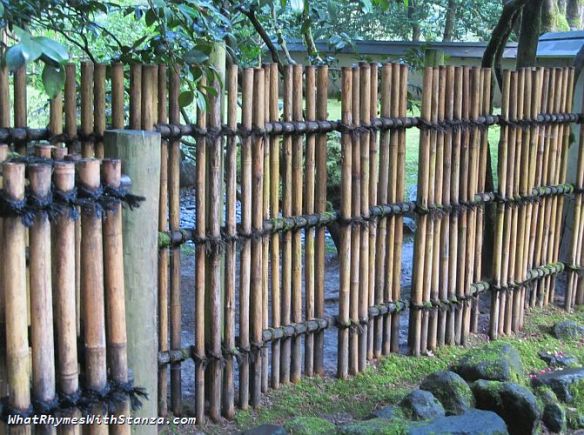
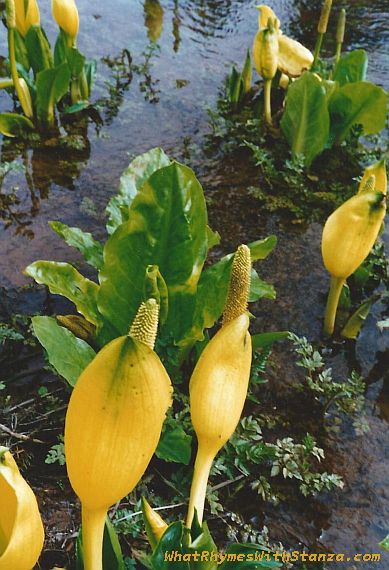
After all this grate research, I have determined that my photos this week are in fact literal depictions of “or the like.”
How do you like them?




 What Rhymes with Stanza?