Weekend Wildcard: Groundhogs and Vital Bogs

1 WILDCARD

Yesterday was Groundhogs Day in the US and Canada, and megastar (among the rodent crowd) groundhog Punxsutawney Phil purportedly did not see his shadow, which is said to be a harbinger of an early spring this year.

While not the most reliable diagnostic tool of the atmospheric sciences (the groundhog has about a 39% accuracy rate), it is nonetheless a quaint tradition from simpler (climatically speaking) times.

A bit lesser known in the US – okay, a LOT lesser known – observance on February 2nd is World Wetlands Day, a day designated to bring awareness to the importance of wetlands in balancing global ecosystems.

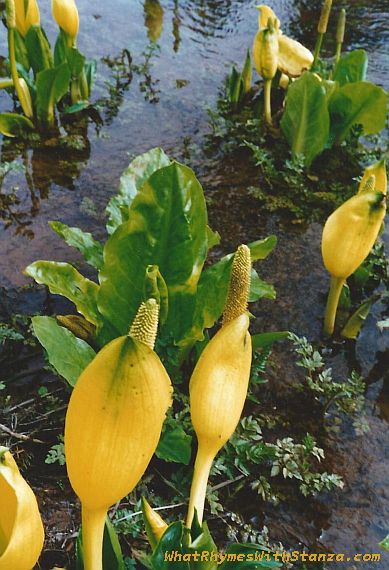
The house where I lived as a youth was situated on a sand hill that was basically surrounded by wetlands (back then designated simply as a swamp). The first signs of spring for me were the green shoots of skunk cabbage that emerged from the murky waters of the swamp. These quickly grew into wide, flat, shiny leaves and bright yellow flowers that emitted the musky odor of their namesake. I loved the cheery sight of them, and I actually found the earthy, slightly sweet smell to be somewhat pleasant (in small doses and from a distance).

Skunk Cabbage 2

The sounds of croaking frogs were prevalent on warm evenings, and every once in a while a beaver or nutria would find their way into our lower yard. Mosquitoes abounded. We pretty much stayed out of the swamp and let it do its thing of living and dying, sprouting and rotting, flooding and receding. I thought it was kind of cool to live within the wetland, but I had no appreciation of its importance as an ecosystem.

The last time I visited that area, I found that the swamp had been filled in and houses lined both sides of the low road that used to define where our yard ended and the swamp waters began. It was a sad sight. The adage “You never know what you have until it’s gone” comes to mind.

It’s too late for “my” swamp, but other wetlands can be restored, preserved and protected. Let’s do it!

wetland Infographic


Infographic taken from WorldWetlandsDay.org 

A Symbol by Any Other Name

“As a child, I always knew it was springtime when I opened my bedroom window and caught the subtle, heartwarming aroma of the season’s first blossoms wafting across the swamplands of home. Yep, if the skunk cabbage was blooming, summer was just around the corner.”

~ Spring is in the Air

Skunk Cabbage

If you were to ask me my favorite flower, I might tell you it is the Lysichiton americanus. But that would be far too pretentious. You know that whole “a rose by any other name would smell as sweet” line? A Lysichiton americanus, by its other name, smells like… well, like its namesake.

“Skunk cabbage” didn’t get its name from any black-and-white striped color scheme. It’s named for its distinctive “skunky” odor. So am I joking that it’s my favorite flower? Nope.

Growing up in a “wetland” area (formerly known as a swamp), the smell of skunk cabbage was indeed a harbinger of spring, which meant warmer weather and maybe just a tad less rain. Or maybe it meant warmer rain and a tad less weather. I forget.

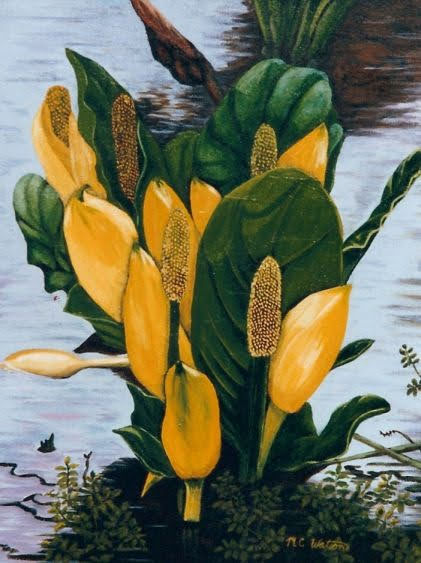
But the symbolism of the skunk cabbage doesn’t just stop at being a seasonal reminder. Despite its stinky name, the plant is quite beautiful. Large, lush green leaves, bright yellow flowers. It livens even the fustiest of swamplands. And it does so by rising regally out of its surrounding mud and mire.

Somehow I find that inspiring. More so than a hothouse rose or a pampered orchid. It is raw no-fuss nature at its best. Simple beauty despite its odoriferous moniker. To me it symbolizes dignity, poise – maybe even grace – while amidst the muck of worldly living.

So, come Mother’s Day or my birthday or any other day one might be compelled to send me a bouquet of flowers, let it be roses. Come on, you didn’t expect me to say skunk cabbage, did you? Symbolism only goes so far.

Skunk Cabbage 2skunk cabbage painting

Weekly Photo Challenge: Symbol