The Ocean

Day Zero of NaPoWriMo (National Poetry Writing Month). Or is it NaPoWriMo eve? I shall endeavor once again to meld with my muse and meet the challenge of writing a poem a day for the entire month of April.

Our first (Early Bird) prompt from NaPoWriMo.net is to

Pick a word from the list below. Then write a poem titled either “A [your word]” or “The [your word]” in which you explore the meaning of the word, or some memory you have of it, as if you were writing an illustrative/alternative definition.

From the list (which I won’t reproduce here) I chose the word “ocean.” Hence:

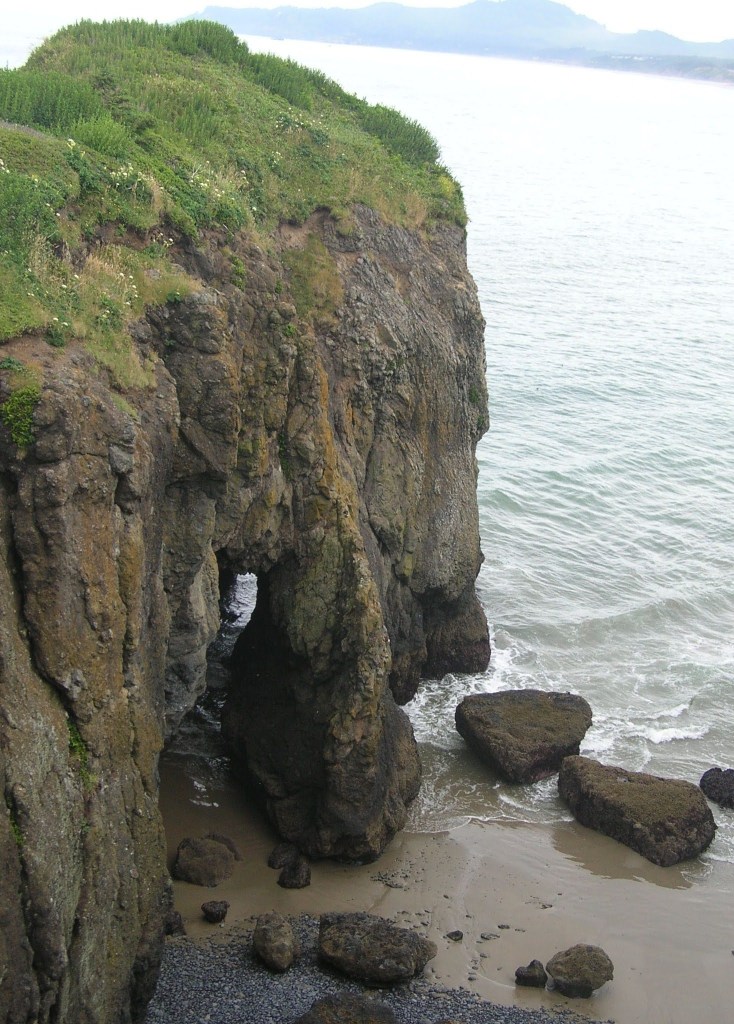
The Ocean

Bestower of bounties:
one may fish for a feast
or dive to the depths
plucking pearls from the peace.

Betrayer of boys
setting sail on the seas,
seduced by the Sirens,
then besieged by the beast.

Mantra of mindfulness,
mysterious muse,
meandering metronome,
hewer of hues.

Destroyer of destinies,
splitter of seams,
shattering ships and
drowning brash dreams.

Thunderous thralls turn to
tranquil translucence.
Balmy or bawdy,
a nymph or a nuisance.

Such is the kaleidoscope,
the ebb and the flow.
We are moored to this tempest;
mind, body and soul.

Alphabetical April

Day Eighteen of National Poetry Writing Month! Today’s prompt from NaPoWriMo.net:

write an abecedarian poem – a poem in which the word choice follows the words/order of the alphabet. You could write a very strict abecedarian poem, in which there are twenty-six words in alphabetical order, or you could write one in which each line begins with a word that follows the order of the alphabet. This is a prompt that lends itself well to a certain playfulness. Need some examples? Try this poem by Jessica Greenbaum, this one by Howard Nemerov or this one by John Bosworth.

My offering:

April 
buds curling,
dense earth frees 
ground-harbored insects.
juncos, kits, larvae; 
Mother Nature opens,
poetic quatrains rustle,
spring’s timely unfolding,
verdant waves, 
xenial youthful zeal.

Sonnet Sunday

Day Nine of National Poetry Writing Month! Today’s prompt from NaPoWriMo.net:

We’re calling today Sonnet Sunday, as we’re challenging you to write in what is probably the most robust poetic form in English. A traditional sonnet is 14 lines long, with each line having ten syllables that are in iambic pentameter (where an unstressed syllable is followed by a stressed syllable). While love is a very common theme in sonnets, they’re also known for having a kind of argumentative logic, in which a problem is posed in the first eight lines or so, discussed or argued about in the next four, and then resolved in the last two lines. A very traditional sonnet will rhyme, though there are a variety of different rhyme schemes.

My attempt:

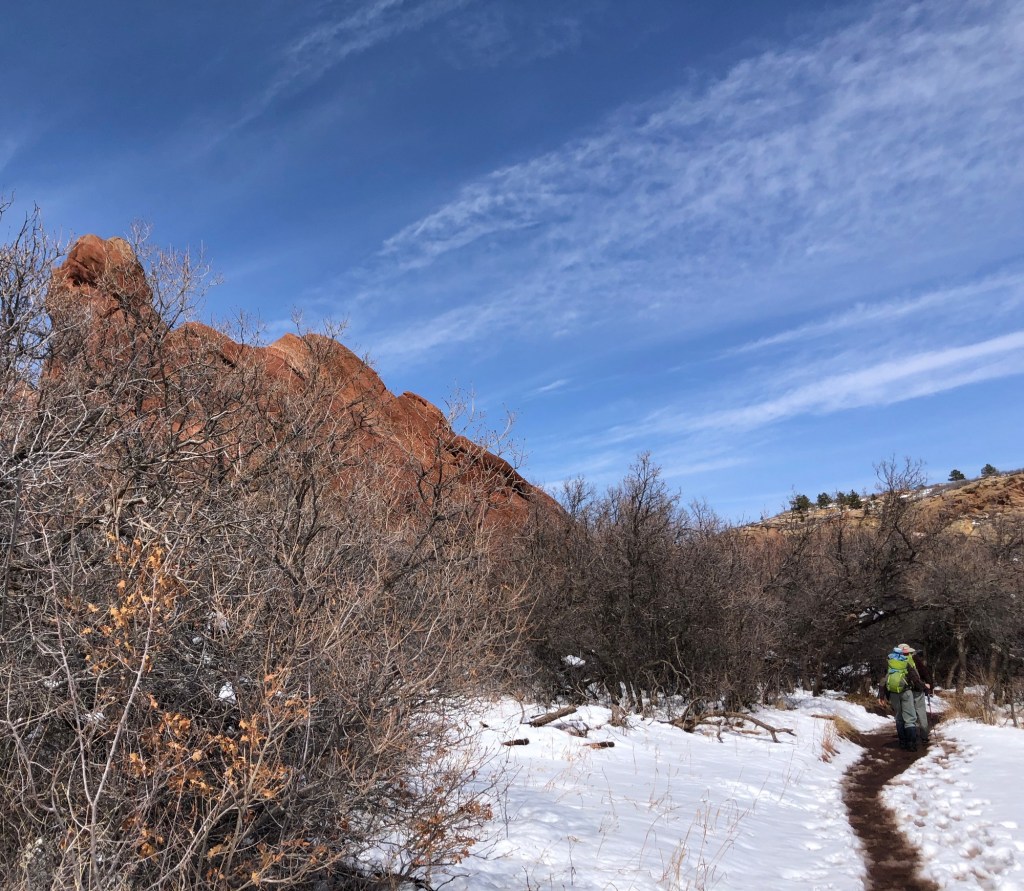
For the Love of Springtime in Colorado

Boots sinking deep in mud-browned melting snow,
sweatshirt peeled off and knotted at my waist.
Spring’s dichotomy in Colorado.
Wool socks, sun shades; my rucksack packed in haste.

Crabapples bloom, spent petals drifting down.
Snow lingers where protected by thick shade.
As winter seeps into the thawing ground,
summer will drop like curtains on a stage.

I trek on, heedless of sign and season.
Despite spring breeze or autumnal bluster,
ubiquitous blue skies transcend reason.
I suck the thinning air, my strength mustered.

Toes white with cold, face tanned by sun, I smile.
Springtime in the Rockies keeps one agile.

And click here for a throwback to a previous sonnet I wrote.

Murmur Murmur

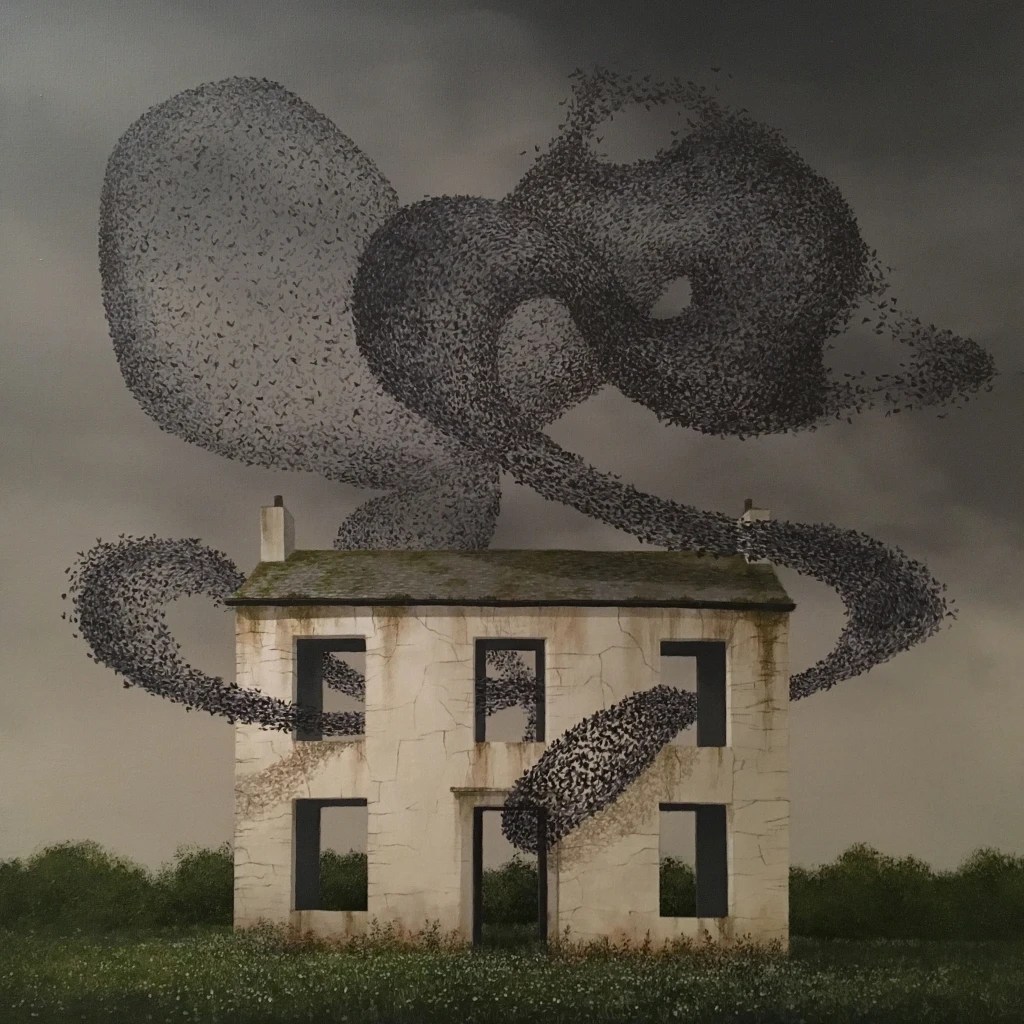
Well, it’s been awhile, hasn’t it? But here I am, back in Stanza-land, and what better way to come back than a writing prompt from the folks at dVerse? Today, Sarah challenges us to choose from a number of paintings by artist Lee Madgwick, and use the painting as inspiration for an original poem.

I will post the painting below, but first, the poem.

Murmuration:
Murmuration refers to the phenomenon that results when hundreds, sometimes thousands, of starlings fly in swooping, intricately coordinated patterns through the sky.

NPR.org

Murmur Murmur

Murmur, murmur, murmuration.
Endless swirling iterations.
By what compelled? No explanation.
I won’t venture speculation.

Like pointillistic illustration,
a thousandfold their compilation.
As one they dance their presentation,
and none claim “leader” designation.

At dusk they merge, no hesitations;
mingling, calling salutations.
This roiling mass staves off predation
as they scope night’s destination.

Starling flock cooperation;
flights that defy computation.
I murmur my appreciation.
Murmur, murmur, murmuration.


Murmuration, by Lee Madgwick