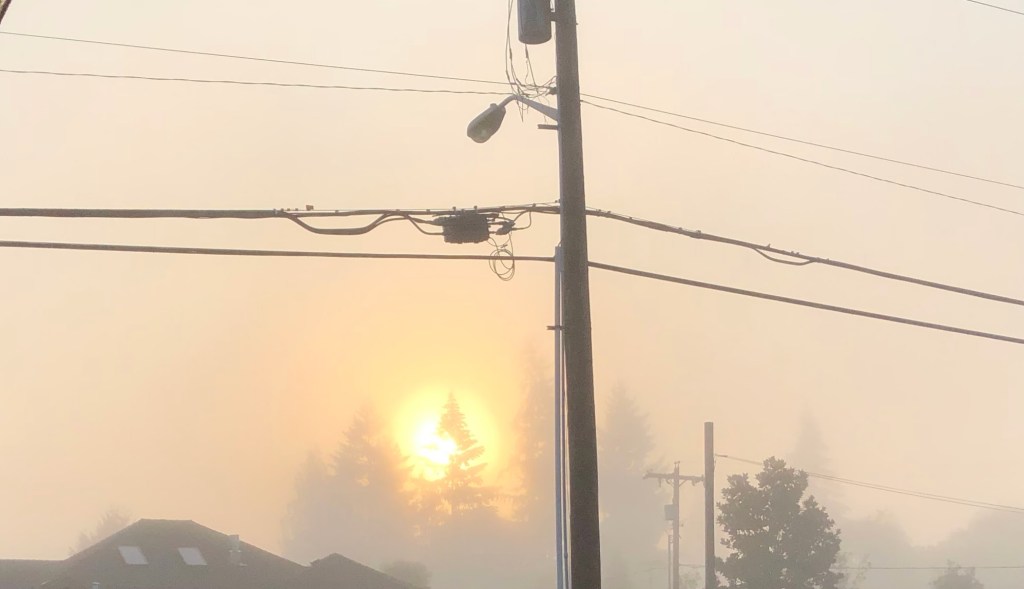
The smoky air carries an orange tinge. Leaves droop on hot, dry trees and shrubs outside my window. Eyes sting, throat burns, head aches. Doggo whines to go outside, but I don’t want to expose his small lungs to this foul air.
My wildlife garden looks vacant. The crows that usually occupy the utility wires at this time of day are nowhere to be seen, though I did spot a lone young squirrel this morning, darting across the lawn towards the walnut tree. Talk about little lungs…
For the umpteenth time, I wonder where we humans went wrong on our earthly odyssey. But maybe this was the inevitable destination all along. I mourn for the innocents who’ve been caught up in our reckless journey. My eyes leak.
wildfires run rampant
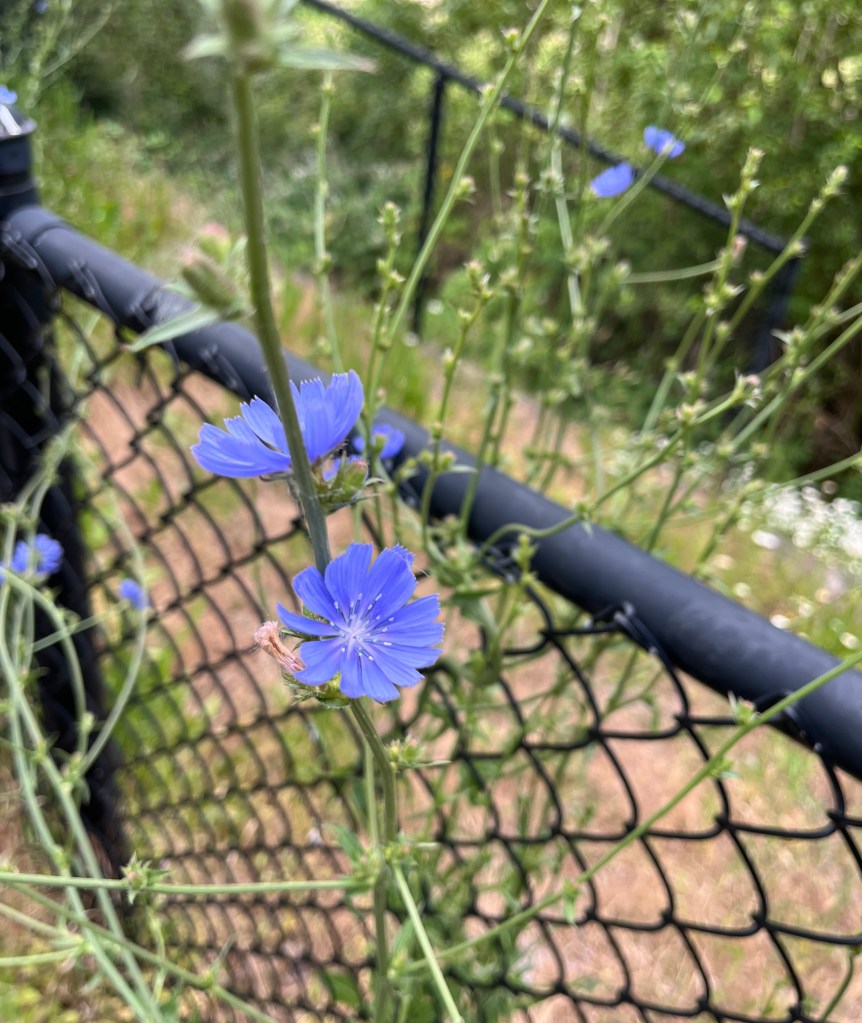
summer blooms stand powerless
where do the birds go?
My thoughts are with all affected by this wildfire season. Loss of lives, homes, possessions, livelihoods.. as well as wildlife and their habitats. Incalculable. Huge thanks to those who are fighting these fires, and all who are aiding those suffering losses.
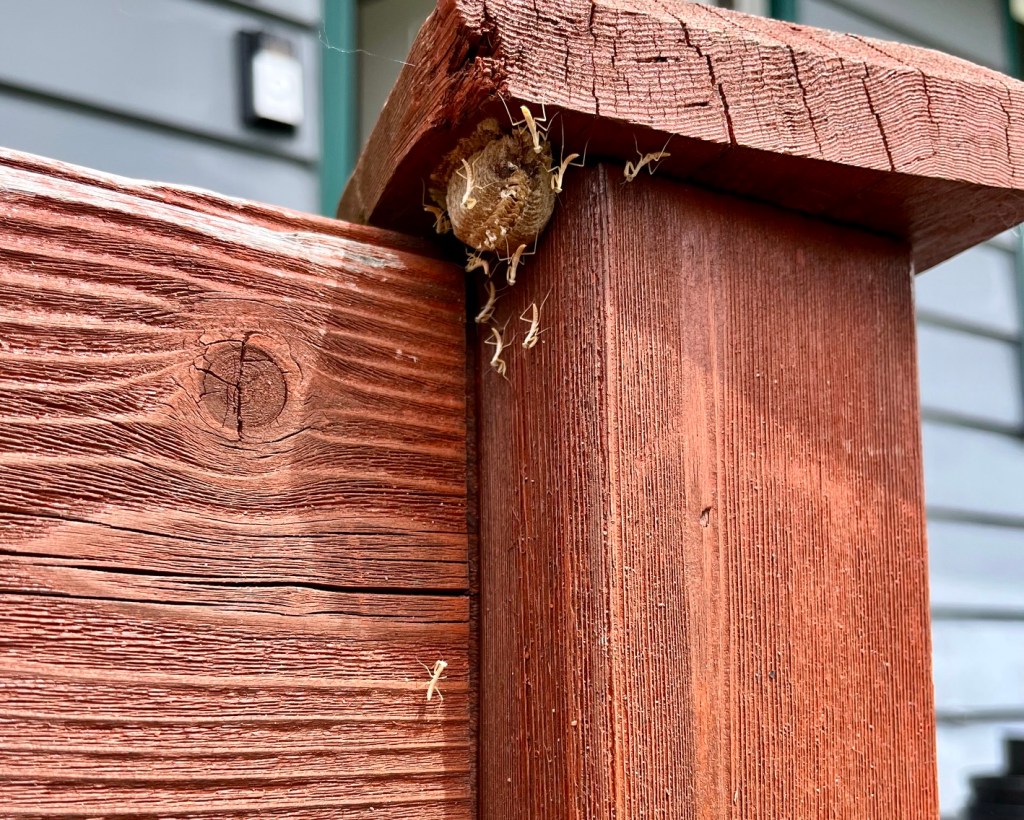
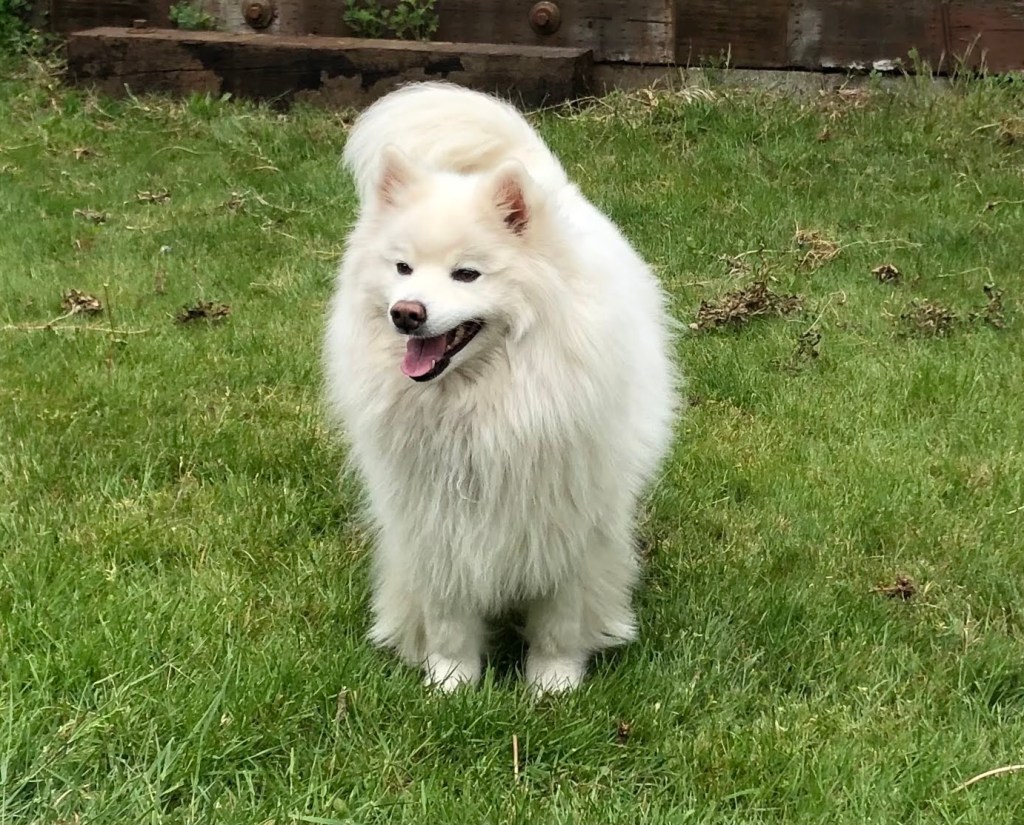
These have I loved: the scattering promise of springtime sprouts in my wildflower garden; the burbling waters of summer-lessened streams, metallic-blue dragonflies zipping past ramrod straight cattails; deep summer shade; the musty smell of an old book, its thick, browning pages steadfastly preserving the author’s words whether deserving of such honor or not; well-earned rivulets of sweat streaking down one’s cheek after a spell of honest labor; dusty brown feet sunk into the warm, soft dirt of a well-tended garden; the triumph of pulling up a dandelion, its root completely intact; an intriguing story; old hymns sung in wobbling harmony by an age-burnished choir; stained glass windows and the kaleidoscopic colors rendered by filtered sunlight; short sermons; old cemeteries, moss-covered tombstones with names scrubbed illegible by centuries of wear, family plots delineated with tired sagging fences; curls of wood shavings, the crisp pitch scent released by newly planed pine boards; antique woodworking tools with handles smoothed by generations of artisanal use; well-brewed coffee and warmed almond croissants; freshly churned buttermilk; fresh baked bread; a full recycling bin rolled to the curb; unexpected blessings of chance, such as spotting a praying mantis ootheca just as its tiny residents emerge to face their next stage of life; combing my fingers through the luxuriant undercoat of my fluffy white spitz; his generous smile as he greets my returns home; stink eye glares from condescending cats; time spent with my daughters, the delight of witnessing the loving, thoughtful women they have grown into; grandchildren playing contentedly on a toy-strewn floor; the smell of a newborn’s silky-soft head; warm evenings, rocking chairs on the back deck, a curiously formed piece of wood to whittle…
Based on the second stanza of ‘The Great Lover’ by Rupert Brooke, “write a list poem that begins ‘These I have loved: ’ of the everyday things that are important or precious to you. Be specific, picking out tiny details, and don’t stop until you get to the bottom of the page. Finish with ‘All these have been my loves’.”
our lives unfold moment by moment by moment
though we try to clump them together into
years and weeks and minute-by-minute or
compartmentalize them into
home and work and hobby and
now and then and now-and-then
and maybe it helps to think there is
some underlying structure to it all since
otherwise we are like untethered balloons
caught up in an errant breeze that
pulls us right past the delineations of
time and titles and self-imposed strictures
and how would we ever manage to define ourselves
if we just let life unfold moment by moment by moment
There is nothing new under sun or stars, so
bleak a plight we dread admit as much.
Life’s meaning now on apathy depends;
and even that we scarcely rely upon.

A rose is a rose is a
rose, especially if that rose is red,
primary on the color wheel,
predictable on barn or barrow.

You see it in our eyes, glazed
over and toneless and done with
useless tears. Instead, we let rain
track our cheeks in sham rills of water.

There’s nothing to do now but sit beside
old memories: books with cracked spines, the
way new snow once appeared impossibly white,
and the cackled surprise of egg-laying chickens.
*Choose a line from a poem that resonates with you. *Build your poem so each line ends with a word from that line. *Keep the words in order, forming the original line down the right margin. *Let your poem move in its own direction. Surprise us! *Include attribution (after [poet])
The poem I chose was The Red WheelBarrow by William Carlos Williams. Since there are only sixteen words in the poem, I used the entire poem to form my own.
The Red Wheelbarrow, by William Carlos Williams*
so much depends
upon

a red wheel
barrow

glazed with rain
water

beside the white
chickens
*Source: The Collected Poems: Volume I 1909-1939 (New Directions Publishing Corporation, 1938)
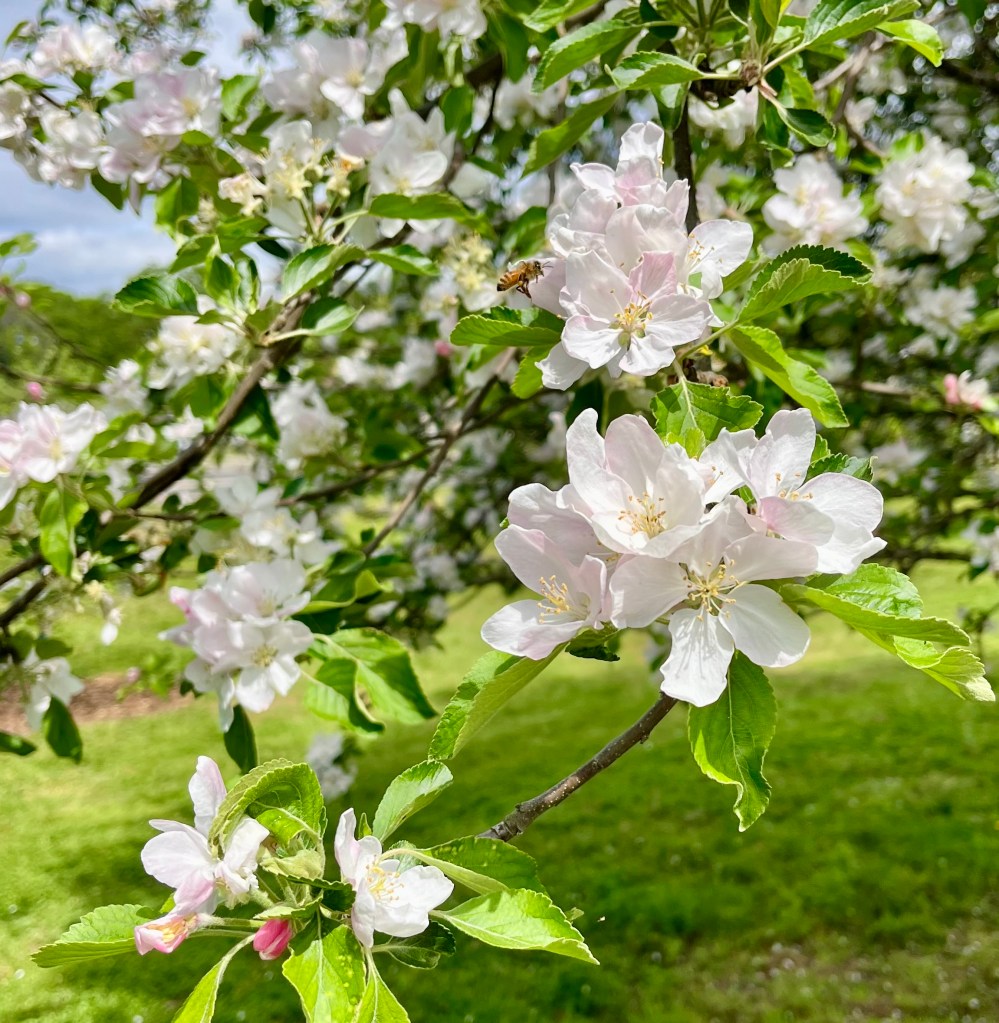
While walking through the park, my dog Chules and I pause at an apple tree. I am drawn to the white-pink blossoms and the bees that float among them. Chules is more intrigued by the base of the trunk, and the invisible messages left there by other dogs. He lifts his leg and adds his own note to the trunk.
cherry blossoms wane
pink petals carpet the ground
apple tree looks on
Day 29 of National Poetry Writing Month (NaPoWriMo). In response to dVerse prompt: Haibun Monday: late cherry blossoms.
I did not see a groundhog yesterday, shadowed or otherwise. Nor did I see my own shadow. I stayed inside, shying from the cold and wind and rain.
My doggo, on the other hand, made several forays around the fenced yard, but did not report back on what critters or what shadows he may have encountered. He usually plays things close to his vest that way. A pup of many barks, but few words.
More winter, or early spring? I must wait and see.
earliest of blooms
dandelions tucked beneath
unmown grass shadows