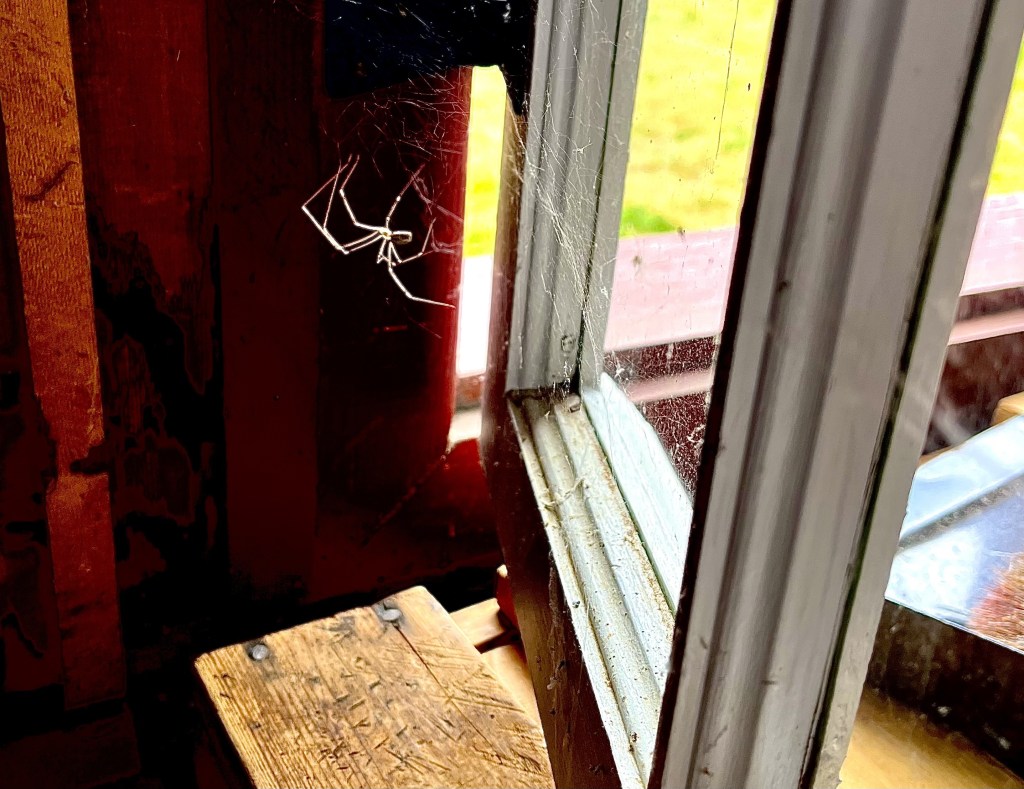
Trapped in her own web
she has long since ceased to spin;
time spins around her.
As she unravels,
a breeze plucks at straining threads,
the web yet to fail.
I ask, who failed whom?
Who suffers, and who prevails?
Spider wonders, too.
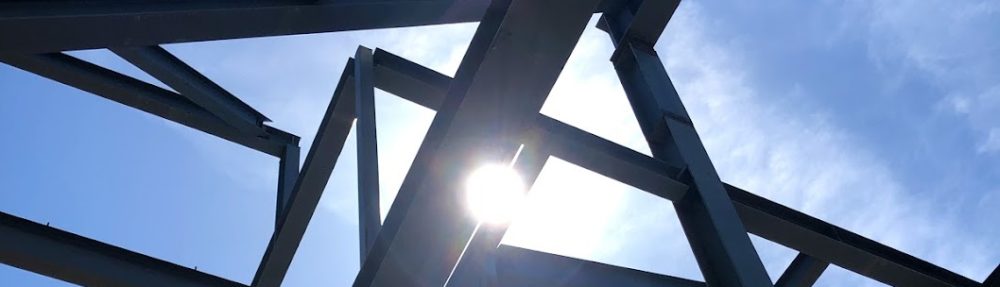
Trapped in her own web
she has long since ceased to spin;
time spins around her.
As she unravels,
a breeze plucks at straining threads,
the web yet to fail.
I ask, who failed whom?
Who suffers, and who prevails?
Spider wonders, too.

Rewrite, rules bent.
Invite to consent.
Aright, we dissent.
A fight? Ambivalent.
Recite and relent.
Acolytes give assent.
Respite. We fall content.

Despite our diffidence,
some incite resistance.
Alas, sans consequence.
Despot... acquiescence.

Dost we protest too much?
Nay, methinks we protest too little.
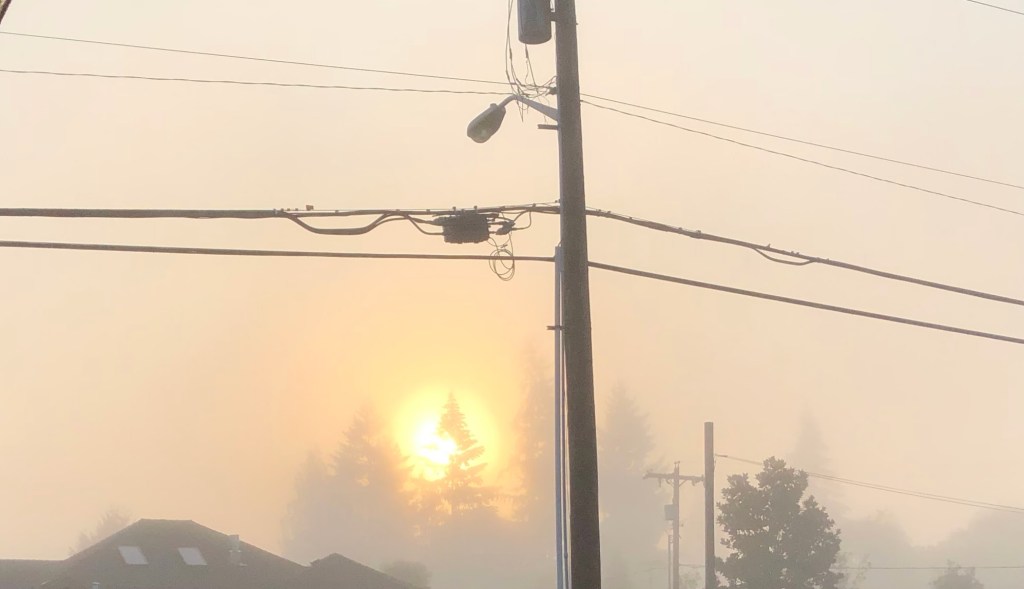
The smoky air carries an orange tinge. Leaves droop on hot, dry trees and shrubs outside my window. Eyes sting, throat burns, head aches. Doggo whines to go outside, but I don’t want to expose his small lungs to this foul air.
My wildlife garden looks vacant. The crows that usually occupy the utility wires at this time of day are nowhere to be seen, though I did spot a lone young squirrel this morning, darting across the lawn towards the walnut tree. Talk about little lungs…
For the umpteenth time, I wonder where we humans went wrong on our earthly odyssey. But maybe this was the inevitable destination all along. I mourn for the innocents who’ve been caught up in our reckless journey. My eyes leak.
wildfires run rampant
summer blooms stand powerless
where do the birds go?
dVerse poets Haibun Monday prompt: Journeying
My thoughts are with all affected by this wildfire season. Loss of lives, homes, possessions, livelihoods.. as well as wildlife and their habitats. Incalculable. Huge thanks to those who are fighting these fires, and all who are aiding those suffering losses.
I once cared
how others perceived me,
whether I fit in,
if I was loveable,
if I was enough.

Now I couldn’t care less.

Now I care
about my own priorities and values.
And in loving myself, I find
I’m far more than enough.
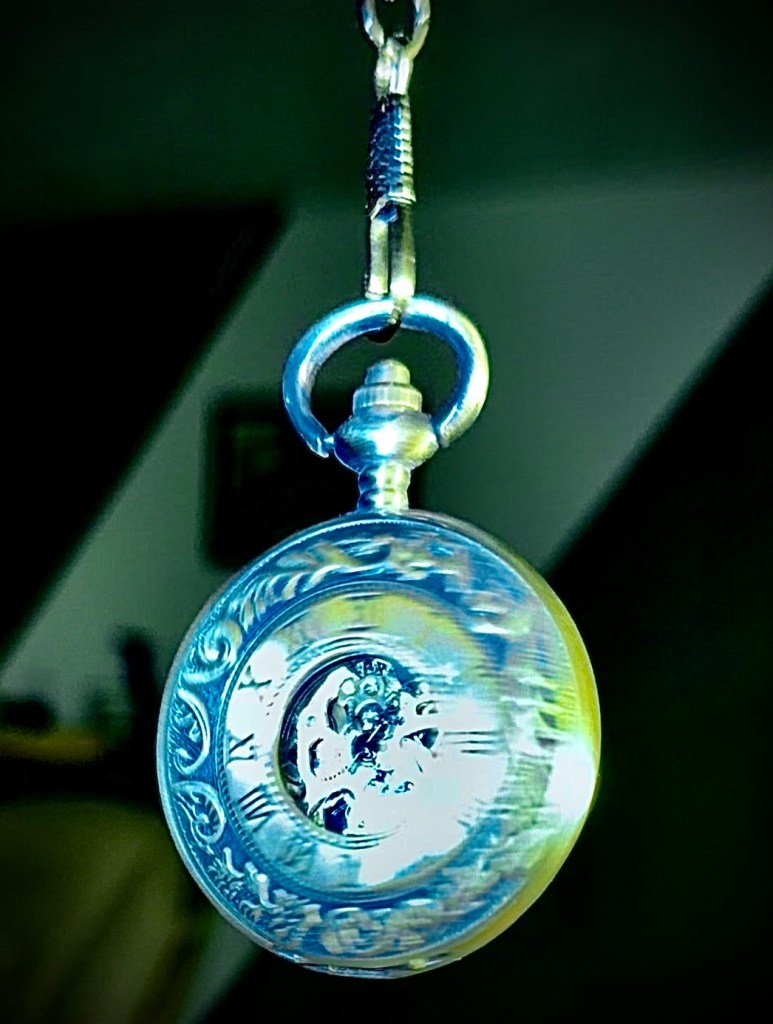
our lives unfold moment by moment by moment
though we try to clump them together into
years and weeks and minute-by-minute or
compartmentalize them into
home and work and hobby and
now and then and now-and-then
and maybe it helps to think there is
some underlying structure to it all since
otherwise we are like untethered balloons
caught up in an errant breeze that
pulls us right past the delineations of
time and titles and self-imposed strictures
and how would we ever manage to define ourselves
if we just let life unfold moment by moment by moment
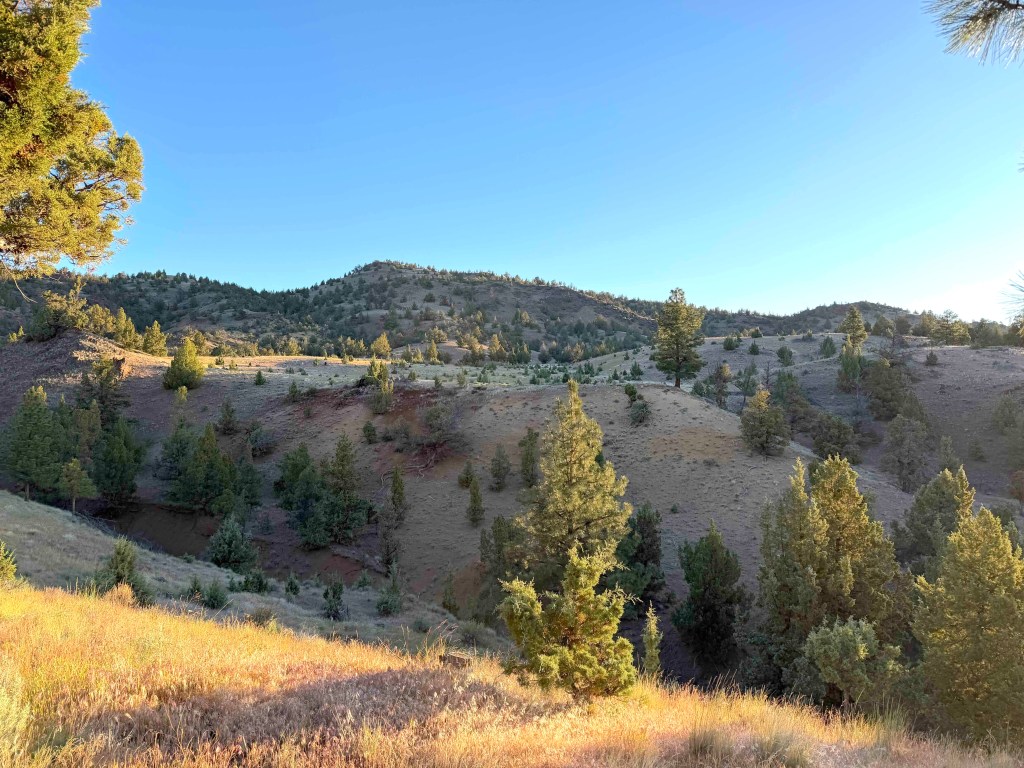
It’s my first excursion in my newly acquired camper van. I drive from city freeways to arterial roads to country roads to the vague essence of roads in middle-of-nowhere eastern Oregon.
I remember driving roads like this in my younger years, in a handpainted red Dodge pickup, where I sometimes had to hop out of the cab, raise the hood and shove a rod back in place so I could shift out of neutral. A simpler time, a simpler vehicle.
When oncoming drivers begin raising a hand in casual greeting as they pass, I remember this neighborly act from my small-town upbringing. Though the van and the road are new to me, I recognize this pace, this sense of community and commonality.
On reaching my campsite, I rest easy in the stillness and reminisce about times past when ruts and potholes preceded speed bumps, and when drivers raised more than just one finger to one another in common salutation.
in burlap-rough folds,
hills of scrub and juniper
bask like sun warmed snakes
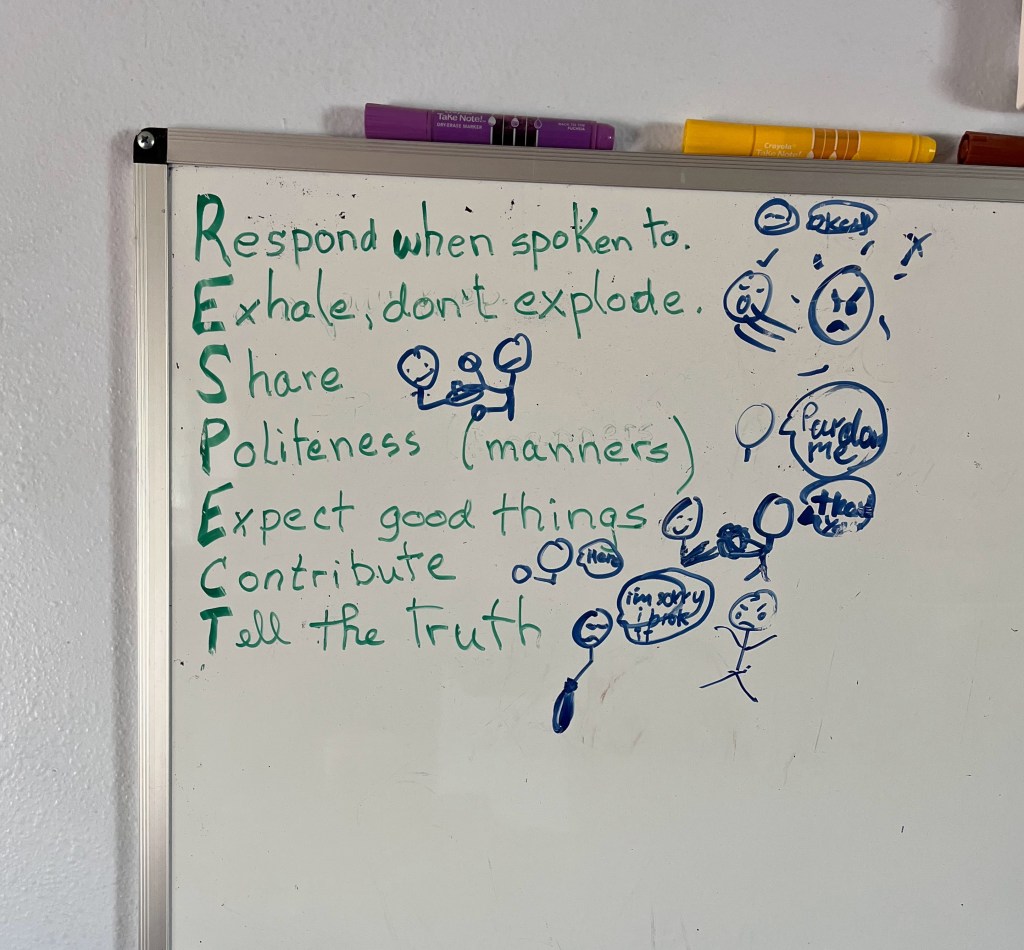
On a wall near my kitchen hangs a whiteboard, a space for grandkids to draw or write or doodle. It also bears a list of household expectations in the form of an acrostic that spells RESPECT.
In response to this week’s dVerse Poetics prompt on The Seven Grandfather teachings, I have expanded the acrostic, adding haiku (or haiku adjacent 5-7-5’s) to reflect on each point. Herewith: RESPECT.
Respond when spoken to.

    nocturnal creatures
    turn skyward their plaintive calls
    answered by the night

Exhale, don’t explode.

    fire breathes hot and harsh
    wind goads it into fury
    water stills the breath

Share

    sun shines and rain falls
    life-sustaining to us all
    flowers do not hoard

Politeness

    Wildlife etiquette?
    Was the lion ever told
    “Chew with your mouth closed?”

Expect good things

    each spring life unfolds
    hibernators search out food
    seedlings seek the sun

Contribute

    fast dive, talons splayed
    the prey snagged and now airborne
    there are mouths to feed

Tell the truth

    “Who?” asks the barred owl.
    “Me, me, me,” says the catbird.
    Northern flicker laughs.
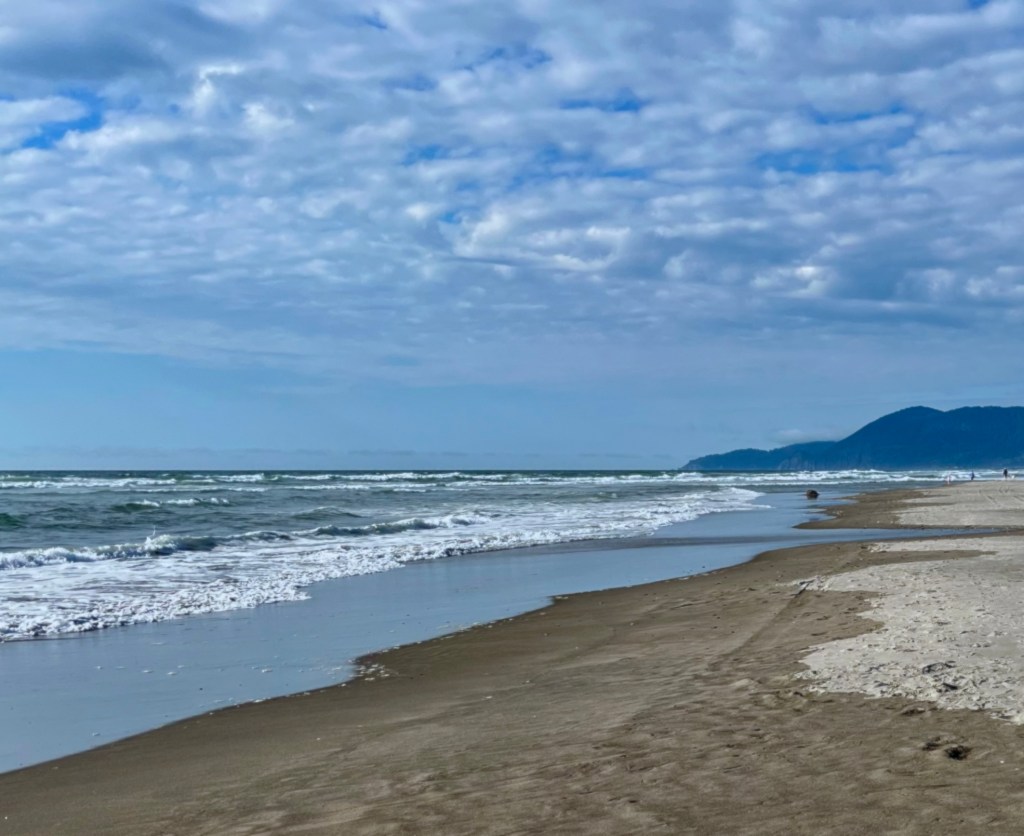
How strangely life unfolds,
Are we merely standing by
with our fates beyond control?

At the outset we are told
we can reach beyond the sky.
How strangely life unfolds.

We set out proud and bold,
but our paths soon turn aside.
Are our fates beyond control?

We rethink what we were told.
Were they dreams or outright lies?
How strangely life unfolds.

So we struggle at the shore
to restrain the ebb tide high.
Are our fates beyond control?

Ah, the tide will ebb and flow.
Just relax into the ride.
How strangely would life unfold
if we let fate take control?
It’s National Poetry Writing Month (NaPoWriMo)!
Day Twenty-Three prompt from NaPoWriMo.net: write a villanelle, and have the poem end on a question.
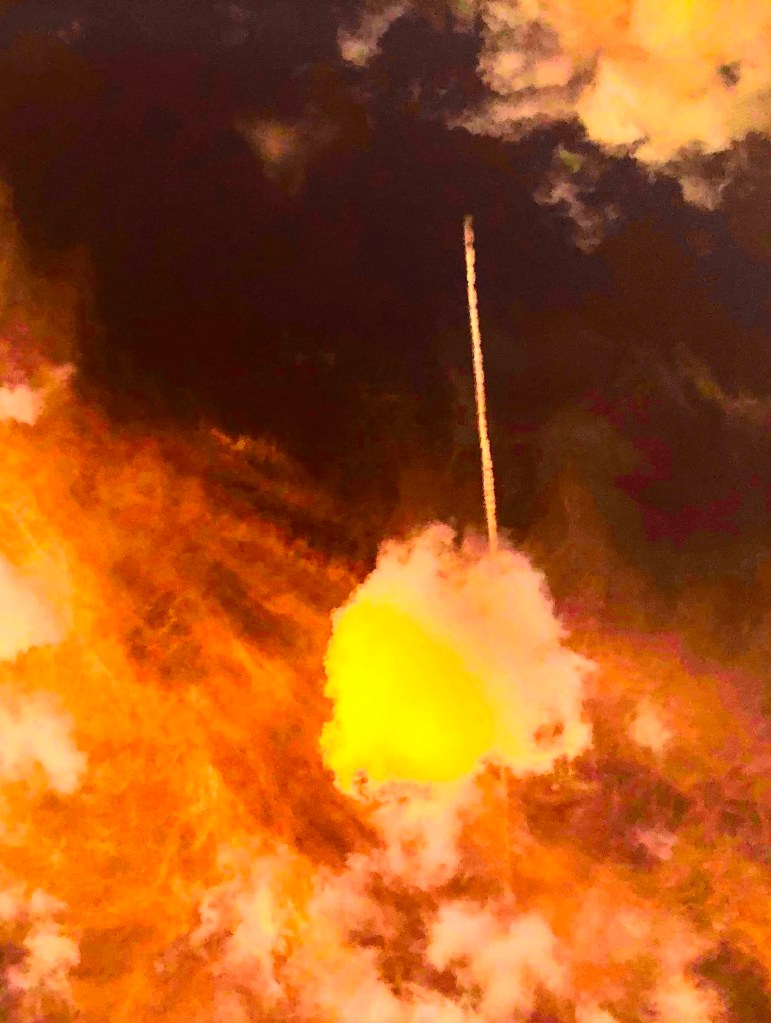
no mother needed – apparently; simply born within the
patriarchal legacy, aromatic right from the start and
already robed in the royal purple of kings

no mother needed as he rises full of promise, strong
of his own accord, self-sufficient, one-of-a-kind,
anointed with the frankincense and myrrh of
his father’s own funeral pyre.

no mother needed, but the father is revered, his
honor and reputation preserved and feted for eternity,
ancestral ashes hidden away lest the paternal lineage
become tainted by the scrutiny of daylight

no mother needed to nourish him,
to prepare him for flight,
to remind him of inborn vulnerabilities,
no reference for humility and compromise,
no haven for non-transactional love

"Pull yourself up by your own bootstraps!"
ah, but the phoenix wears no such
pedestrian footwear

and in the end, in his nest alone,
consumed by the flames of his own making,
his only solace is that a son will emerge
to give his life meaning
It’s National Poetry Writing Month (NaPoWriMo)!
Day Twenty prompt from NaPoWriMo.net: write a poem that uses an animal that shows up in myths and legends as a metaphor for some aspect of a contemporary person’s life. Include one spoken phrase.
They wrote it all down. The good (not much of that),
the bad (though with surprisingly little judgment),
and the ugly (so, so much of that).

They recalled the local boys who went from zero to hero
just by donning a uniform,
the surreal images of those same boys
heading off to war by the trainload,

the newfound responsibilities of keeping up the homefront,
the thrill of stepping out of constrictive roles:
flexing freedoms, flexing muscles, revealing capabilities;
still a wife, a sister, a nursemaid, a supportive prop,
but now also a train conductor, a delivery driver, a farmer.

They spoke of the loneliness, the longing, the yearning,
the carnal lust (“the wild cave-woman spoke”);
outgrowing the “good girl,” the “good wife” roles,
the soldiers, briefly passing by on their way to something
horrible or coming back from something horrible,
more than willing to fulfill the women's desires,
allay their fears, divest them of their virginity.

They described the ubiquitous mud of the battlefields,
how it turned uniforms brown (“the new style of clothing…
the chic of mud”),
how it disabled firearms, swallowed up artillery, drowned soldiers.

They told of the homecomings, the soldiers
no longer soldiers, the bodies no longer breathing,
the heroes who would rather not have been,

the mothers who weren’t mothers
when their men went to war,
the sainted helpmates who became whores in the
eyes of unforgiveness, of hypocritical judgment,
the fatherless children left to be raised by mothers
who could no longer hold the jobs
the men now reclaimed.

They sat opposite the empty chairs,
where their partners in life once sat.
They regretted scoffing at the the local boys in crisp new uniforms
who became soldiers, who became heroes, who became
disillusioned, haunted shells of men.

They suffered loss, but did not suffer bullet wounds,
they sacrificed all but received no medals.
They rose to the challenges but were shoehorned back
into their stifled caricatures of weakness and dependency
once deemed no longer needed in the workforce.

God bless the soldiers who fought for freedom and justice.
God bless the women who fought for stability and sanity.
God bless the female poets who lived it all
and wrote it down so that we – a century later –
might understand.
It’s National Poetry Writing Month (NaPoWriMo)!
Day Sixteen prompt from NaPoWriMo.net: write a poem in which you respond to a favorite poem by another poet. Not quite on prompt today. In looking for a poem to use (as I have no favorite), I found myself falling down a rabbit hole of female poets writing about WWI. Stark, moving poems depicting all facets of the war from a woman’s perspective.
A Sampling of Poems written by women about World War One:
War Mothers ~ Ella Wheeler Wilcox
https://www.poetryfoundation.org/poems/57317/war-mothers

August 1914 ~ Vera Mary Brittain
https://www.poetryfoundation.org/poems/57299/august-1914-56d23aac2477c

from At the Somme: The Song of the Mud ~ Mary Borden
https://www.poetryfoundation.org/poems/57329/at-the-somme-the-song-of-the-mud

After the War ~ May Wedderburn Cannan
https://www.poetryfoundation.org/poems/57365/after-the-war

August 1914 ~ May Wedderburn Cannan
https://www.poetryfoundation.org/poems/57362/august-1914-56d23ace66a9d

War Girls ~ Jessie Pope
https://www.poetryfoundation.org/poems/57296/war-girls

The Veteran ~ Margaret I. Postgate
https://www.poetryfoundation.org/poetrymagazine/browse?volume=12&issue=5&page=10

I Sit and Sew ~ Alice Moore Dunbar-Nelson
https://www.poetryfoundation.org/poems/52759/i-sit-and-sew

