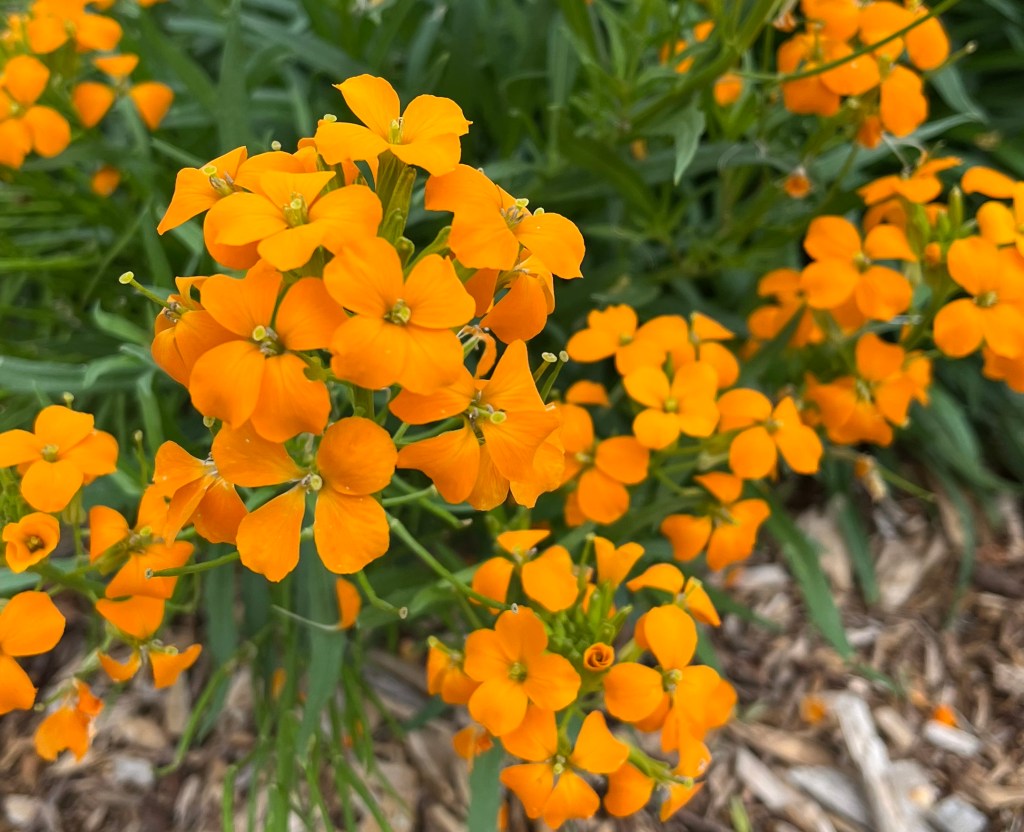
Wordless Wednesday (Western wallflower)
Image
2
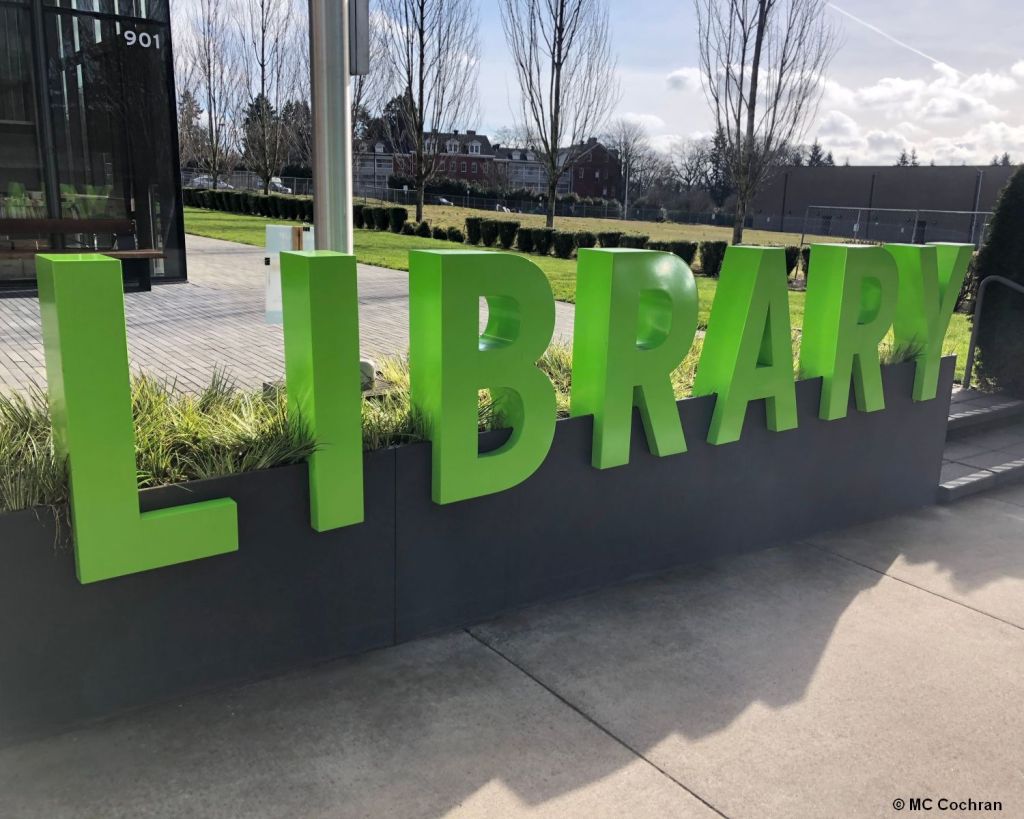
I recently visited the Vancouver, WA public library and came across the Mary Granger Sculpture Garden, a collection of four sculptures on the library property, all created by regional artists.
I’ll share them here as part of Marsha’s Photographing Public Art Challenge (PPAC).
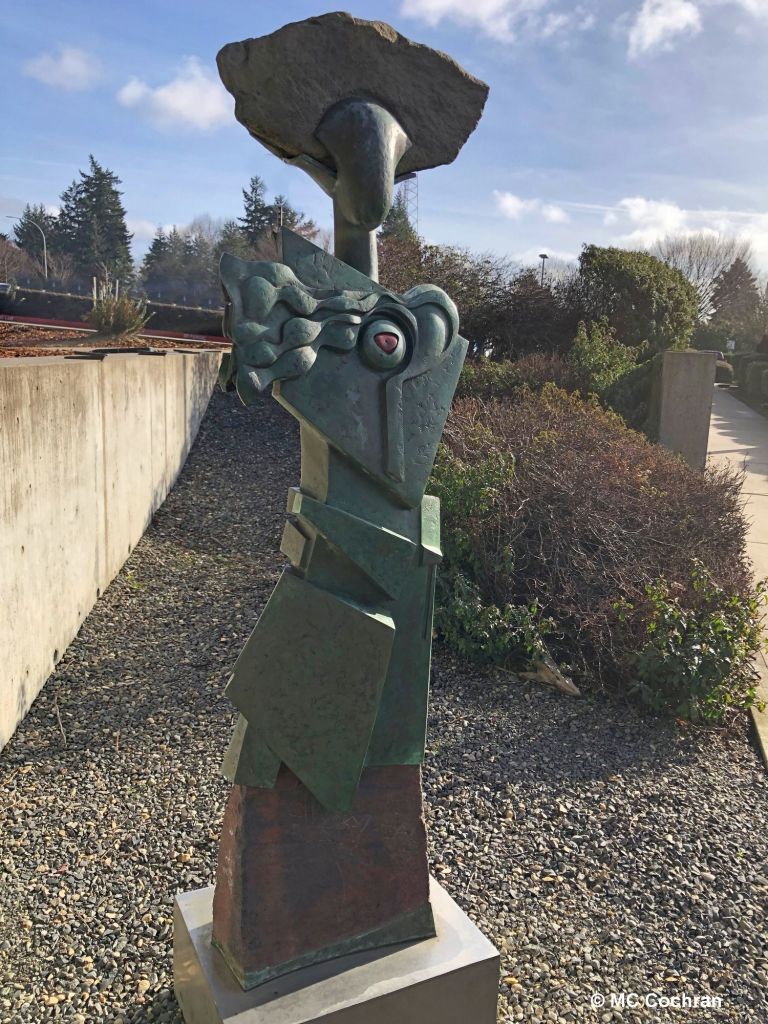
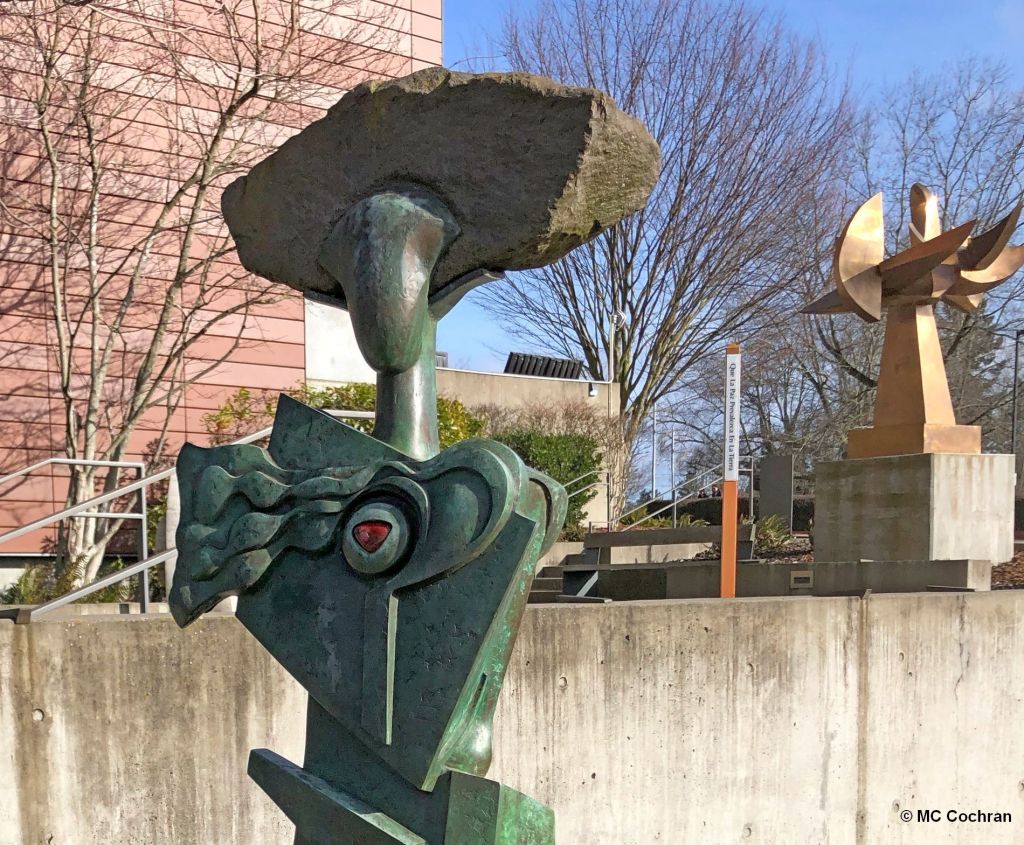
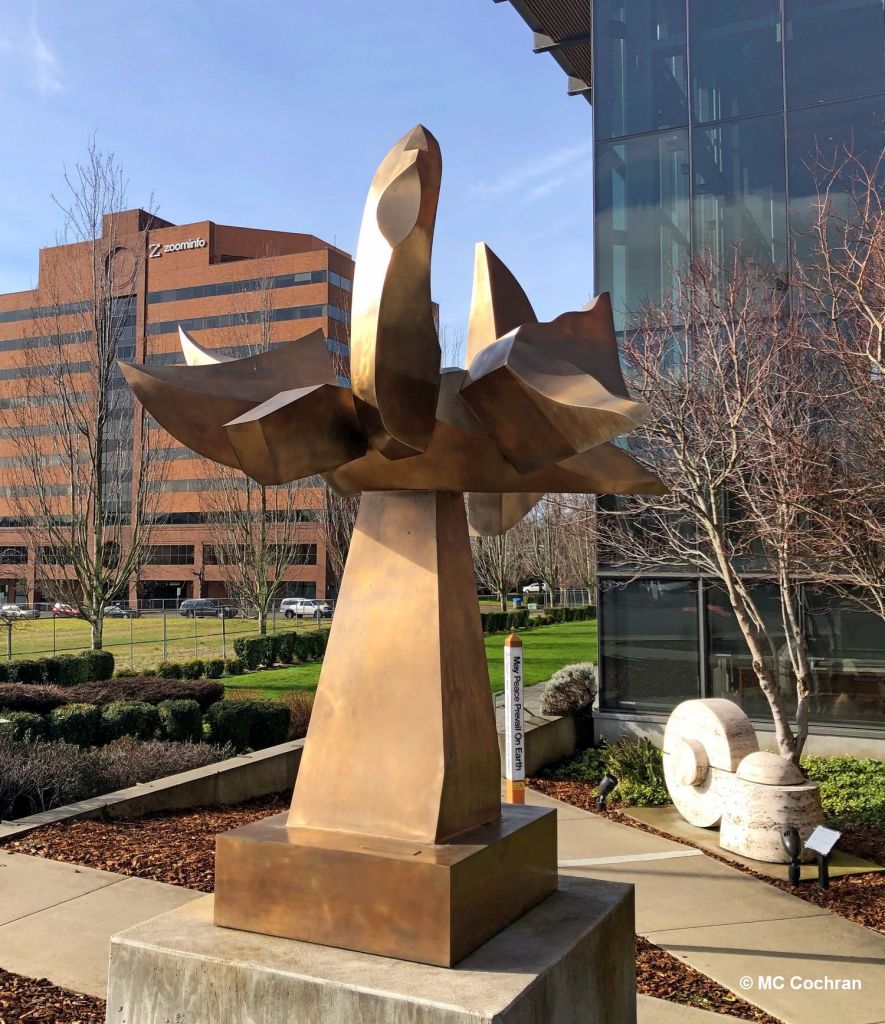
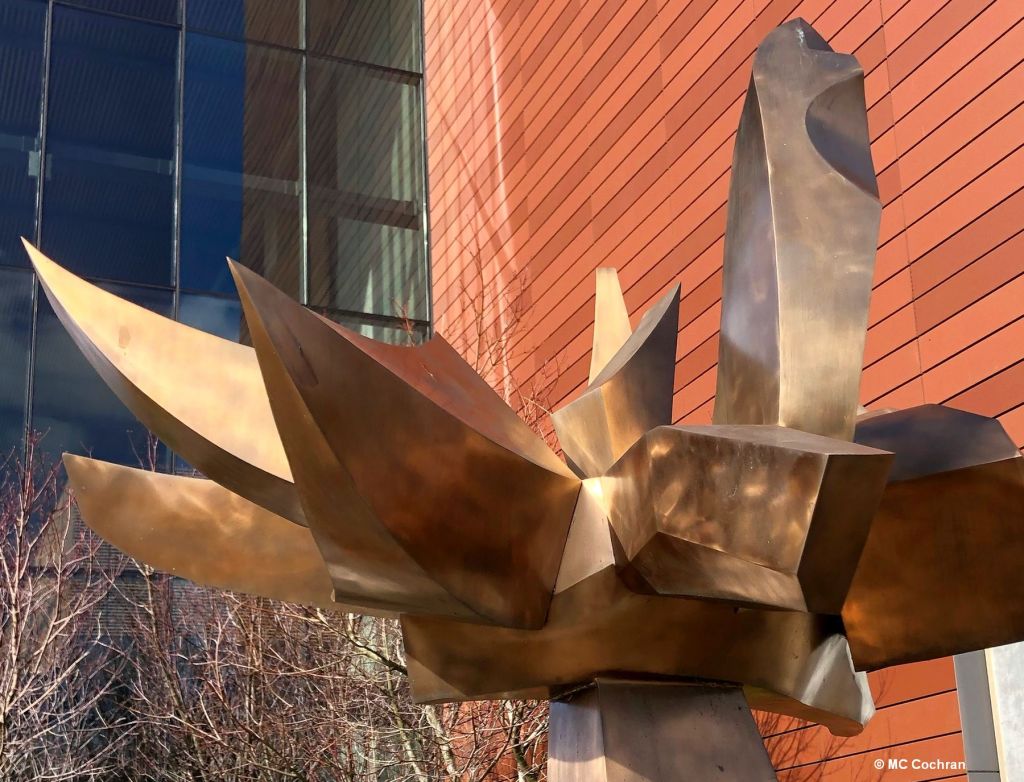
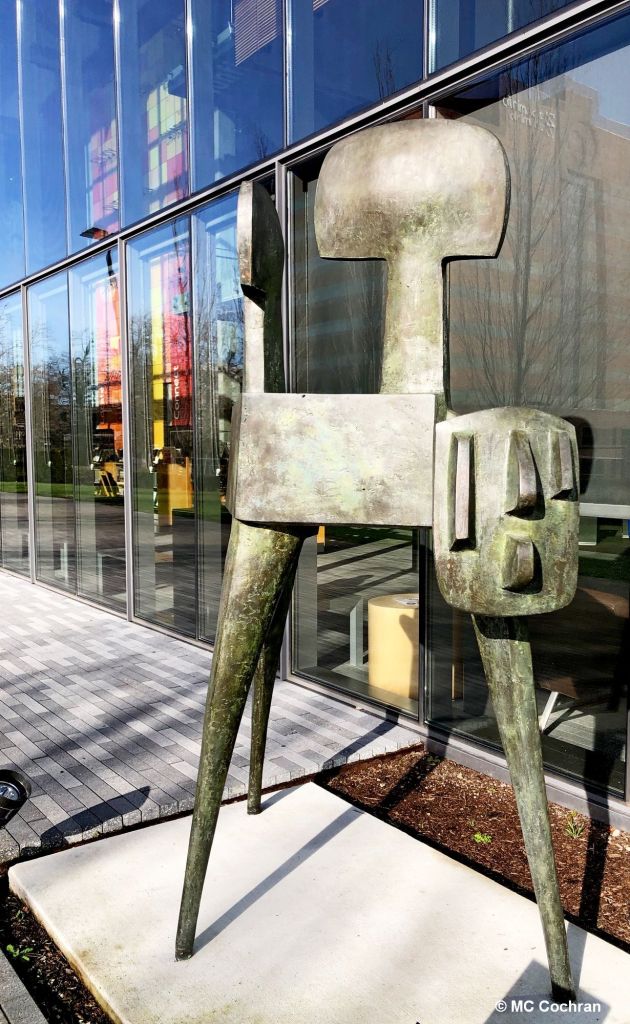
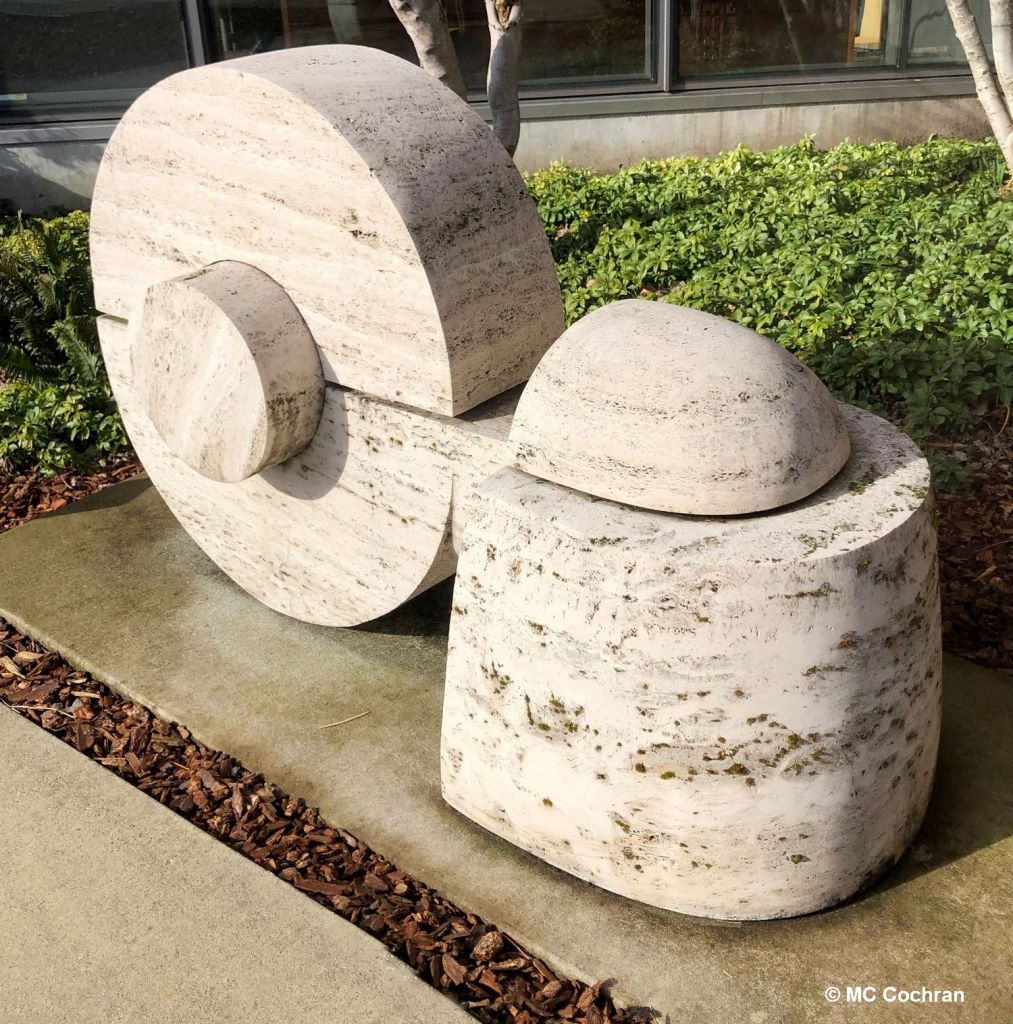
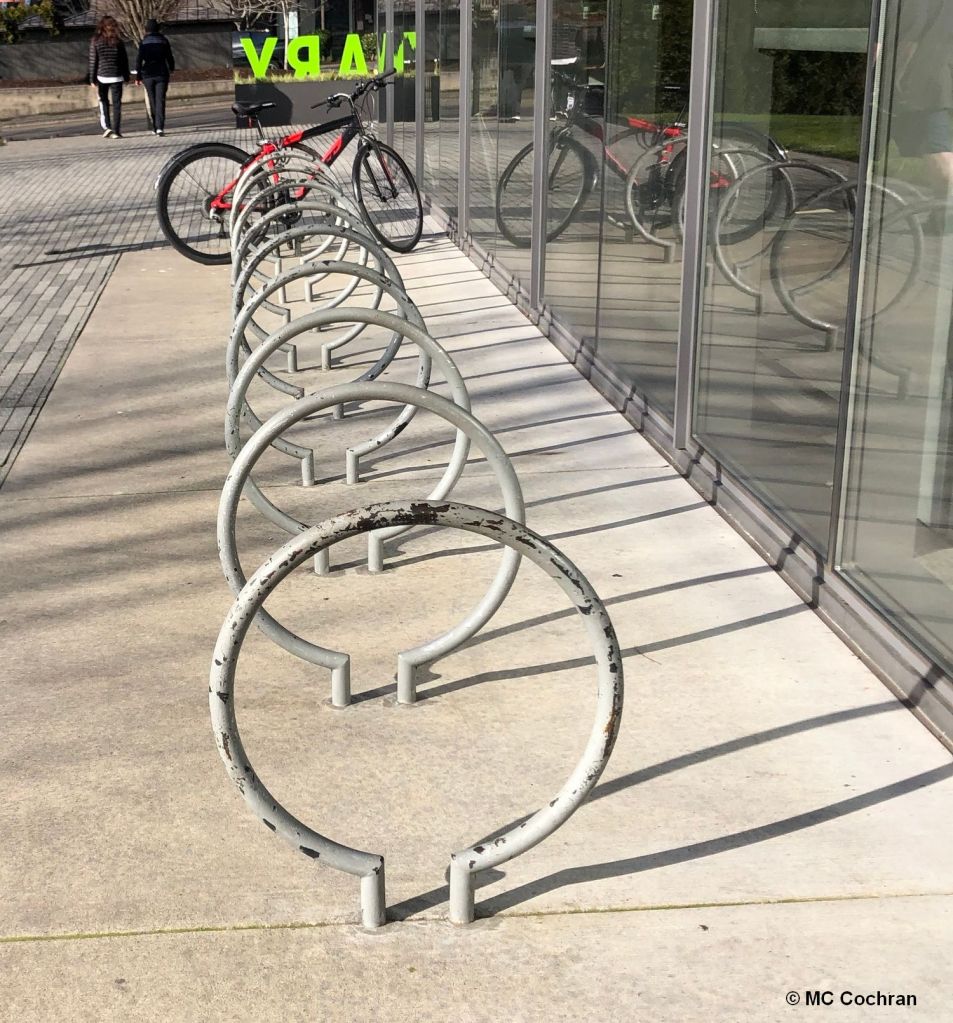
I thought I’d come across a fifth piece of public art, but upon further investigation, it turned out to be a bike rack. Oh, well. Perhaps art is in the eye of the beholder.
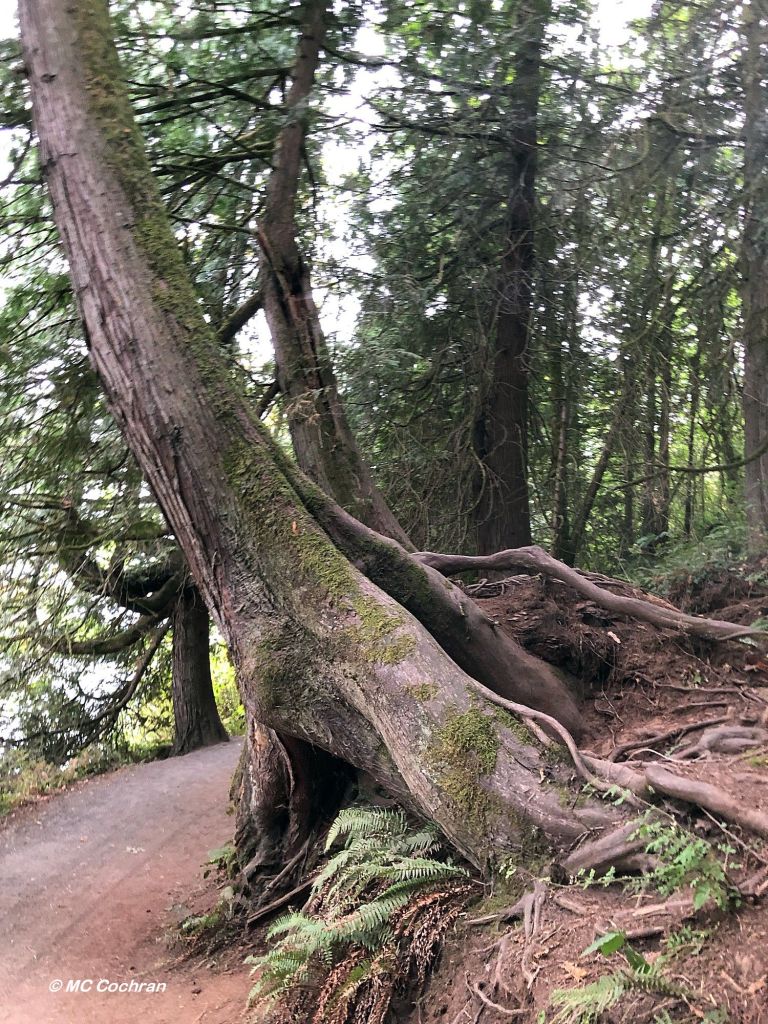
As our Vancouver USA Summer Spots Challenge walks continue, Chules and I moved on to the Salmon Creek Greenway Trail and the Lacamas Heritage Trail.
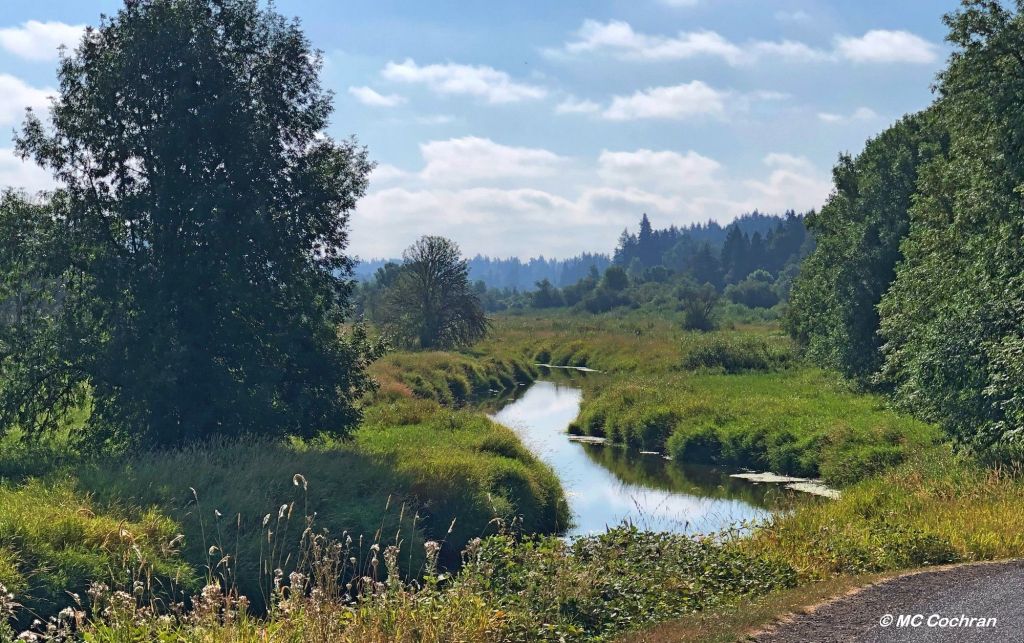
The Salmon Creek Greenway Trail check-in was at the west end of the trail. The east end is 3 miles away at Klineline Pond, where we visited earlier in our 7th walk. I’ve been on the Salmon Creek trail many times, so it was a familiar, comfortable place to visit.
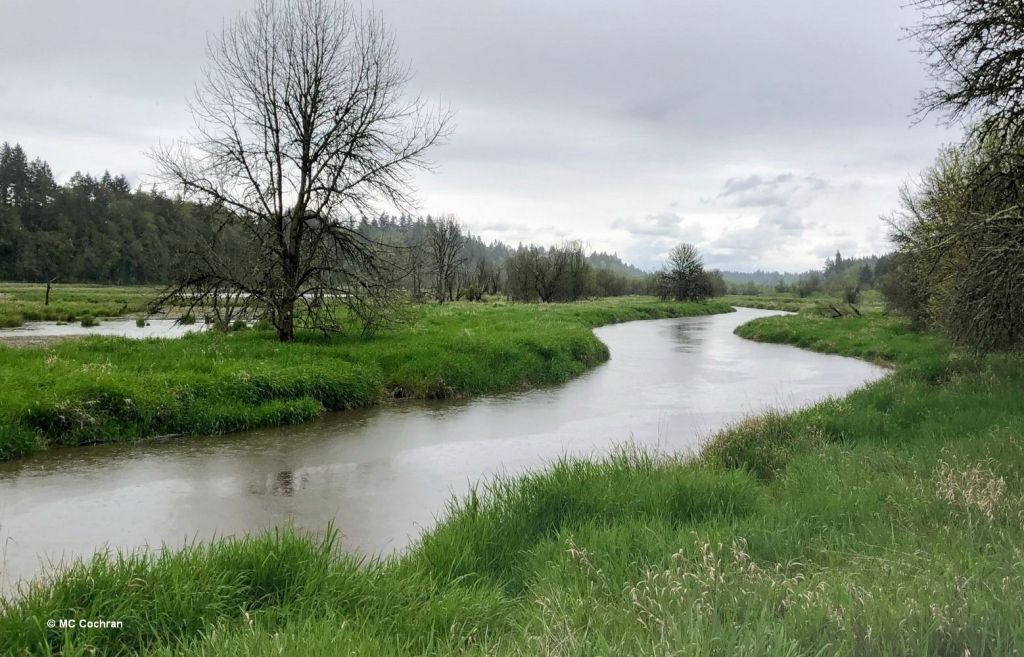
I was surprised at how low the water level was, but I guess that’s to be expected given the dry, hot weather we’ve been facing this year.
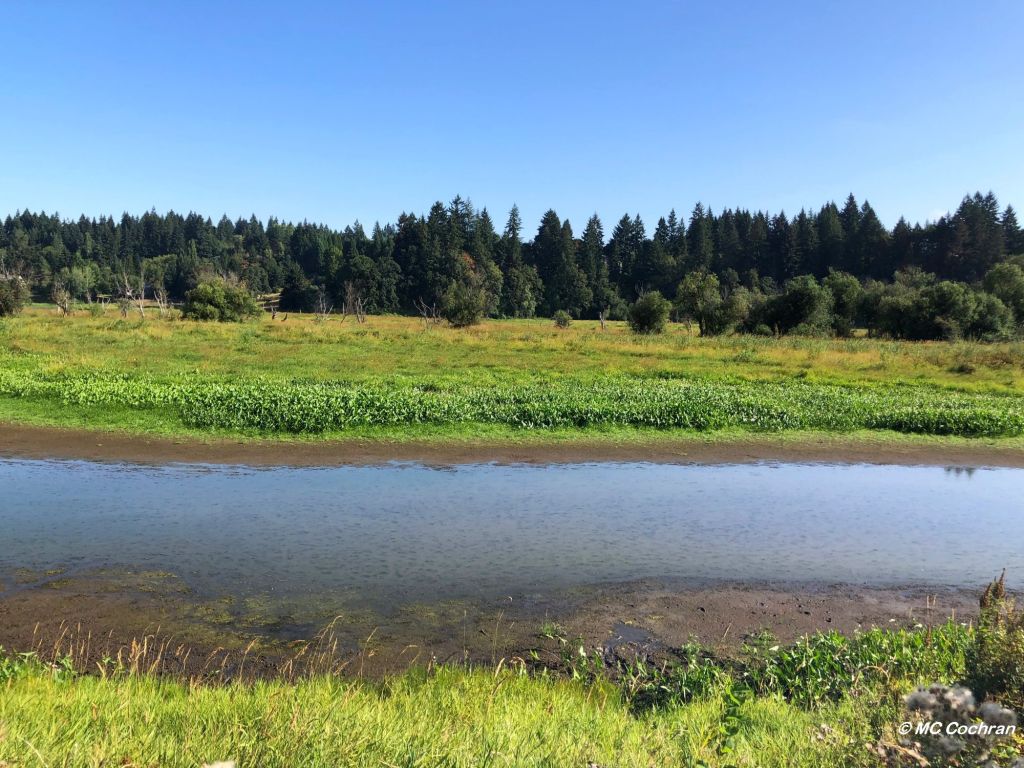
It was heating up pretty fast on the day Chules and I visited, so we didn’t walk the whole length of the trail. But we got in a good mile and did our gps check-in.
The day we went to Lacamas Lake for the Heritage Trail visit, it was actually cool and drizzly, and I was glad to have taken a warm vest along. Chules didn’t seem to care one way or the other.
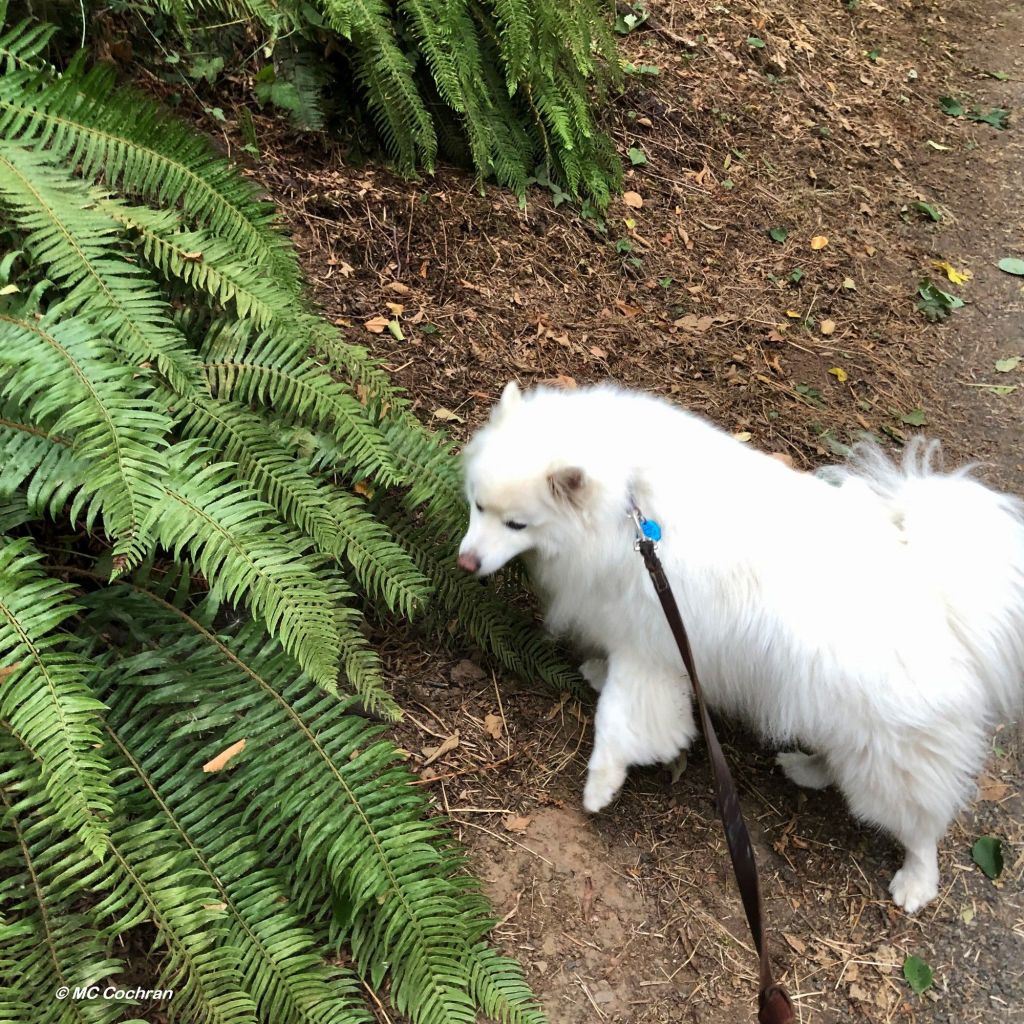
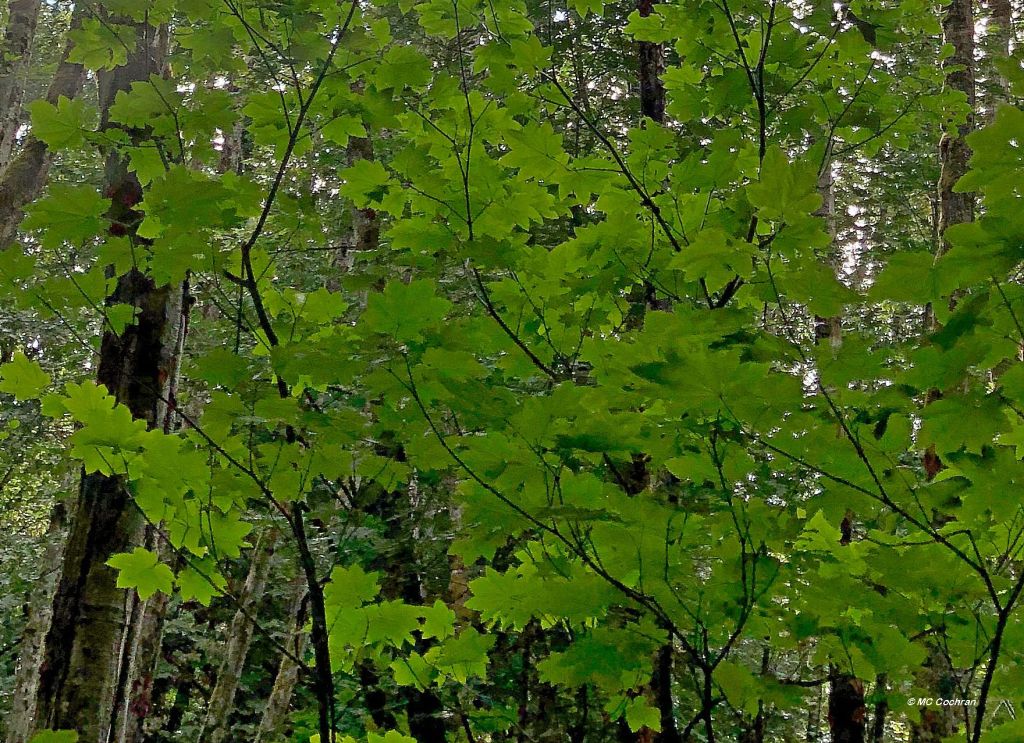
I had never been on this trail before, at least not that I recall, and I was pleasantly surprised at the tall trees, lush ferns and expansive lake.
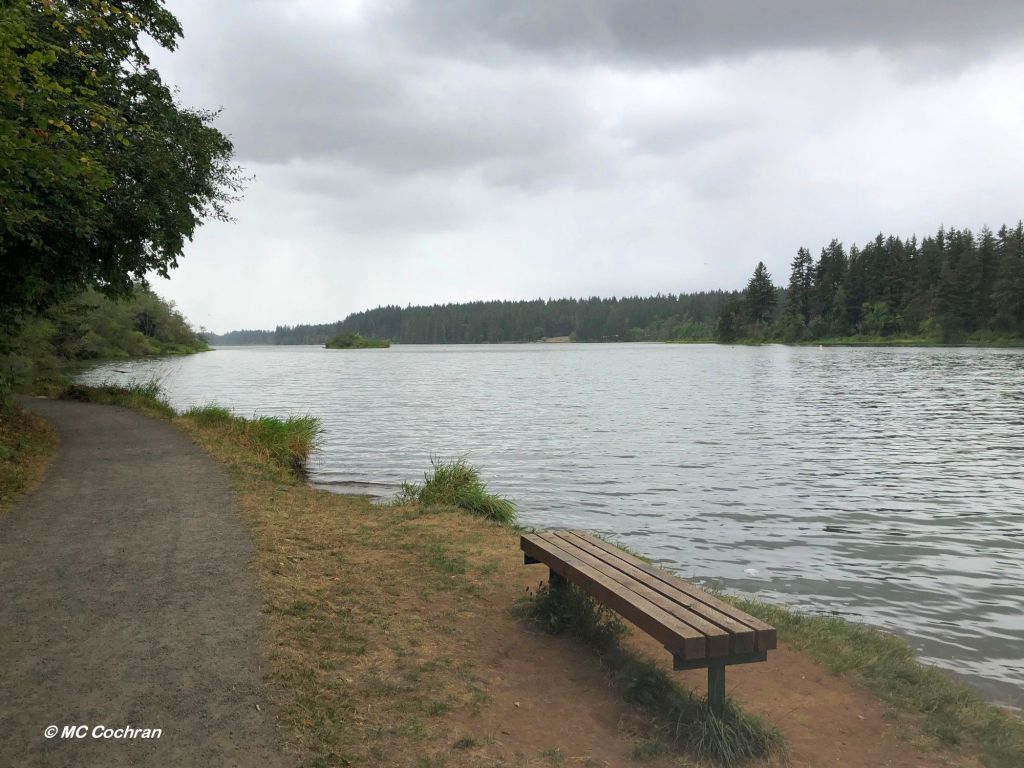
This is another candidate for a return visit in the fall to enjoy the color changes.
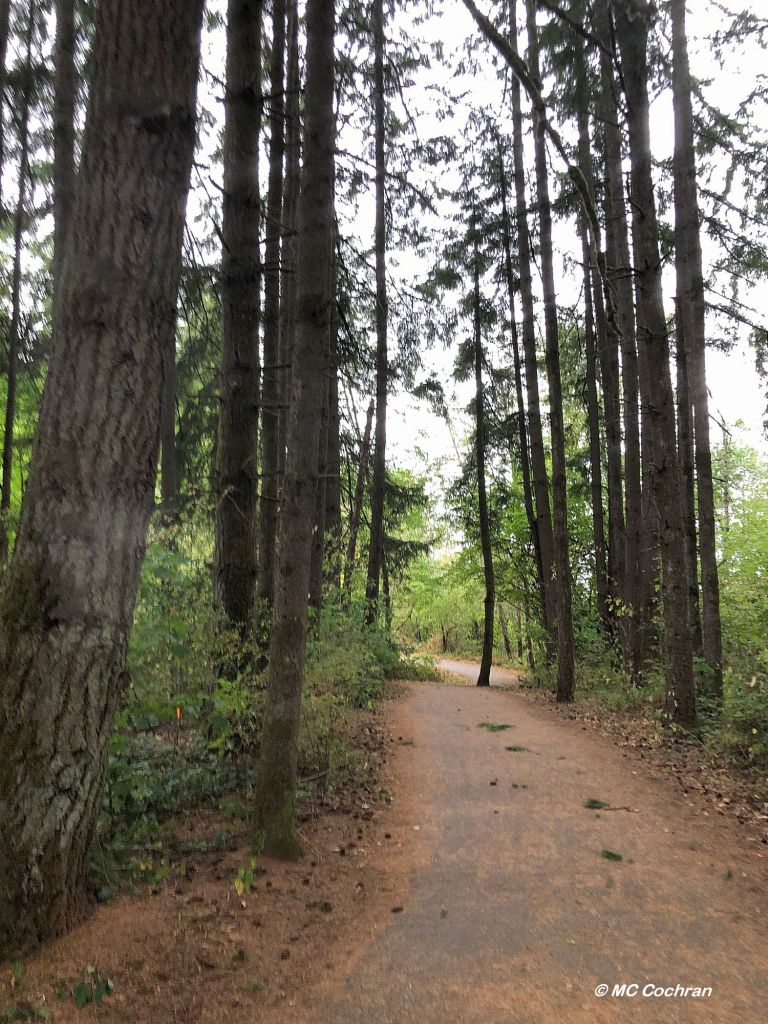
Eleven check-ins done, four to go!
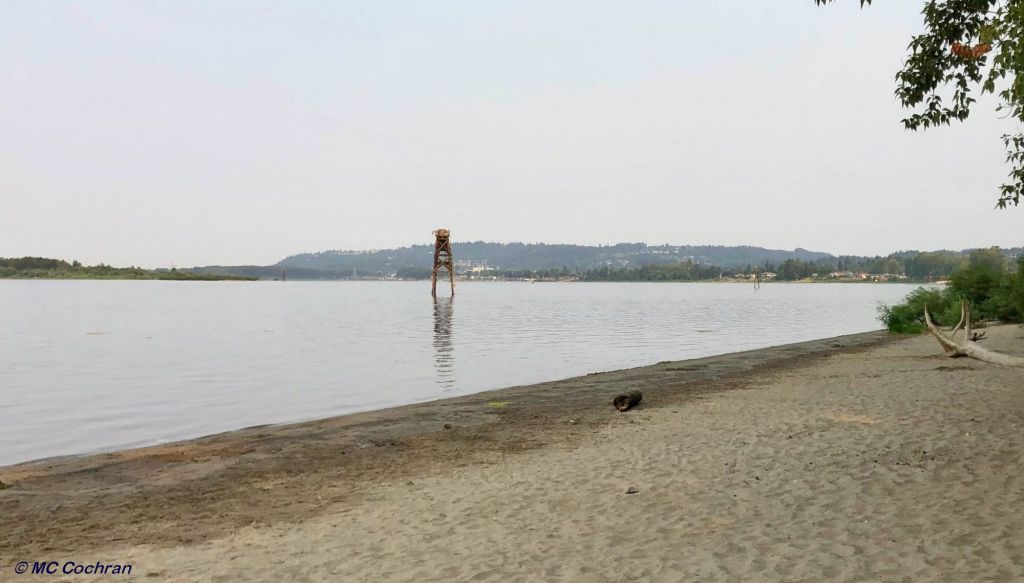
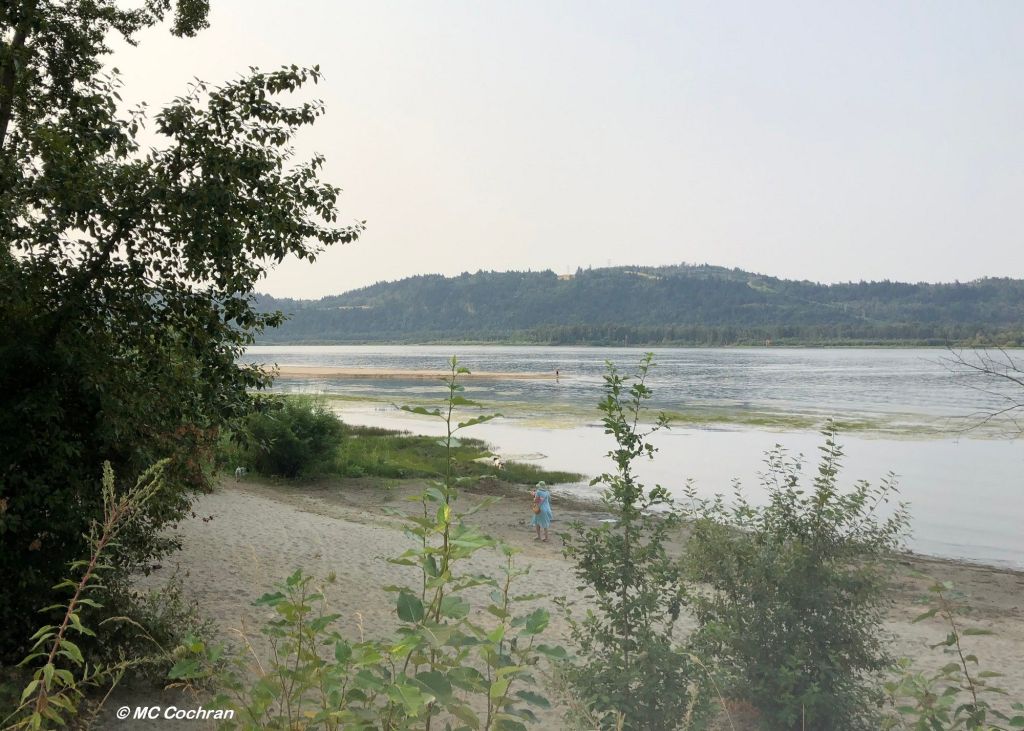
In our quest to complete the Vancouver USA Summer Spots Challenge (and thereby be entered into a drawing for which I no longer even remember what the prizes are), Chules and I made our ninth outing a trip to Washougal, Washington, which is east of Vancouver. There, the Captain William Clark Park overlooks the Columbia River.
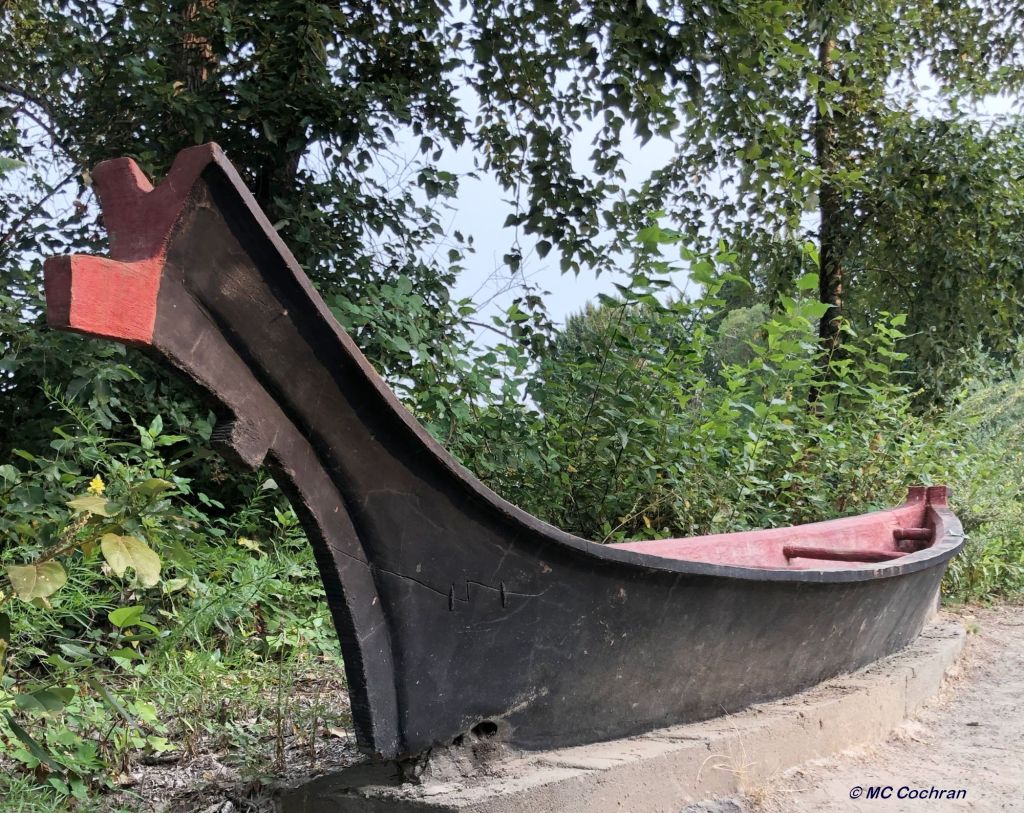
The park’s namesake, William Clark, is half of the famed Lewis and Clark explorer duo that came to the Pacific Northwest in 1806. The park features replica dugout canoes, and while I was trying to figure out if they were supposed to be Lewis and Clark’s dugouts or those of the local Chinook tribe, I learned that the explorers never described their canoes in their journals, so the replicas would be speculation at best.
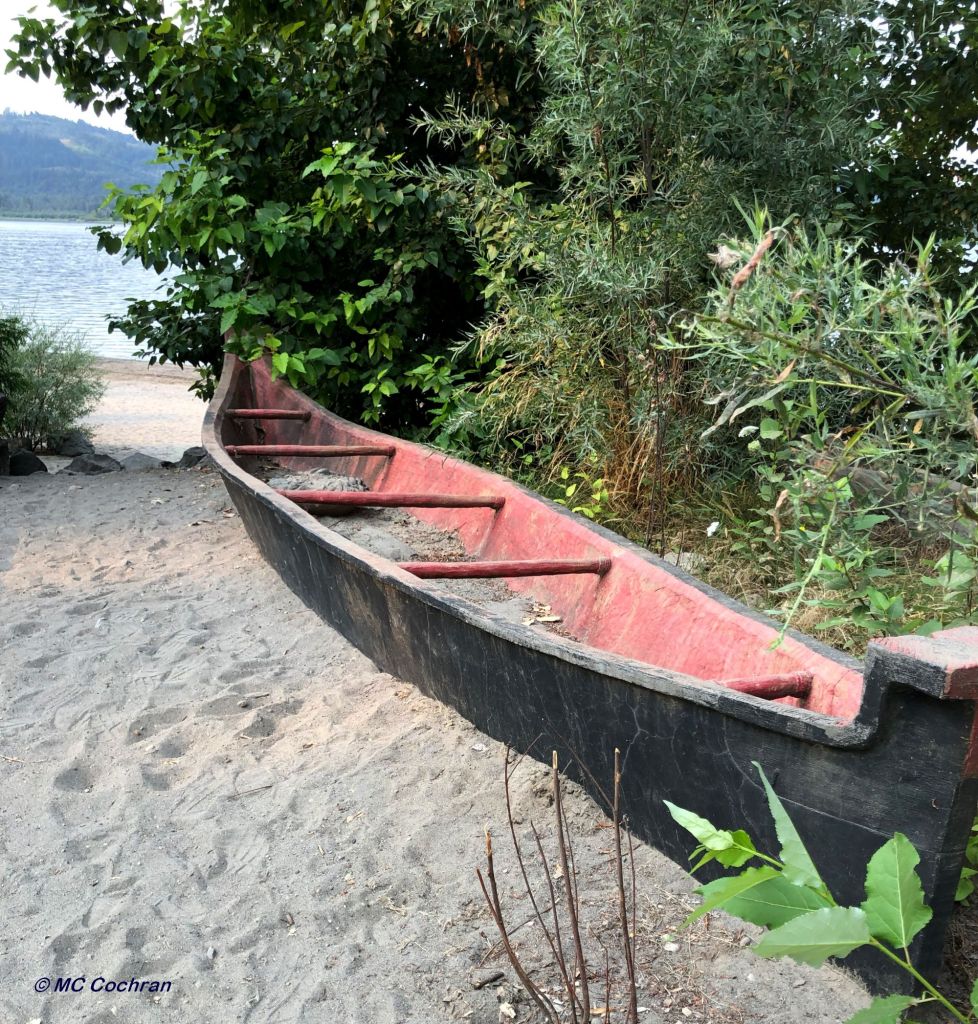
I can pretty much guarantee, though, that they didn’t have a hole at the bottom as seen in this photo:
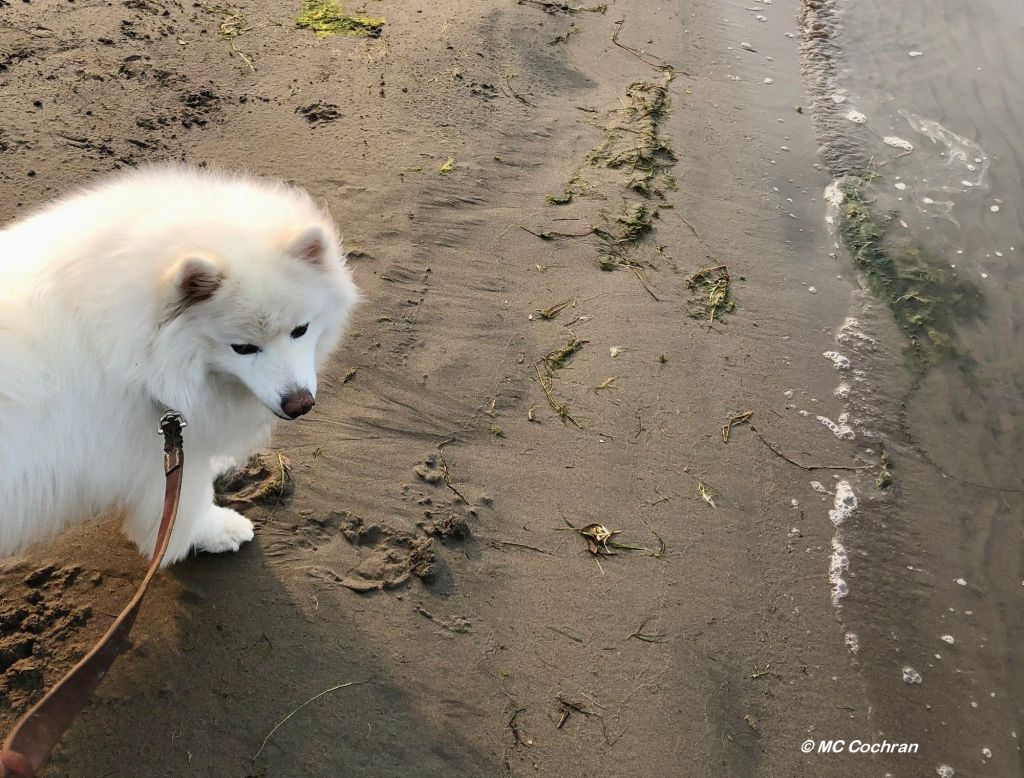
The park is also the location of Cottonwood Beach, and I took Chules down to the water to soak his tootsies, but he was not interested in the least so we made our gps check-in and headed home.
Nine check-ins down, six to go!
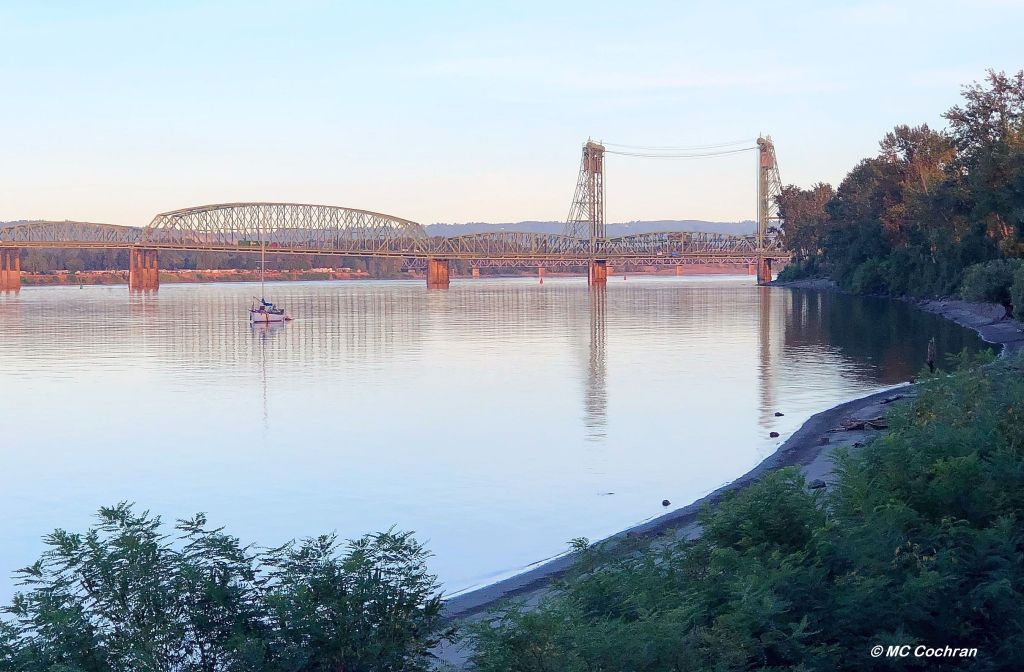
At the halfway point of the Visit Vancouver USA challenge (an app designed to encourage participants to get outdoors and explore the area), my eighth walk took me to the banks of the Columbia River and the Waterfront Renaissance Trail.
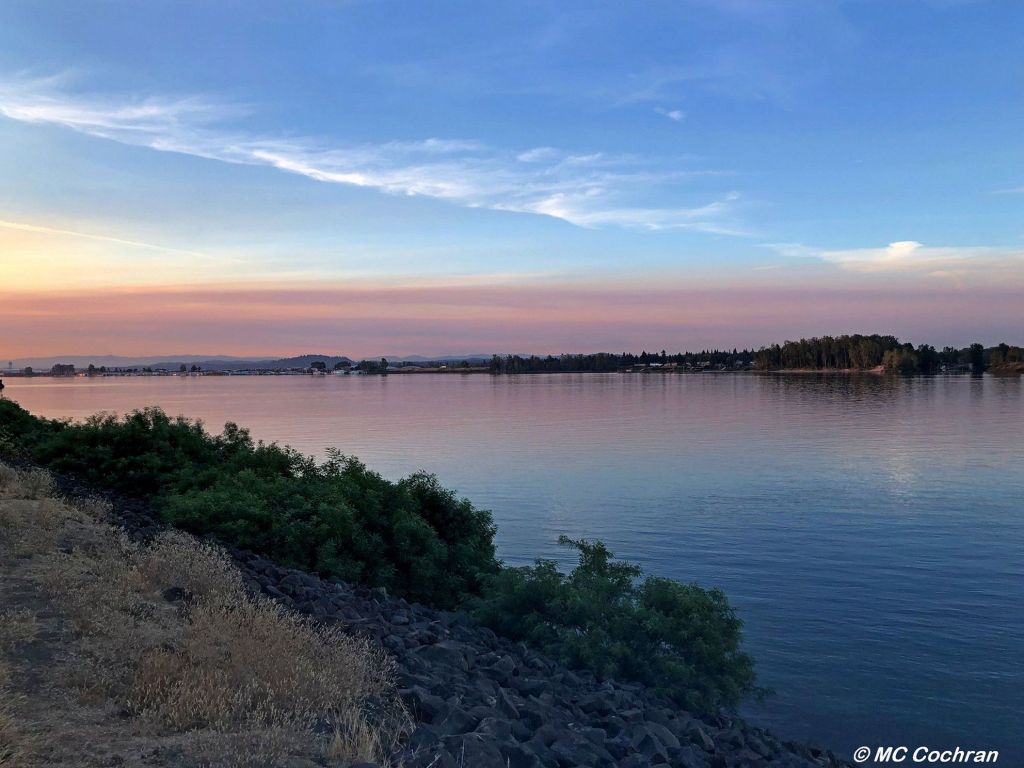
Chules and I went early in day to avoid the “heat dome” high temperatures, so we managed to catch a bit of the sunrise pink sky.
We’ve visited this area many times, so we strolled the familiar walkway for about a mile. I always enjoy seeing the art installations, including this sculpture of Ilchee, by artist Eric Jensen.

The sign next to the sculpture tells us that:
“Ilchee, or ‘Moon Woman,’ was the daughter of Chinook Chief Comcomly. Ilchee arrived in the Fort Vancouver area in 1813, where she met and married her father’s successor, Chief Casino. She is depicted gazing west down the Columbia River, toward her family’s ancestral home at Chinook Point on the Washington coast.”
Farther east on the trail is another public art piece titled “Wendy Rose,” by the artists Women Who Weld (Sharon Agnor, Wendy Armstrong, Sumi Wu, Jennifer Corio & Kathy Wilson).

The plaque there states:
“Wendy celebrates the legacy of the women who entered the workforce at the Kaiser Shipyards during World War II. Wearing a bright red polka dot scarf made of glass, Wendy strides across the Bonneville Dam and is surrounded by other local symbols of the era.”
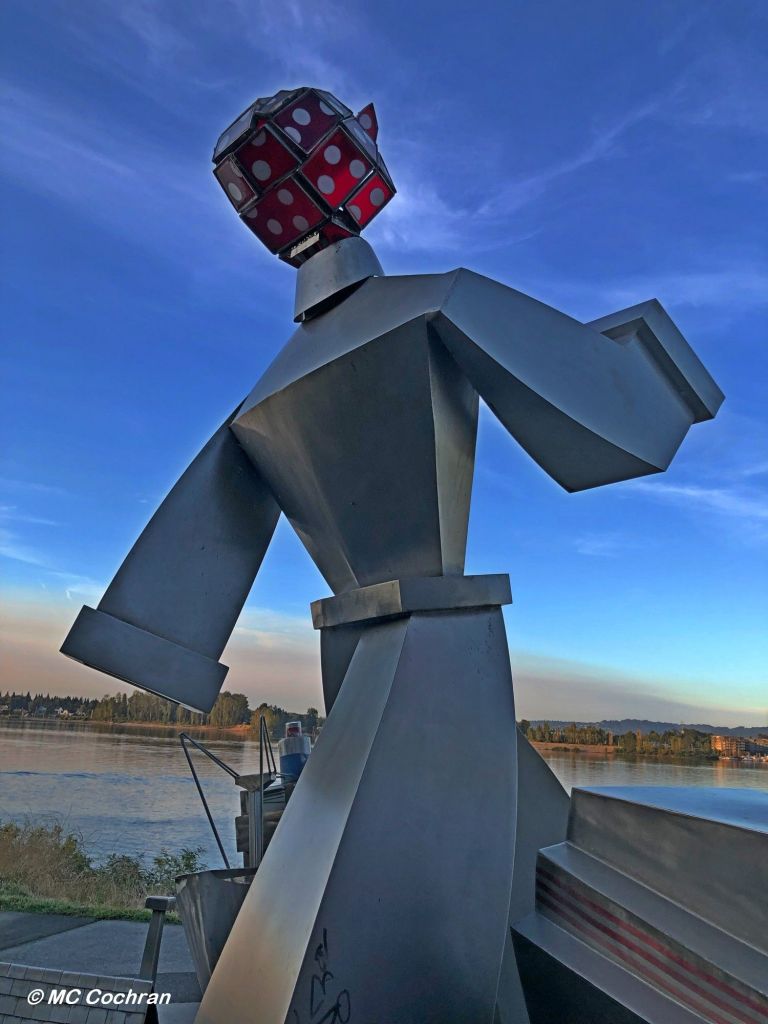
An interesting contrast between Ilchee and Wendy Rose, historically (and artistically) speaking.
So that’s eight site check-ins; seven to go!

Also an entry for the Photographing Public Art Challenge (PPAC) hosted by Marsha and Cee.
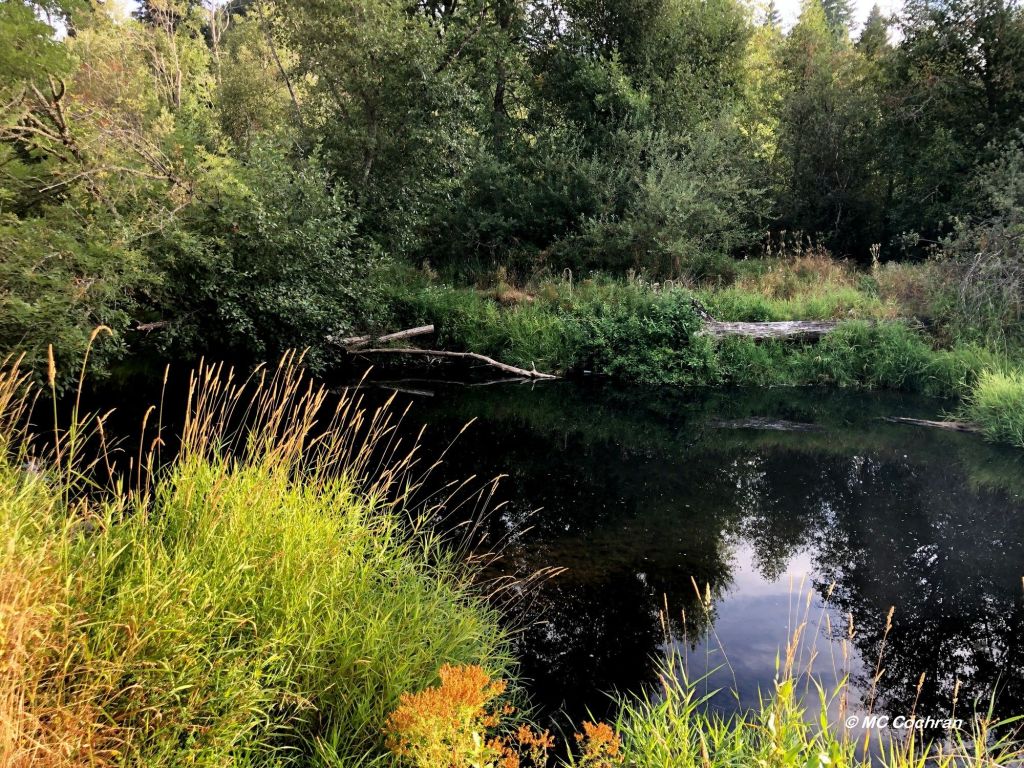
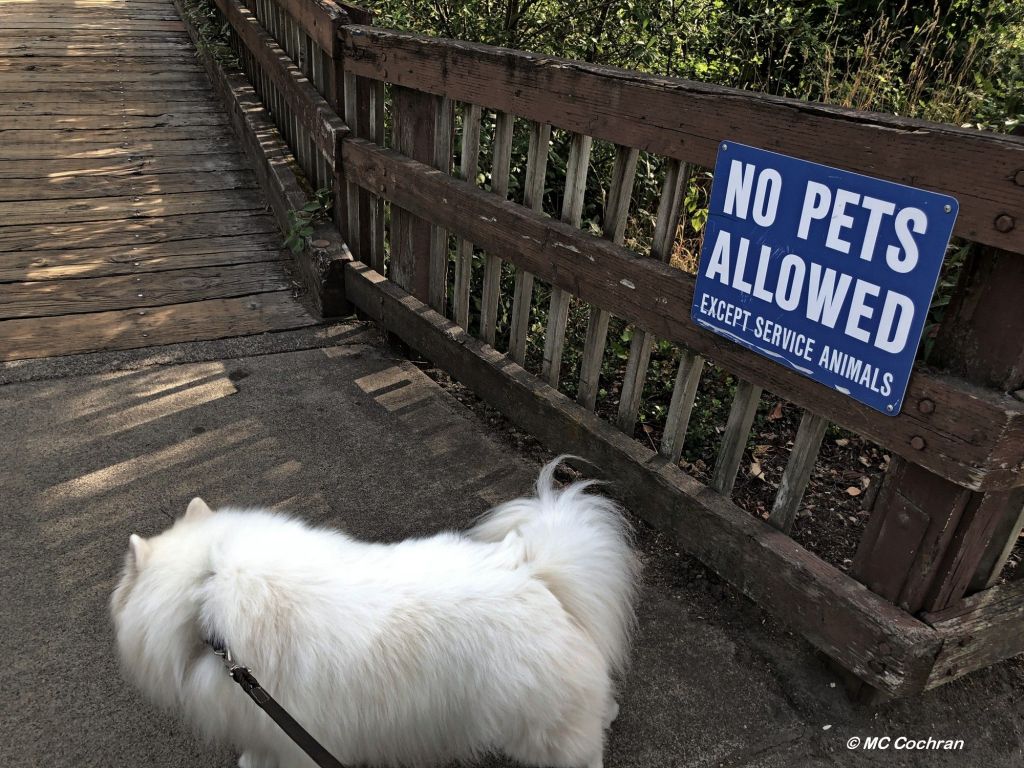
The 7th outing for the Summer Challenge walks took us to Klineline Pond. Fortunately we could do our gps check-in from the parking lot because – after paying the parking fee – we discovered that my fur buddy Chules was not welcome at the pond.
So we took a photo from afar. The pond area appears to be very lush and green.
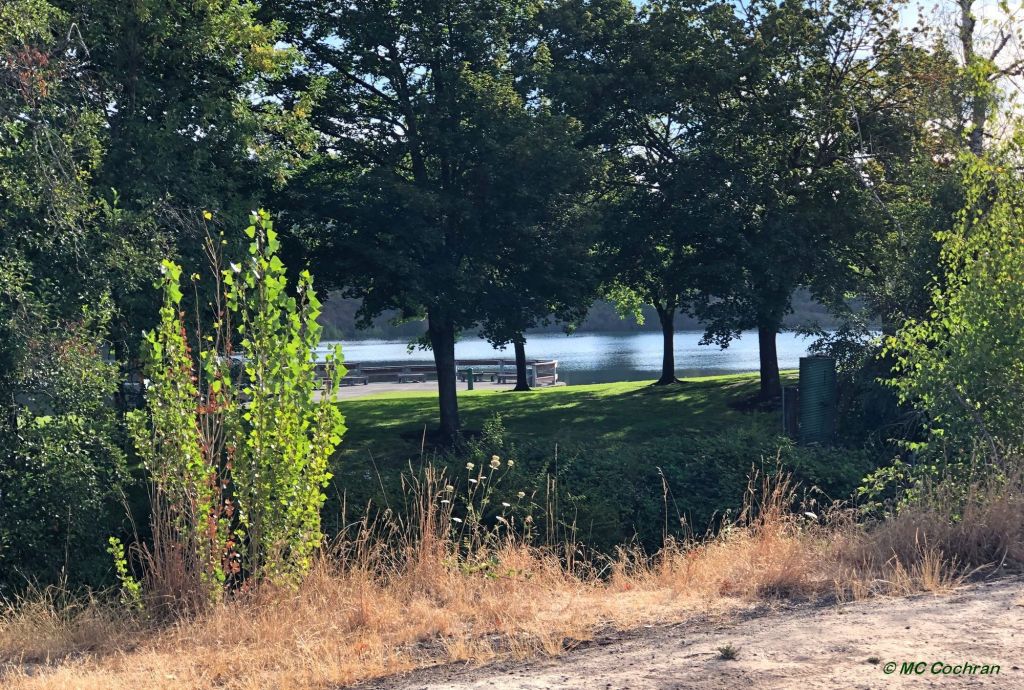
See that dried brown area in the forefront of the pic? Yeah, that’s where Chules and I were delegated to be. Nonetheless, there is a path that parallels Salmon Creek, the stream that feeds into Klineline Pond, so we took that and got in a nice little scenic walk.
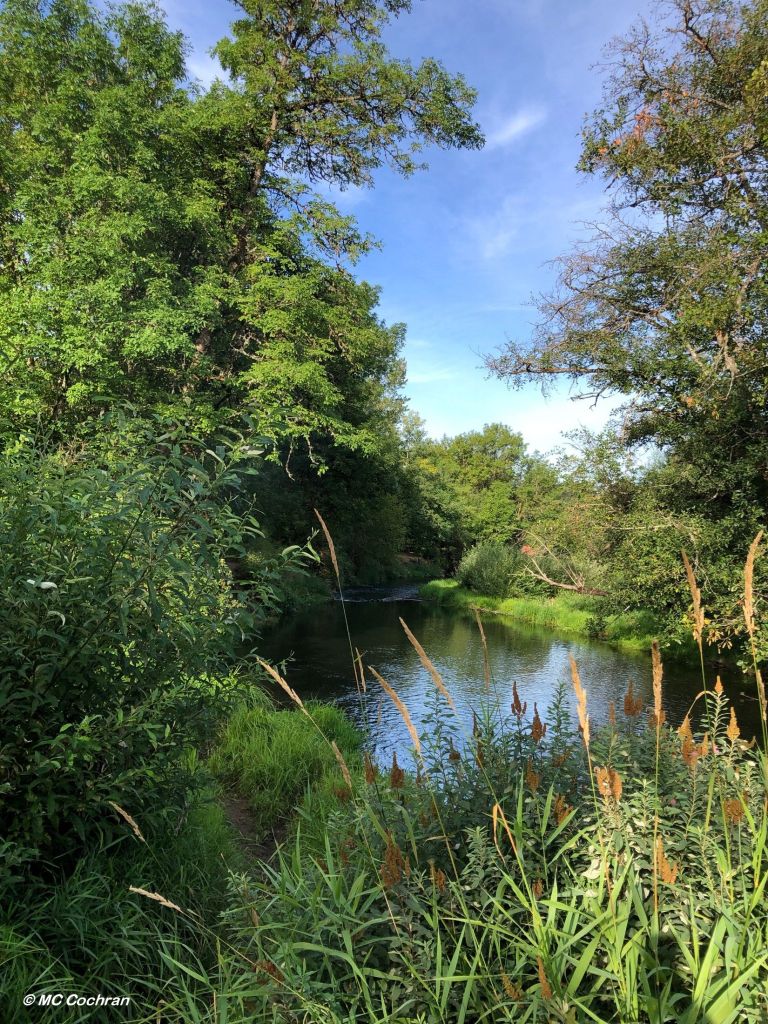
I think Chules took this next pic. I did my best to straighten it. He thinks it looks great.
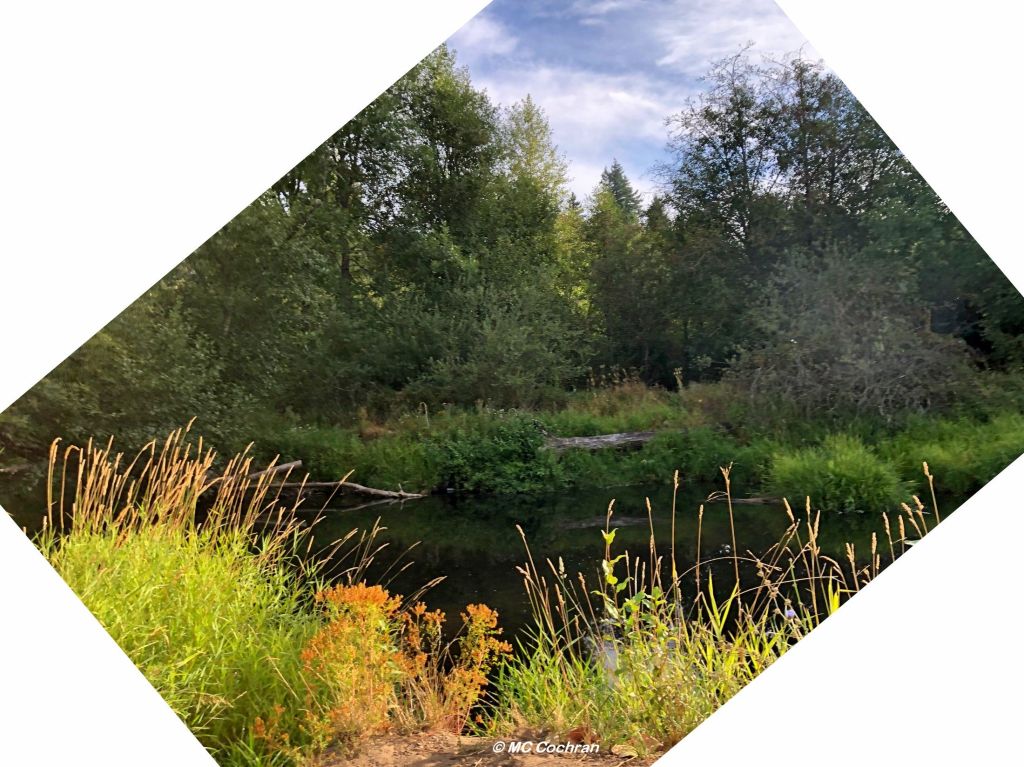
The next photo is straight. It’s the tree that’s crooked.
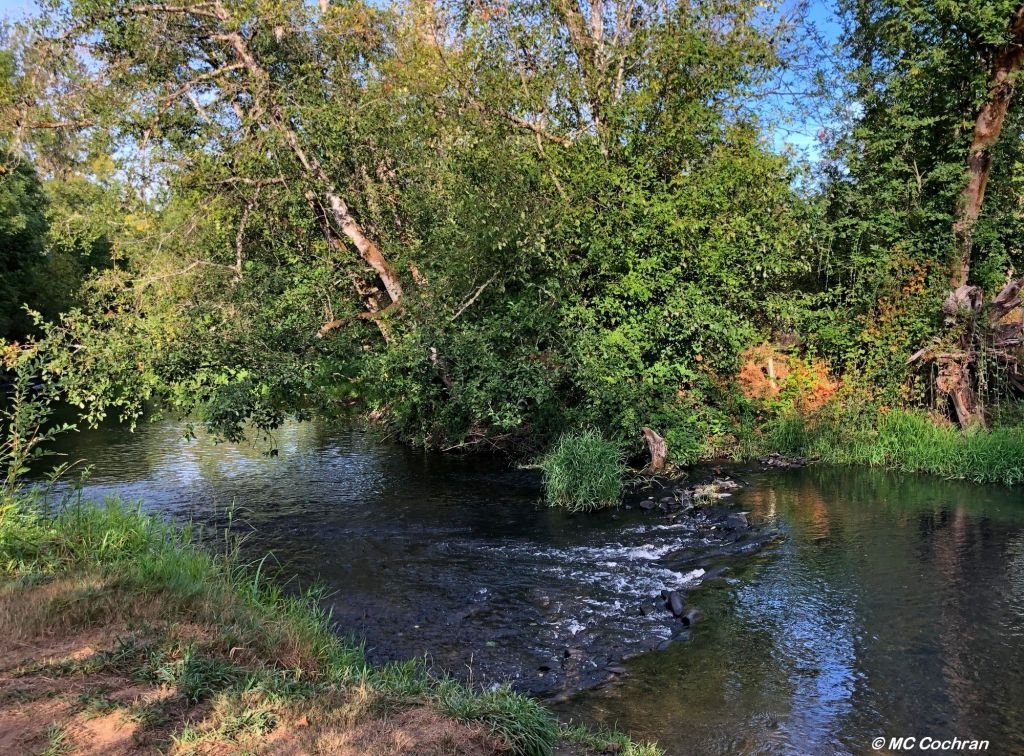
Seven site check-ins down; eight to go!
The next two checkpoints on my Summer Challenge site visits were Vancouver Lake Park and Frenchman’s Bar Park.
I went to Vancouver Lake first. I have to admit I wasn’t super impressed with the park. It’s got picnic tables and volleyball nets set up on the sandy beaches, and I saw folks headed to the water with kayaks and picnic baskets. But unless I missed something, there’s really not much in the way of “communing with nature” potential.
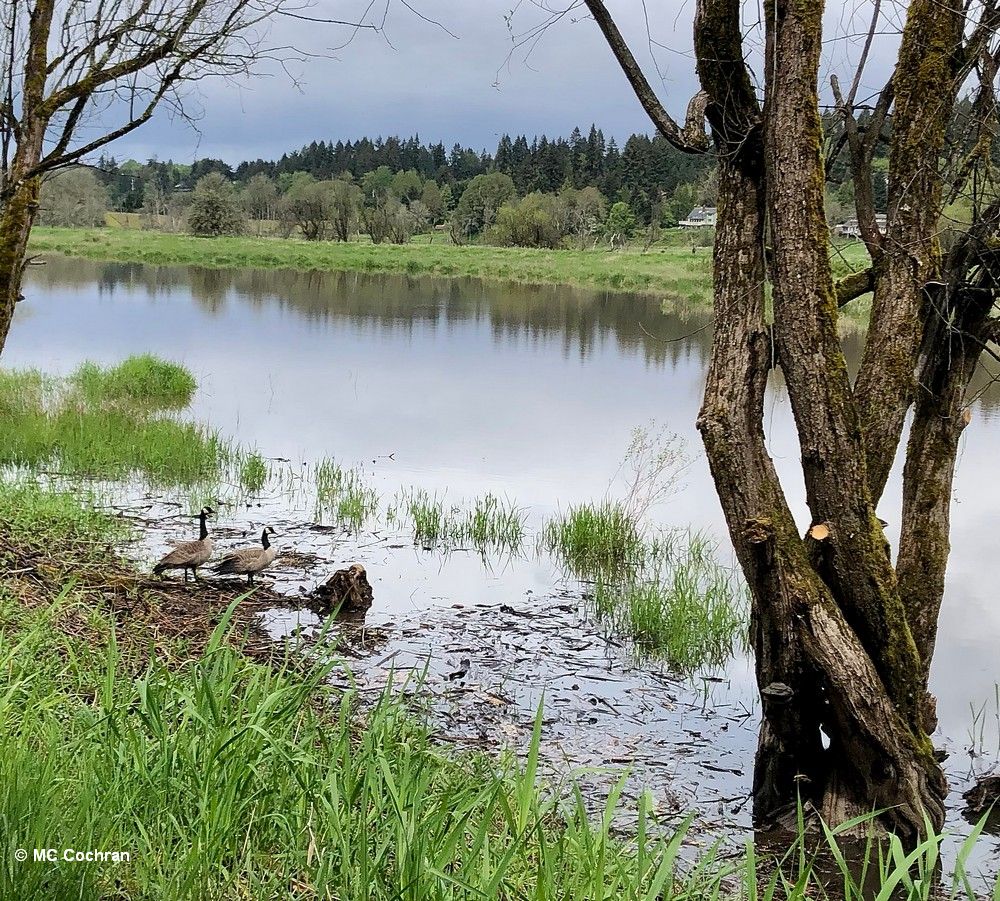
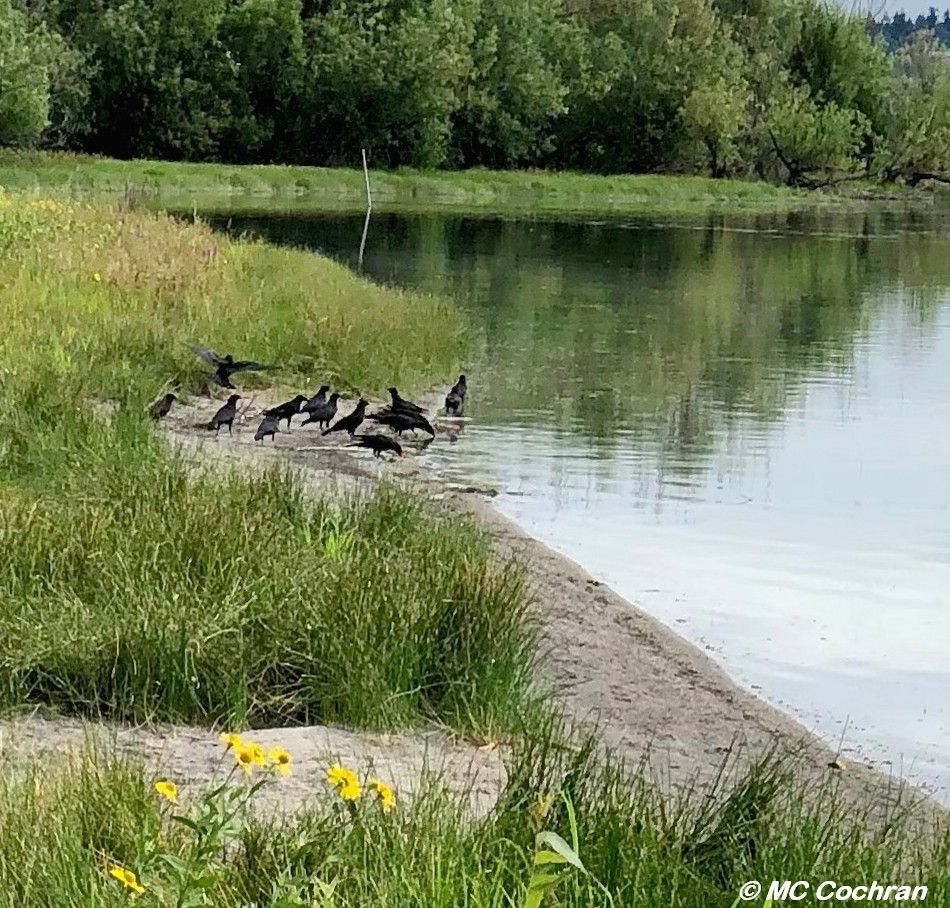
Chules and I walked down the beach a ways and found a gaggle of geese and a murder of crows. (The murder scene is in the photo at top.) Beyond that, we didn’t see much to crow about. But we were able to check off another location for the challenge!
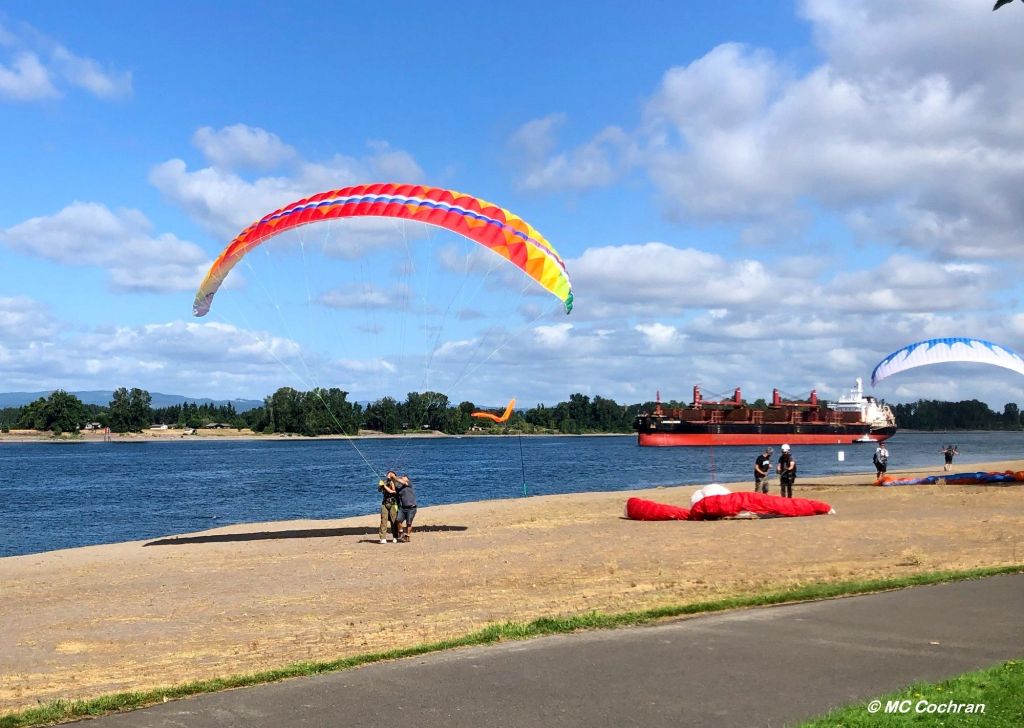
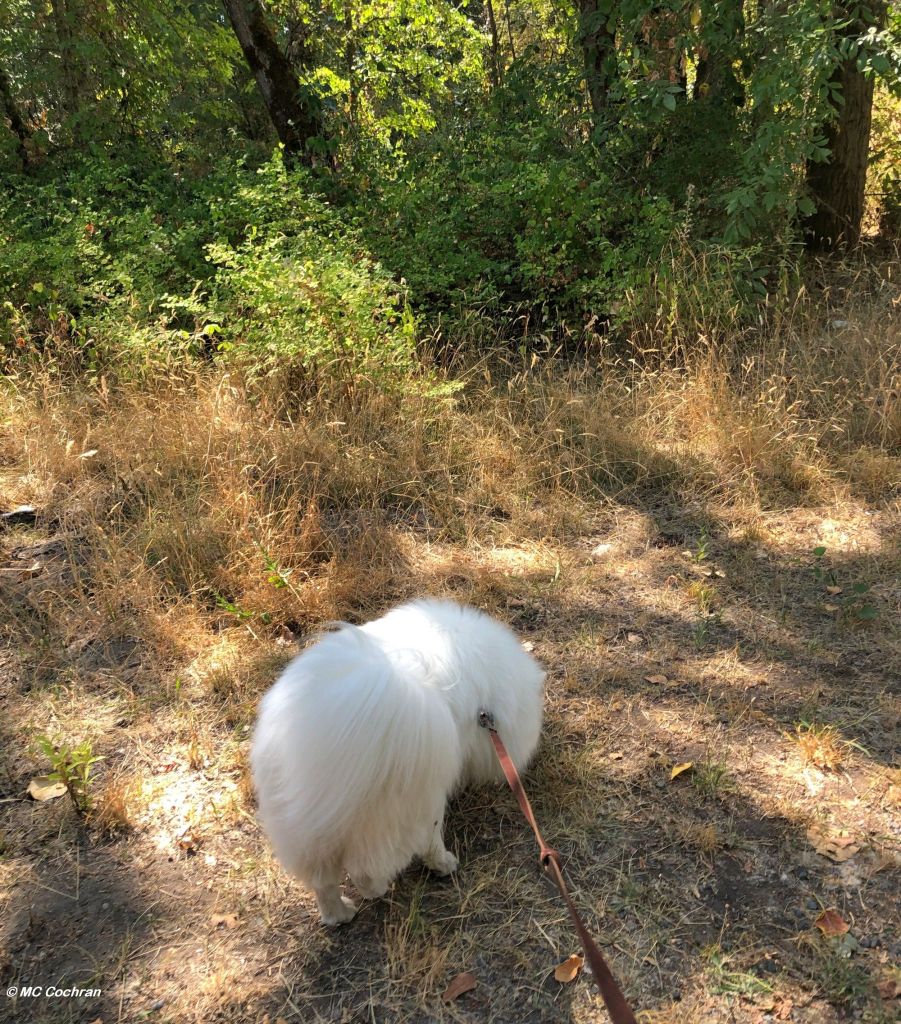
Frenchman’s Bar Park is a mile to the west of Vancouver Lake (as the proverbial crow flies), on the shore of the Columbia River. We went early in the morning to avoid the +100F degree heat expected later that day, but the place was already busy with paragliders trying to launch from the beach, a wedding (we assumed based on the white-gowned woman and the nervous looking man at her side), and a multi-generational family wandering around at the behest of a photographer conducting a frenzied photoshoot.
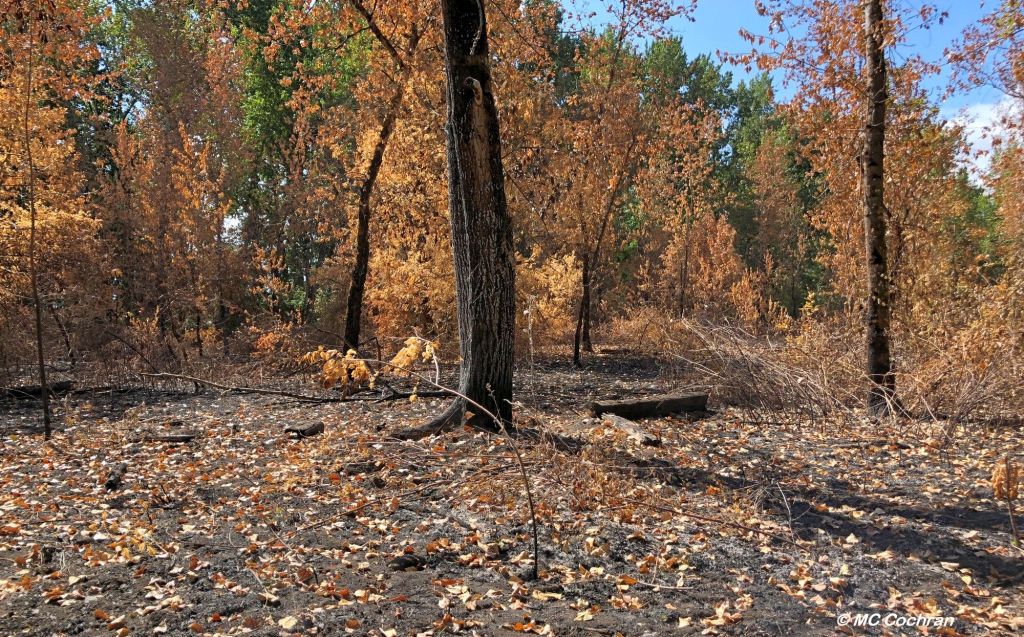
Chules and I tried to bypass all of that, and ended up following a gravel/dirt trail north to the river bank. We passed through a sizeable section of woods that had been burned recently, likely the result of an uncontrolled (and illegal) campfire.
Then we circled back where the photographer was encouraging a couple of reluctant kids to snuggle in next to grandma, the wedding party was making its way to tables laden with food, and the deflated paragliders were packing up their deflated gliders. We never saw any of them successfully launch. (Paragliders, that is… hopefully the wedding couple’s launch into married life will fare better.)
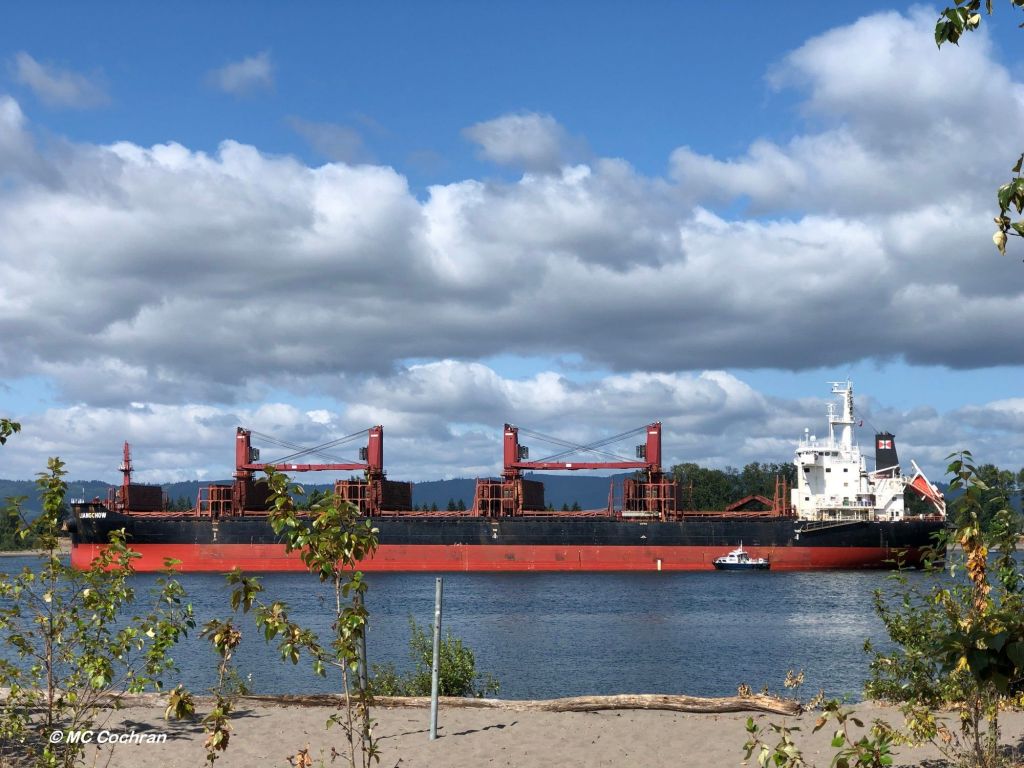
We will likely go back to Frenchman’s Bar, but unless Chules develops a penchant for beach volleyball, we won’t be rushing back to Vancouver Lake.
Six site check-ins down, nine to go!
Continuing with my Summer Challenge walks, my third and fourth outings were practically at the same location, so I’ll cover them both here.
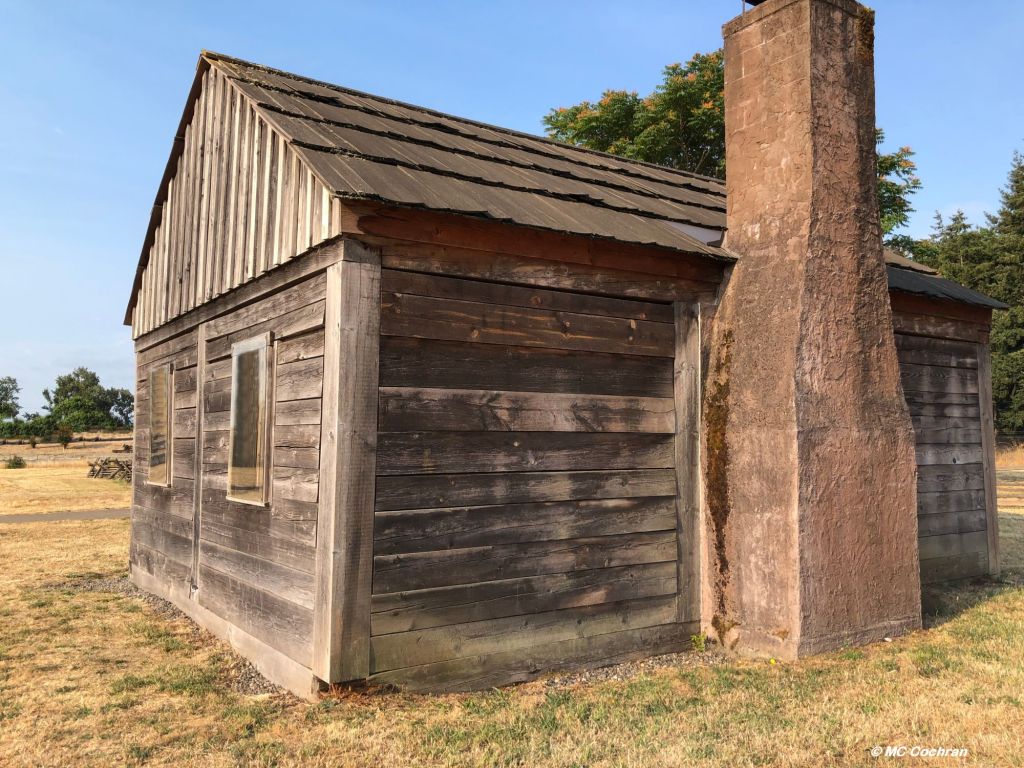
Fort Vancouver was established in 1824 as a fur trading post by the Hudson’s Bay Company. The company abandoned the fort in 1860 and moved their operations north into British Columbia. The fort was destroyed in a fire in 1866. In 1948, the site was designated as a national monument, and in the mid 1960s, the National Park Service began building the full-size replica structures that stand on the site now.
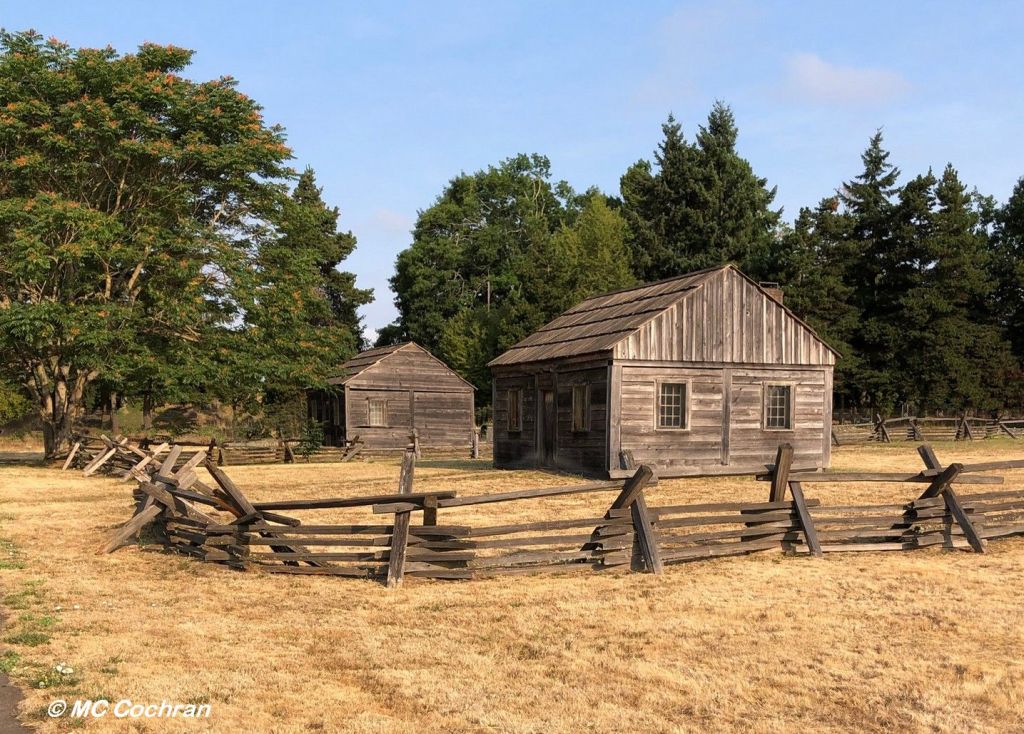
The day Chules and I visited, the Fort was closed to the public, so we “checked in” via gps, and then walked the paths through the adjacent fields of tall grass and wildflowers.
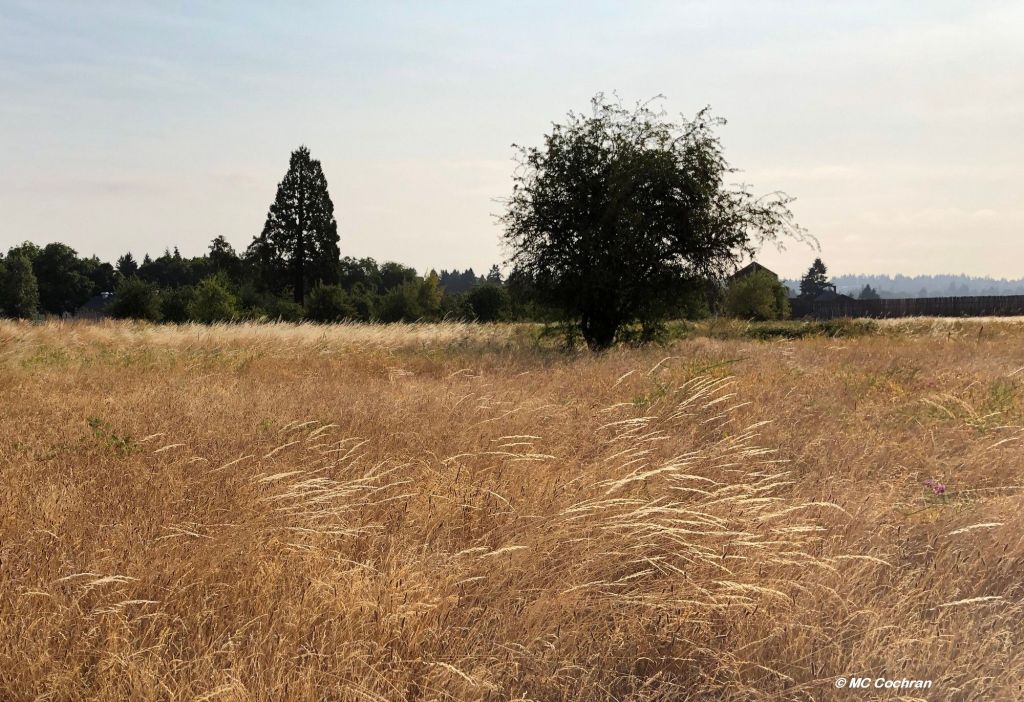
The following day, we returned and took another path which is part of the Discovery Historic Loop, and leads to the Vancouver Land Bridge which crosses over Hwy 14 and leads to the Old Apple Tree Park.
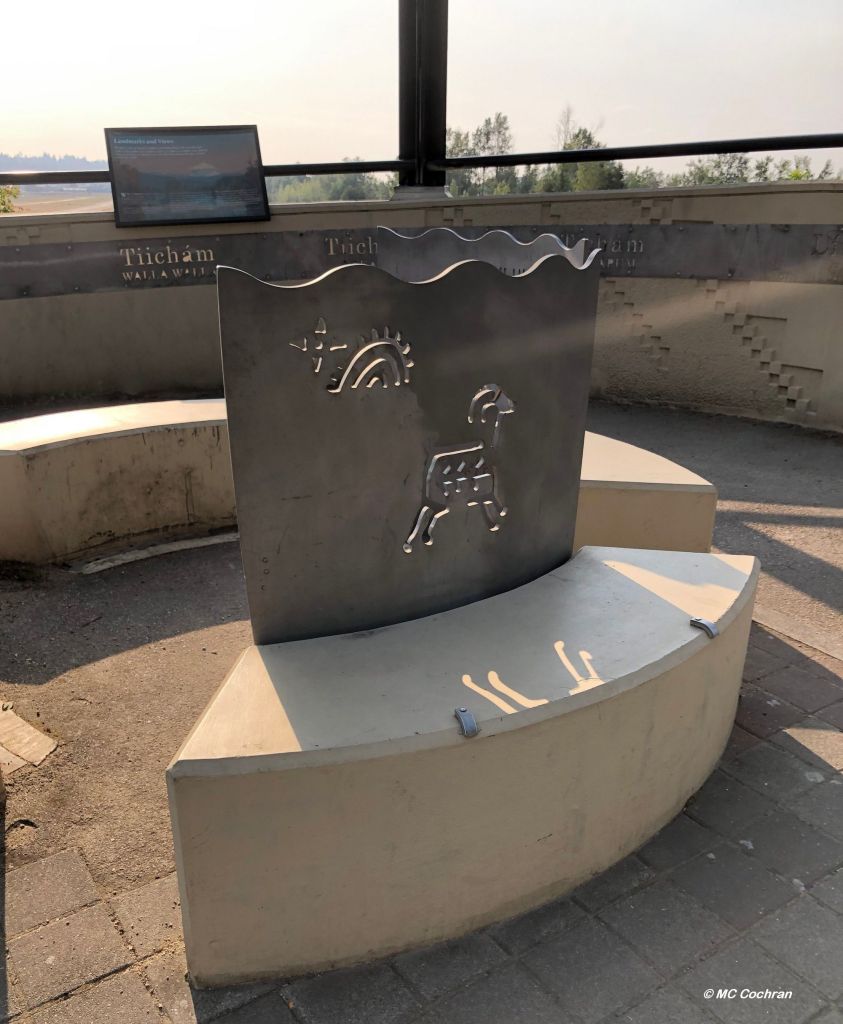
The Old Apple Tree, planted in 1826, was – until its recent demise – the oldest apple tree in the Pacific Northwest. If I remember correctly it toppled in a storm, and there is an old stump and a young apple tree there now.
I thought the land bridge was the gps checkpoint, but I wasn’t able to check in until I reached the apple tree, er – stump. The entire Discovery Historic Loop is 2.3 miles, and actually encompasses two other checkpoints that I will cover later.
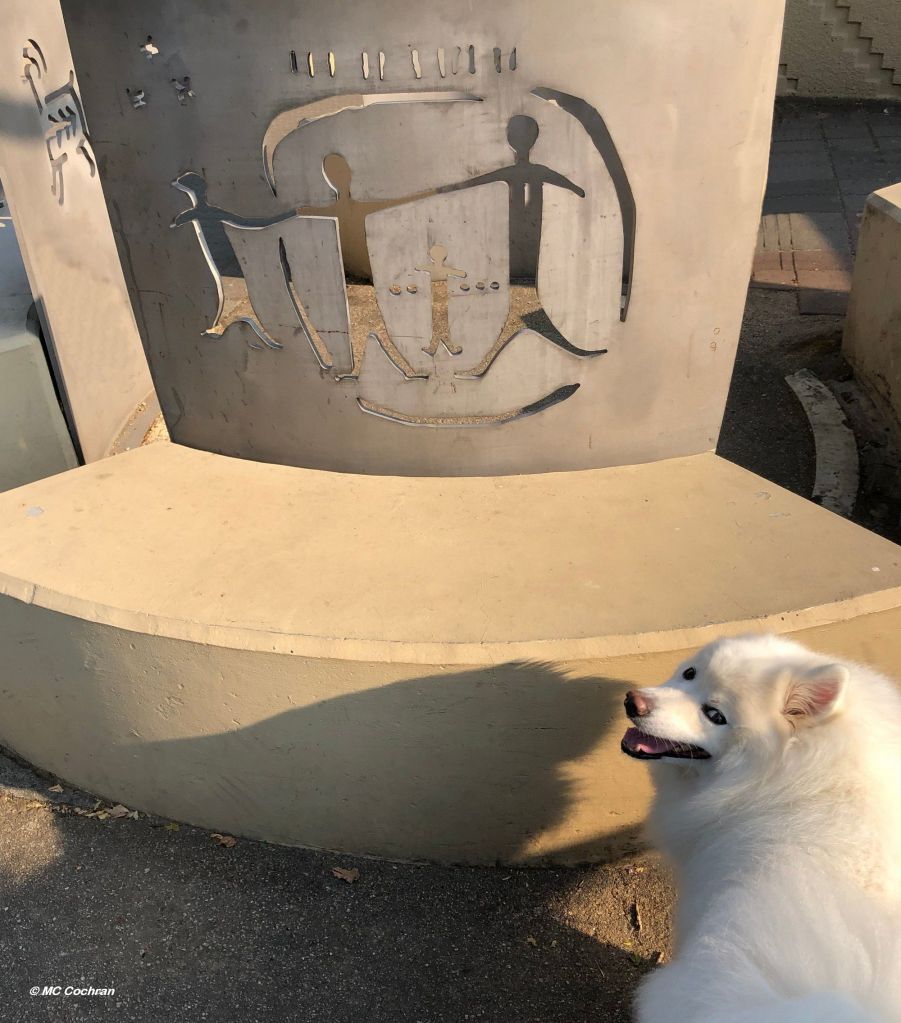
I will likely return to Ft. Vancouver some other time to tour the actual fort. Chules might have to stay home for that trip. No dogs allowed inside the fort.
Four sites down, 11 to go!
As stated in my last post, I am participating in a local summer “challenge” that aims to get folks out and about to nearby parks, nature trails and other fun outdoor locations. I described my first outing of the challenge here.
My second walking adventure took me to:
Evergreen Trail at Columbia Springs
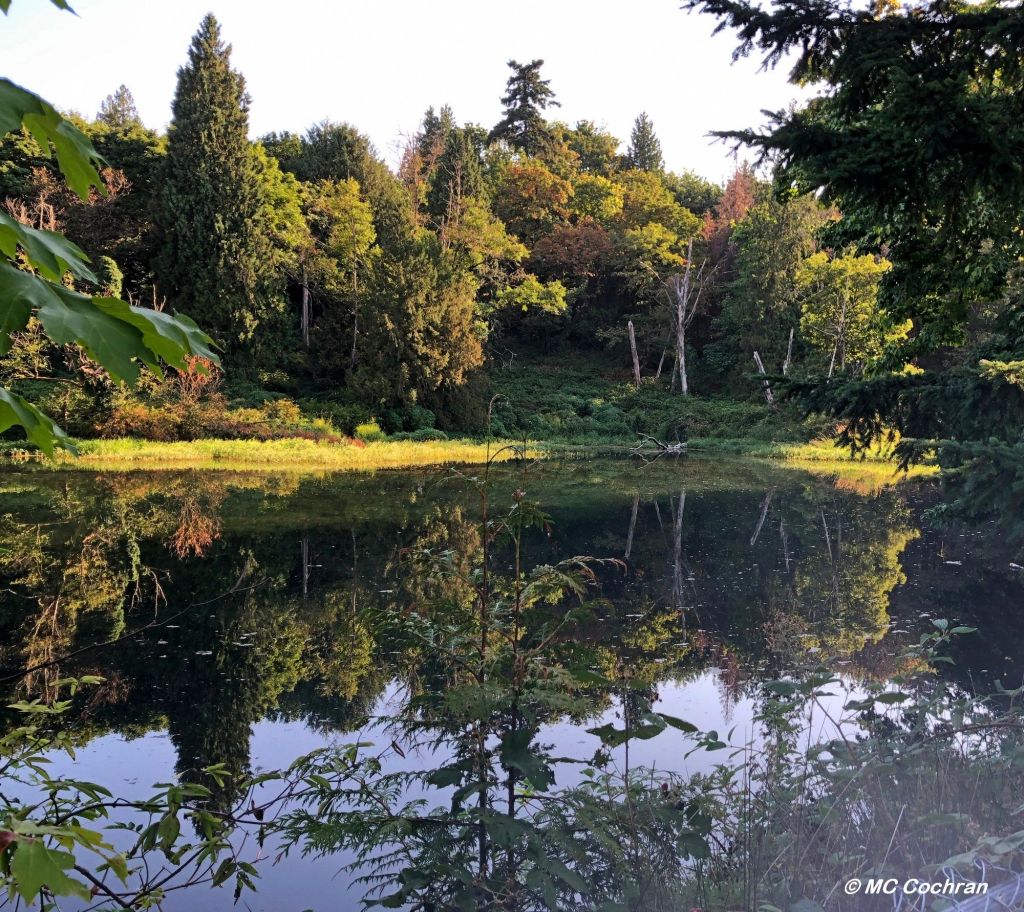
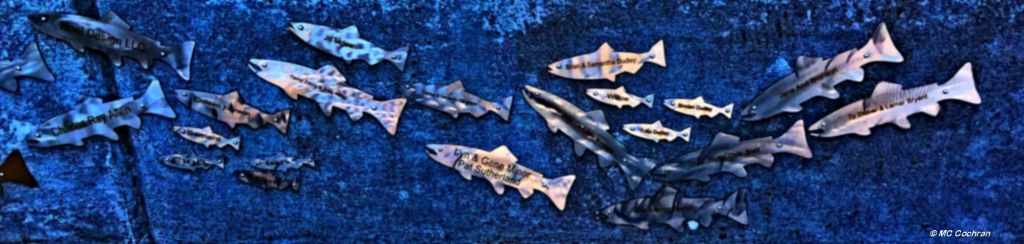
The Evergreen Trail starts at the Columbia Springs Environmental Education Center in Vancouver, WA. The center is a nonprofit that teaches folks about stewardship and environmental science. There is also an active fish hatchery on site that raises steelhead, rainbow trout and chum salmon.
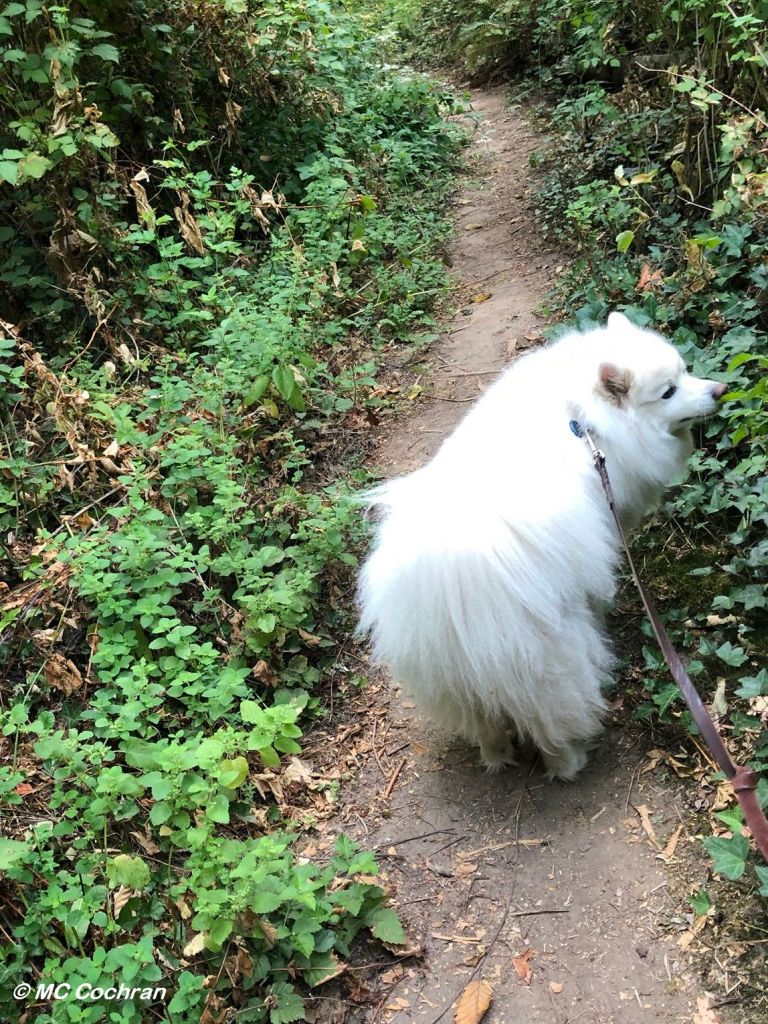
Chules and I made our way along trails flanked by native and nonnative flora. It all smelled wonderful to Chules.
There are a number of paths to choose from, all of them relatively short and easy to walk.
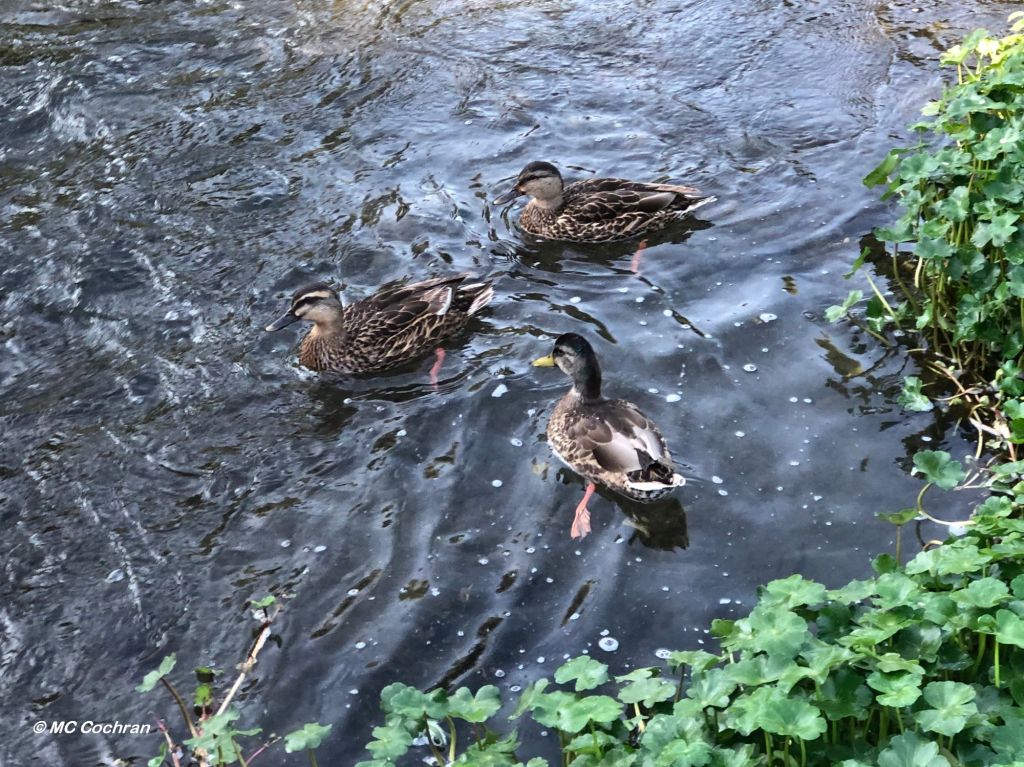
We met some very friendly ducks who apparently thought we’d be easy marks for snagging a snack. They lost interest and swam away as soon as they realized we were snackless.
All in all, Columbia Springs made for a nice morning adventure, and I got another location checked off my list.
Two down, 13 to go!
 What Rhymes with Stanza?