I’m not the most neighborly person in the world. And recently I seem to be gravitating toward lawn and garden projects that involve fences, privacy screens, hedges, wide moats filled with man-eating piranhas… well, I would if I could.
Last weekend I invested in a number of boxwood shrubs to create a hedge between my driveway and the driveway of the house next door. Once I got the shrubs planted, I gathered up the containers they had come in, the tags I had cut off of them, and the little stick things that get shoved into the containers to identify the plants and tell you how to water them.
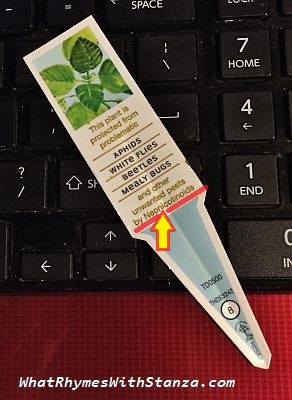
Stick Thing
I never really read the stick things. I let nature decide when to water the plants, intervening only when I hear the plants hallucinating that the mailbox is a shimmering waterfall.
I happened to glance down at one of the stick things in my hand, and my eye caught a word that began with “neon.” Idly wondering if my hedge was going to glow in the dark or light up with beer signs, I took a closer look. The stick thing read:
This plant is protected from problematic
- aphids
- white flies
- beetles
- mealy bugs
and other unwanted pests by Neonicotinoids.
These pesticides are approved by the EPA.
Since I try to avoid pesticides in my yard, I was not impressed that someone had taken it upon themselves to determine which pests were wanted or unwanted in my hedge. But I’d already planted the boxwoods, so I made a pledge to read the stick things more carefully in the future, and went inside the house to clean up.
After scrubbing the dirt (and pesticides, apparently) off my hands, I opened my laptop and checked my Facebook feed. The first post to grab my eye was one by The Mother Nature Network. A photo of bees crawling over a honeycomb was accompanied by the heading:
Lawn Care Giant Announces Plan to Phase Out Bee-Harming Pesticides
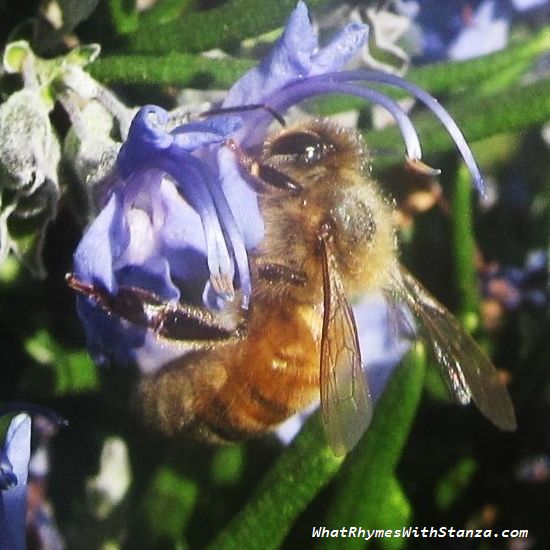
Very cool! And about time. The declining bee population is a major problem for the environment.
Then I read the first line of the click-through article:
“Ortho’s decision to nix neonicotinoids is an important one.”
Neonicotinoids… hmmm… where had I seen that word? Neon—
OMG!!! My glow-in-the-dark boxwood hedge was going to turn me into a bee killer!
I started researching.
⇒ Maybe I could just rinse the pesticide off. (No, you can’t).
⇒ Maybe the effects of the pesticide are short-lived. (Wrong again.)
⇒ Maybe boxwoods don’t have flowers that will attract bees to them. (Yes, they do. In fact, bees love boxwood flowers.)
The only “solution” I could find: pluck off all the blossoms in the first blooming season so the bees don’t get to them. In subsequent seasons, the poison won’t be so harmful. So they say.
You know what a boxwood flower looks like? Yeah, neither does anyone else. They are described as “inconspicuous.” Small and yellow-green in color, they pretty much just blend in with the leaves.
I’m at a moral crossroad here. Do I:
- dig up the plants, dispose of them, and find some that aren’t going to be lethal? Or
- swear an oath that I will make daily searches during blooming season, scouring the hedge for hidden flowers to remove? I’m willing, but would that be enough?
The hedge runs along my dandelion/clover-infested yard where it abuts the neighbor’s always green, utterly weed-free lawn. Maybe his weed killer sprays or granules (or whatever form of poison he uses) will leach over and kill my bee-killer pesticide-drenched boxwoods. One could hope.
I have a feeling I will be ripping out my hedge this weekend. Maybe it will bring good bee karma. Maybe the bees will pay me back by asking their wasp buddies to leave me alone this year. I could recommend a nice relocation site nearby. One with a very, very green lawn.
Yeah, as I said at the start, I’m just not very neighborly.
The Daily Post weekly photo challenge: Dinnertime
 What Rhymes with Stanza?