#Weekend Coffee Share 3/19/17

170319

If we were having coffee, you might notice that the path into my house is ever-so-slightly clearer. As the kitchen makeover progresses, some of the overflow materials, tools, odds and odders are thinning out a bit. Just a bit, though.

Pardon me while I squeeze past the stove that’s been pulled out of place and now sits in the middle of the kitchen, find you a clean coffee mug and try to remember which space of countertop was clear enough to hold the coffee maker this morning.

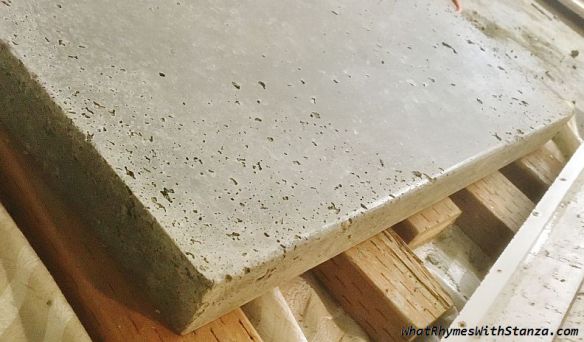
I poured one of the concrete countertops – just a little one; 24” x 15.5” – and set it in place yesterday to see how I like it. It seems rather thick at two inches, especially for such a small top, but I’ll leave it there for a while to see if I warm up to it. If nothing else, it will make for a good practice piece as I try to get the hang of filling the air holes, polishing and finishing the concrete.
170319b

Painting, more painting, resizing cupboard doors to fit around the new range top vent, ripping up old flooring, pulling staples… it’s slow going for me, but mostly because I’m in no hurry. I spend a lot of time just standing in the middle of the kitchen, surveying my “progress,” and alternating between a sense of pride and a sense of panic as the thought, “What was I thinking when I decided to take this on?” runs through my mind.

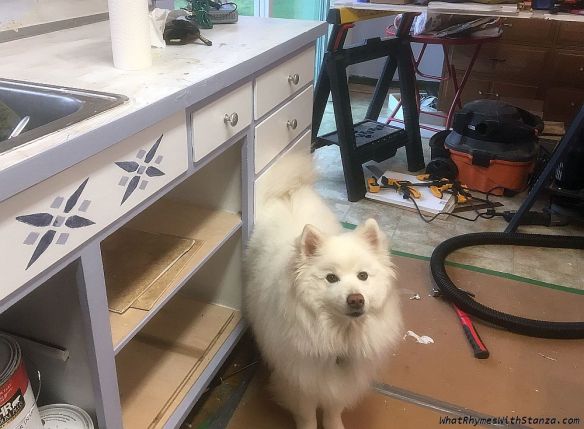
It makes my eskie Chules anxious to see me just standing there. He thinks if I’m in the kitchen I should be fetching him a snack, and if I’m not going to feed him I should stop staring at the walls and go play with him. Or at the very least, sit and watch him as he naps.

The sun’s actually out today, a rarity that I should probably take advantage of. I’ll let Chules take me for a walk and then consider doing some yard work.

Thanks for stopping by. I apologize if I bored you with my kitchen update. As the weather moderates I can begin regaling you with stories of my landscaping projects (something about which I am equally clueless as I am with the DIY kitchen project).

I hope you have a great week!


#WeekendCoffeeShare is graciously hosted by Emily at NerdintheBrain.com.

A Smashing Success

s3

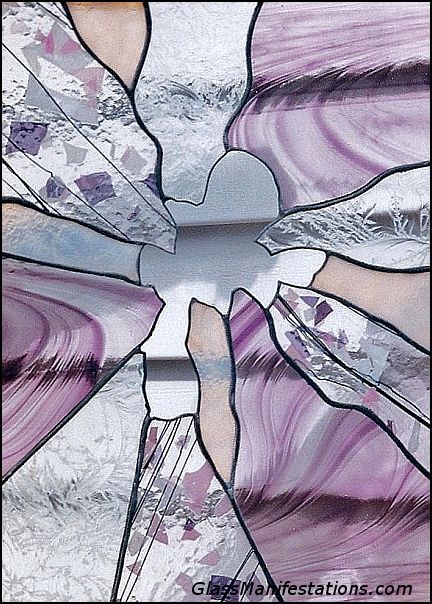
I’m going to make a hole in a window

You’re going to break a window?

Not break a window. Just put a hole in one.

So smash it, you mean.

Yes, it might look smashed.

What will you smash it with?

Does it matter what smashed it?

If you want to smash a hole in a window, you have to hit it with something.

What would you use, if you were to smash a window?

Me? I’d use a baseball. Maybe smack it hard with a bat. You could hit it from clear across a field and no one would know it was you.

People will know I smashed this window.

See, that’s why you use a baseball or something. Make it look like an accident.

So, an unfortunate baseball incident?

Exactly.


s1

“The Unfortunate Baseball Incident”


S  S is for Smashing.

Nautilus: the Golden Marvel

i4

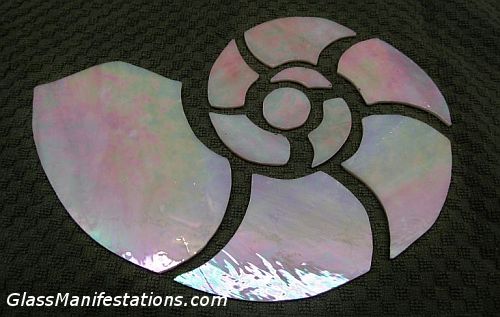
I mentioned last week that I featured a nautilus design in a stained glass panel I made for my granddaughter because of the shell’s meaning to me.

A [chambered] nautilus is a cephalopod of the genus Nautilus that has a spiral, chambered shell with pearly septa. Now doesn’t that sound totally inspiring? I mean… pearly septa! It just doesn’t get any better than that.

Okay… at my level of understanding: it’s a mollusk with a spiral shaped shell that consists of individually partitioned chambers. As the nautilus grows, it continues to enlarge its shell and create more partitions as it goes. Each chamber contains a gas that helps give the animal buoyancy.

When the nautilus inhales the gas from its chambers, its voice sounds really high, like Mickey Mouse’s. Nautiluses love to do this at parties, as it usually gets a pretty good laugh.

Okay, I made that last part up. Just the Mickey Mouse part. They really do have gas. And they don’t even eat beans.

But they are whizzes at math. See, the nautilus shell, with it’s spiral shape, is an example of the “golden ratio,” a mathematical ratio based on the number Phi. Phi (with upper case “p,” Greek letter Φ) represents the number 1.618… It’s reciprocal, phi (with lower case “p”, Greek letter φ), equals 0.618…

n2

Approximation of the golden spiral (drawing in public domain).


Since math is all Greek to me anyway, I can’t really grasp the concept of Phi, but the ratio it represents can be seen in relationships all throughout the universe, in:

proportions of the human body, proportions of some animals, DNA, plants, music, art, geometry, the solar system, movements in the stock market, the designs of the Egyptian pyramids, raindrops on roses and whiskers on kittens (just testing to see if you’re paying attention)… and as noted, in the shape of the spiral of the nautilus shell.

Some may argue that the application of the golden ratio, in many instances, is based on arbitrary points of proportion that happen to match the equation. Kind of the idea that when all you have is a hammer, everything looks like a nail. If you set about looking for a particular pattern or ratio, you can find ways to fabricate – er, I mean discover – its appearance in almost anything.

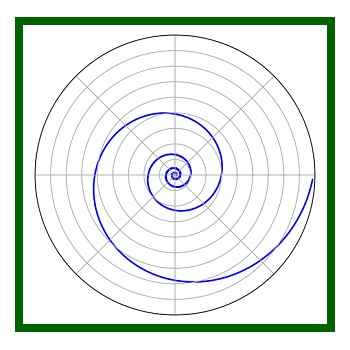
So that’s the “golden spiral.” But, not to be outdone by the Greeks, the French (specifically French mathematician Rene Descartes) came up with the “marvelous spiral.” Something about logarithms and more math stuff.

n3

Logarithmic “marvelous” spiral (drawing in public domain).

As with the Golden ratio, the logarithmic (“marvelous”) spiral occurs in many forms in nature. Examples:

the shells of mollusks (i.e. the chambered nautilus shell); the approach of a hawk to its prey; the approach of an insect to a light source; the arms of spiral galaxies; the bands of tropical cyclones; patterns in sunflower heads; the nerves of the cornea…

I guess you could say it’s everywhere you look! (See what I did there? Cornea… everywhere you look… pretty funny, huh?)

So what is the significance of all of this?

To me it indicates that there is a strong interrelationship between virtually everything in nature (and the aesthetics of some things manmade); that there are forces bigger than we can imagine at work in the universe; and that on some level there is a grand design to everything.

A golden, marvelous design.


Note: This is a revision of a post I published on another blog I had going in a previous lifetime. Any plagiarism of myself has been done with my full knowledge and permission (to myself). I think.


N  N is for Nautilus.

The I’s Have It

i8Inertia: I want to make a stained glass panel for my soon-to-be-born grandbaby. But:

  • I haven’t done stained glass work in a long time and I’m pretty rusty;
  • I’m downsizing so I don’t want to go out and buy a lot of new materials;
  • I don’t want to end up making something that looks horrible.

Inquisitiveness: What could I make that would be fairly simple, using materials I already have on hand, while challenging my perfectionism?

i3

Idea: I have a sample box of multi-colored rectangles of glass. I have lead came. Straight lines are simple.

i1

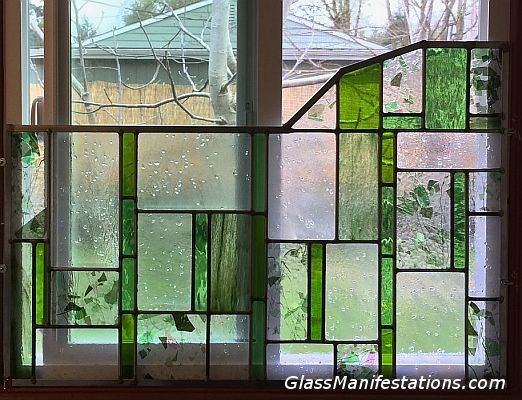
Inspiration: When I lay out the sample pieces, they remind me of a patchwork quilt. I could make my new grandbaby a “quilt.” That’s a grandmotherly gift, right?

i2

Imagination: What if I added a symbol of some sort? Something meaningful to me that would make the “quilt” more personal… like… a nautilus! [You’ll have to wait for the “N” day to find out what makes the nautilus meaningful to me.]

i4

Implementation: Get the lead out (literally), and go for it!

i5

Insight:

  • I’d forgotten how much fun it is to do stained glass and I want to take it up again;
  • simple designs can be just as effective as elaborate ones. I don’t have to plan big projects that require a lot of materials;
  • when my grandbaby is old enough to appreciate this gift, her thoughts will likely not be about how “horrible” it is. Her thoughts might even have to do with recognizing the love that went into the making of this gift.

i6

Incredible!!!!  ⇒ The way that I feel for having overcome the inertia, impediments and insecurity I felt before taking on this project!

i7

Isla: The name of my first grandbaby.


I  I is for Incredible.

A Glob by Any Other Name. Please.

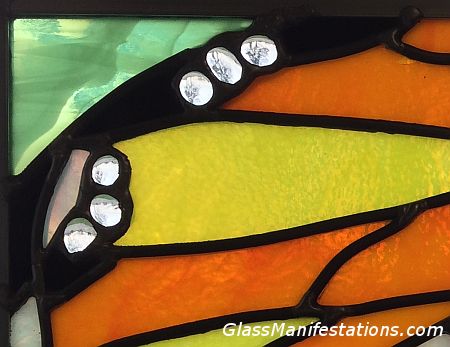
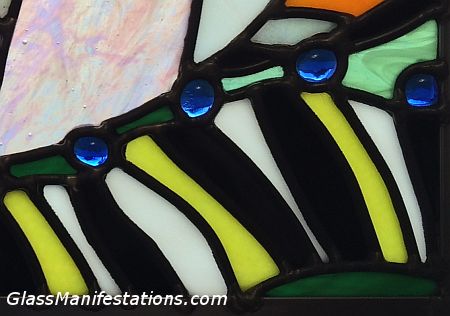
g4You look at these beautiful buttons of glass; a confectioner’s delight of colorful “candy.” And you ask, “What are these gorgeous pieces called?”
And I say, “Oh, those? Those are globs.”

Globs? Brings up visions of a lump of ice cream fallen to the sidewalk where the warm pavement turns it into a sticky – well… a sticky glob.

Or maybe a coagulation of gunked up motor oil stuck to the floor of a mechanic’s garage, dripped from an engine that was so filled with grime that the dark sludge came out in – you guessed it – globs.

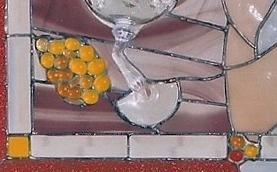
But these beauties of glass? These irregular shapes and sizes were formed when molten glass was dropped in small amounts onto a flat surface and left to solidify. Flat on the bottom, rounded on top, and delightfully ready for incorporation into stained glass projects.

g2

g1

g3

And, yes, they’re called globs.

Oh, by the way, if you don’t think that name quite suits them, I guess you could call them by their other name. They are also known as nuggets.

g5

Feel better now? I know I do.


G  G is for Glob.

Clusters: All Together, Now

cluster example 5
In yesterday’s post, the definition of bevels included the mention of “geometric configurations (called ‘clusters’) for incorporation into leaded glass work.”

Ah, clusters…

The fun thing about clusters is that you have ready-made pieces that you simply fit together (with copper foil or some type of came, i.e. lead), and then fill in the rest of your pattern with pieces to accomplish the desired panel shape (rectangle, square, circle…).

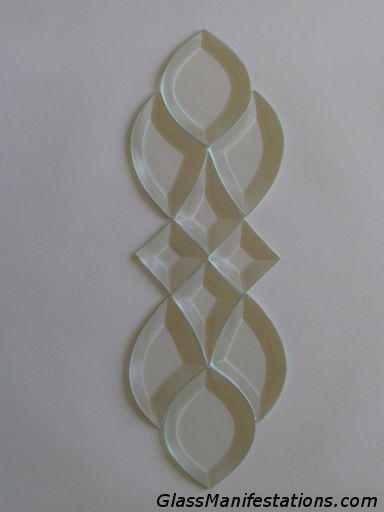
For example, I purchased a bevel cluster with ten bevels that – when pieced together – would look like this ornate design:

cluster example 1

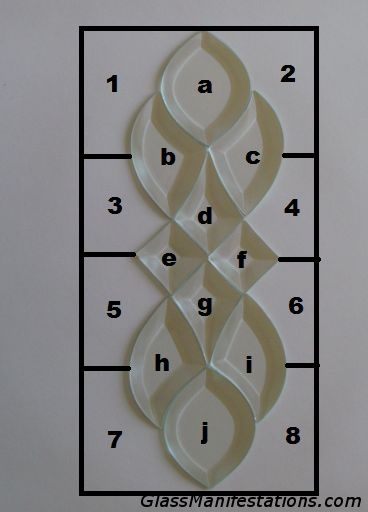
By cutting glass in the shapes of “1” through “8,” as pictured below, one could turn the design into a rectangular panel with the bevel cluster pieces (“a” through “j” in the diagram) centered within the rectangle. A simple example:

cluster example 2

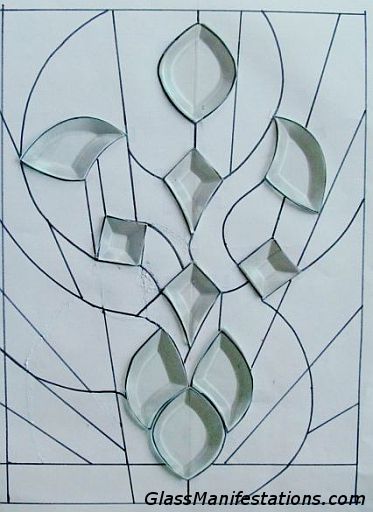
Something I like to do for fun is use the bevel pieces in a more unconventional way and incorporate them into panels to create entirely different patterns. In the example below I kind of “exploded” the bevel cluster and came up with this design:

cluster example 3

And here is the completed panel:

cluster example 4

I need to work on my window photography.

I titled the panel “Ascending.”

The bevels used in the “Manifest” design that appears on the header of this blog is another example of using a cluster in an unconventional way. Can you guess what the design was originally intended to be?


C  C is for Cluster.

The Bevel You Say!

Bevel
One way to easily dress up a stained glass panel is to incorporate bevels into the design. While frequently used as borders, individual bevels can also be employed as standalone elements in the overall design of a window or panel.

A bevel, as defined at Glass Patterns Quarterly, is:

“cold glass (usually clear, thick plate) with edges that have been ground and polished to an angle other than 90 degrees. Transmitted light is refracted and a prism-like effect results. Bevels are available in a variety of sizes, shapes and geometric configurations (called ‘clusters’) for incorporation into leaded glass work.”

There was a time when I was downsizing from my three-bedroom home (with garage studio), and moving into a one-bedroom apartment (no garage). I couldn’t see any way that I could find room for a stained glass work area. So I started selling/giving away/using up many of my supplies.

I had a box of triangle-shaped clear bevels that I had purchased with no particular project in mind. I probably got them in some kind of deal, like the “spend just $100 more and get free shipping on your order” offers. Who can pass those up, right?

I decided to make a window based simply around triangle bevels. This is what I came up with:

bevel2

I’m back in a three-bedroom home (two bedrooms and one studio, actually), and glass supplies seem to be slowly accumulating again. I now have a box of ¾ inch by 4 inch rectangular bevels that I bought for no particular purpose (going-out-of-business sale… Hello!). They will no doubt start trickling into future designs.

In the meantime, I can always hang them in my windows and, just like Pollyanna, use them as prisms to create rainbows.

“Just as if anybody’d care when they were living all the time in a rainbow!”
~ Pollyanna, by Eleanor H. Porter


B  B is for Bevel.