Invisible

tracks

You didn’t see me.
You watched my reflection
turn in a direction
you chose not to see.

You didn’t hear me.
You thought I was sleeping.
In fact, I was weeping.
You chose not to hear.

You didn’t touch me.
You thought I might crumble.
You thought you might stumble.
You chose not to feel.

You didn’t miss me.
You thought I had left you,
came not to my rescue.
You chose to move on.

I vow to be seen,
and heard and respected;
my path self-selected;
invisible no more.


dVerse Poetics: Invisible

Weekend Wildcard: Groundhogs and Vital Bogs

1 WILDCARD

Yesterday was Groundhogs Day in the US and Canada, and megastar (among the rodent crowd) groundhog Punxsutawney Phil purportedly did not see his shadow, which is said to be a harbinger of an early spring this year.

While not the most reliable diagnostic tool of the atmospheric sciences (the groundhog has about a 39% accuracy rate), it is nonetheless a quaint tradition from simpler (climatically speaking) times.

A bit lesser known in the US – okay, a LOT lesser known – observance on February 2nd is World Wetlands Day, a day designated to bring awareness to the importance of wetlands in balancing global ecosystems.

The house where I lived as a youth was situated on a sand hill that was basically surrounded by wetlands (back then designated simply as a swamp). The first signs of spring for me were the green shoots of skunk cabbage that emerged from the murky waters of the swamp. These quickly grew into wide, flat, shiny leaves and bright yellow flowers that emitted the musky odor of their namesake. I loved the cheery sight of them, and I actually found the earthy, slightly sweet smell to be somewhat pleasant (in small doses and from a distance).

Skunk Cabbage 2

The sounds of croaking frogs were prevalent on warm evenings, and every once in a while a beaver or nutria would find their way into our lower yard. Mosquitoes abounded. We pretty much stayed out of the swamp and let it do its thing of living and dying, sprouting and rotting, flooding and receding. I thought it was kind of cool to live within the wetland, but I had no appreciation of its importance as an ecosystem.

The last time I visited that area, I found that the swamp had been filled in and houses lined both sides of the low road that used to define where our yard ended and the swamp waters began. It was a sad sight. The adage “You never know what you have until it’s gone” comes to mind.

It’s too late for “my” swamp, but other wetlands can be restored, preserved and protected. Let’s do it!
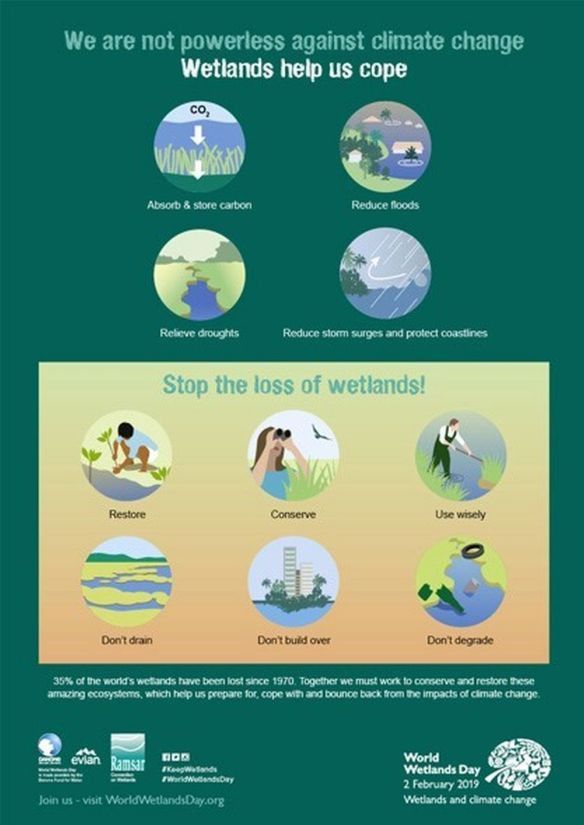
wetland Infographic


Infographic taken from WorldWetlandsDay.org 
Overload

keyboard

“I can’t do this anymore!”
The laptop stares at me from the kitchen table
where I sit, defeated head fallen into helpless hands.
It has stalked me from my work office to my home.
Black and white pixels layer documents across its screen,
a lasagna of files dumped from an overstuffed virtual briefcase.

I can’t do this anymore.
My husband stares at me from the kitchen counter
where he sits, a lukewarm mug of coffee cupped in soft hands.
Did I say that out loud?
His disapproving frown indicates that I did.

I shove the opened laptop across the table.
It stops just shy of the edge.
I wish it would have fallen,
hit the linoleum floor and
shattered into a million pieces.
I wish I could do the same.

“Two more years,” he says.
“Stick with it for two more years, and then I can retire.
We’ll move to the valley and you won’t have to work.”

Two more years? I can’t do that.
Nor can I fathom any middle ground between
two more years and not anymore.

I can feel myself being compelled toward the edge
where I will teeter until the inevitable fall.
I wonder how many years it will take
to recover the million pieces.


In response to the dVerse Poetics prompt:

“… the Poetics challenge today is to write a confessional verse in the style of [Sylvia Plath, Robert Lowell, Anne Sexton…] … or write something which plays with the ideas expressed here — to put your regrets, your guilts, your sins, your humanity, your lived experiences, and all that you have kept within, out there through unbridled frankness or hyperbole or hidden allusions and metaphors or in any which way you want. It is all about challenging the restrictions that we impose in our written expression and to share something which is depictive of our own self.” 

world afire

Had we only raked the forest floors
we could have stopped the fires.
If we built a higher wall,
tear gas wouldn’t cross the border.
There is no global warming;
can’t you feel the cold rain
falling on the fallen?

Anger rakes across my senses,
fire ravages my gut.
Walls can’t contain the pain
or hold back the tears.
The earth burns with desperation
as hearts grow ever colder.
And all the while, it is snowing in Russia.

stump


dverse Poetics: fire up that creativity

Insider

flame4

Your conspiratorial wink
seeks my complicit nod.
A pact, an inside joke
among us privileged.
What’s the punch line today?
Racism? Xenophobia? Homophobia?

Today the tacit agreement ends.
I will look you in the eye – unflinchingly –
and say, “No more!”
Straight. Into. The. Mirror.


dVerse Quadrille #68: Wink

Your Vote Matters! Know Your Rights!

Vote Glass_ballot_box_-_Smithsonian

Glass Ballot Box circa 1884, Smithsonian Institute, public domain photo

As we near the midterm elections in the US, it is becoming clearer and clearer that voter suppression is alive and well in 2018. When voting at the polls, make sure you know your rights.

Vote Acme_ballot_box_-_Smithsonian

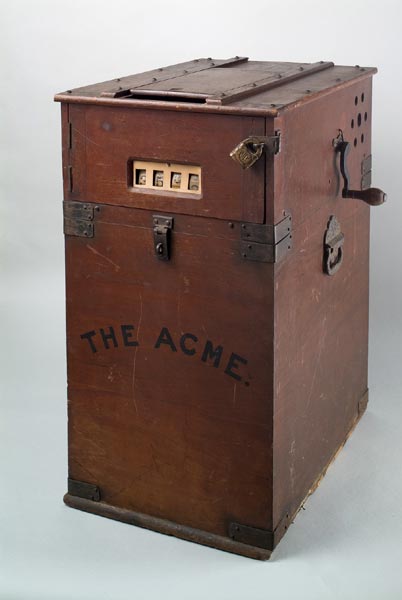
Acme voting machine circa 1880, Smithsonian Institute, public domain photo

Here are some important takeaways from a CNN online article found here:

If you are told you cannot vote

  • ask poll workers to check surrounding systems for your name.

  • ask to sign an affidavit  swearing your eligibility.

  • ask for a provisional ballot and follow up later to make sure it’s counted.

  • if you are denied or feel intimidated, report the incident to any poll workers present, AND

  • report the incident to local officials or the Department of Justice Voting Rights hotline*

Vote Metal_ballot_box_-_Smithsonian

Metal ballot box circa 1936, Smithsonian Institute, public domain photo

Phone Numbers that may be useful:

Election Protection Hotline: 1-866-OUR-VOTE
Election Hotline (en español): 1-888-VE-Y-VOTA 
*US Department of Justice Voting Rights Hotline: 1-800-253-3931


The information above is taken from the CNN article “Here’s what to do if you’re turned away at the polls.

National Voter Registration Day

Midterm elections are coming up on November 6th in the US. Are you registered to vote? You can register HERE. It’s super easy and super important. Be heard, make a difference.

Vote like your life depended on it. Someone’s life truly does.

“Too many people struggled, suffered, and died to make it possible for every American to exercise their right to vote.” ~ John Lewis


“We must vote for hope, vote for life, vote for a brighter future for all of our loved ones.” ~ Ed Markey


“Individual rights are not subject to a public vote; a majority has no right to vote away the rights of a minority; the political function of rights is precisely to protect minorities from oppression by majorities (and the smallest minority on earth is the individual).” ~ Ayn Rand

002

Hiroshima, reluctantly

Hiro

August 6th is the anniversary of the atomic bombing of Hiroshima. For the dVerse Monday haibun challenge, poet Frank J. Tassone suggested we write a haibun “that states or alludes to either the Hiroshima attack, or one of the themes of the Hiroshima Peace Memorial Ceremony, such as peace, the abolition of nuclear weapons, or the horror of nuclear war.”

From my place of privilege, I would rather post about my pets, show photos of flowers… you know,  the nice feel good stuff. I almost passed on this week’s poetry challenge, but given the current state of the world, I felt it important that I not do so. So, not my usual fare, but in my thoughts:


It never really registered, when I viewed the black and white newsreels. The children, in the street, crying. Some naked, their clothes having been burned off their bodies. Some… I wouldn’t even want to describe it. I wouldn’t want to put it into words, because then maybe it would cease to be a black and white movie, and it would be real. Real flesh and… flesh and…

… the flesh, it was melting off their arms.

Mushroom cloud rising
I can only imagine –
no, not even that

Count Down

cell

NaPoWriMo Challenge, Day 26: “write a poem that includes images that engage all five senses. Try to be as concrete and exact as possible with the “feel” of what the poem invites the reader to see, smell, touch, taste and hear.”


Seventy-two steps down Hall B,
to mute doors with blank-stare windows.
Don’t touch the handles. Fingers would
scorch to ash. Or freeze so hard they’d shatter.

Eyes recoil from chlorine-glazed floor.
Salt water soothes the nose.
Slick. Sticky. Squeaky rubber soles,
but no one ever trips
over absent laces.

Turn around at the door.
Seventy-two steps back. Always the same distance,
though the walls expand and deflate in
fallow-breathed rhythm.

At forty steps back he’s there.
You feel him like a sweat-soaked wall.
The door at forty is no blank stare.
The darkened window rages in razor-orange furnace blasts.
Involuntary flinch. Voluntary cower
to the far wall as you pass by.

He feels you, too,
like a limp, soiled napkin.
He wants to crush you with his fury, until
your soul oozes out and seeps under
his cell door.

He screams. He flings insults and curses
like hot excrement at the walls. At you.
The orderlies will come soon,
syringe locked and loaded.

At the station, turn right.
Fifty-five steps down Hall A.

Elegy for All

If you die tomorrow,
I will write you this elegy,
because you are loved
and you will be missed.

And if you sense no love
and no connection
and feel as though no one will even notice
when you are gone,
you may read this elegy and know that
you are loved more than you know, and —
in ways you may not even perceive —
you matter very, very much.

If I die tomorrow,
I will know I am loved
and that I had connections
of soul and heart and mind
with those whose paths touched mine.

I will be missed
by those I love and those who love me, and
even by some who don’t know me at all,
because perhaps — in ways I may not even perceive —
I mattered to them.

For today, though,
before this elegy applies,
let’s notice and celebrate –
if we are able —
our blessings of love
and connection, and of mattering.

Let’s make a difference
for those who do not feel so blessed.

Let’s open our souls and hearts and minds
to one another so we needn’t wait until
tomorrow to read this elegy and
discover just how very, very much
we all, indeed, matter.

elegy


NaPoWriMo Challenge, Day 24: “write an elegy – a poem typically written in honor or memory of someone dead. But we’d like to challenge you to write an elegy that has a hopefulness to it.”