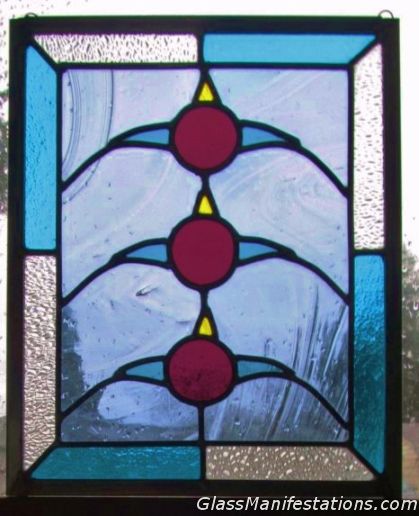
Seasonal Transitions

It’s fun to make series of panels on a theme. I have one in progress that I’ll share more about later.

The topic of The Daily Post’s weekly photo challenge this week is Transition.

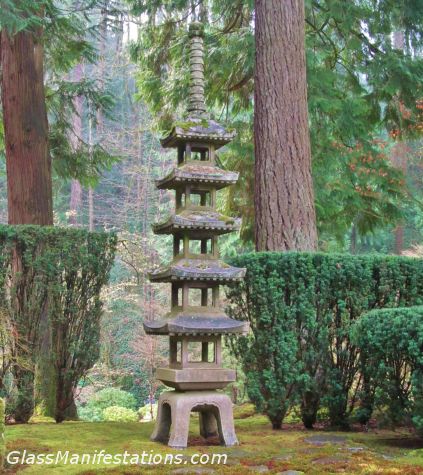
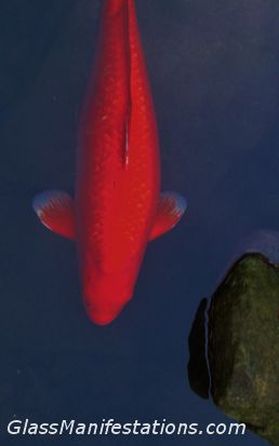
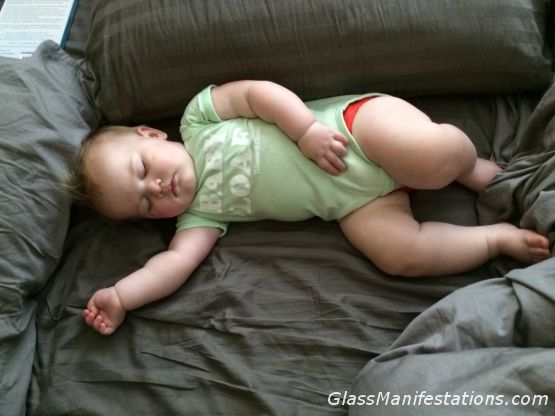
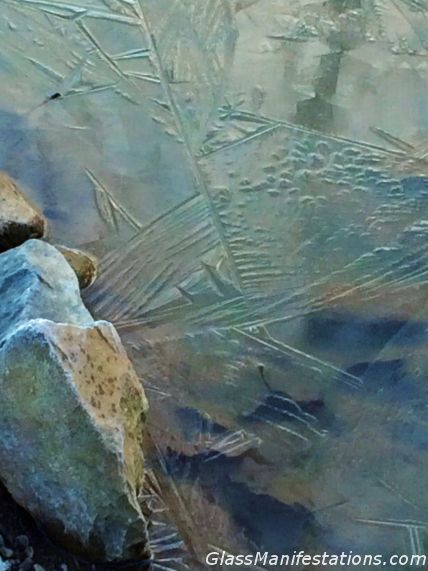
Here I have used some fun background glass to help depict the four seasons. Hope you enjoy.

Click on photo below for larger images of each panel.

seasons

Sorting Glass — A Poem

I’ve turned my energies to poetry for a while, as I take a two-week challenge from The Daily Post. I didn’t write this poem for the challenge, but was reminded of it, so I thought I’d share it here:

Sorting Glass

Sorting stained glass into bins,
careful lest I cut myself.
How does one parse the spectrum of light
into specific and separate boxes?

Blue or green?
Translucent or opaque?
Flashed? Rolled? Blown? 
It even defies the line 
between solid and liquid.

Can’t mold it into endless shapes,
like a potter fondling clay on a wheel.
Can’t sand it smooth like a choice piece of wood,
and wipe the fine dust away with gentle strokes.

No. It’s cold and rigid and sharp and brittle.

But when the light finds it,
it warms and dances and morphs 
into myriad shapes and textures and nuances
that no other medium can rival. 
It comes alive. 

It brings me to life.
And as I sort it into bins,
being careful not to cut myself,
I feel its pulse in time with mine. 

m3

Symmetry in Design

symmetry

Weekly Photo Challenge Symmetry

To some extent, I try to avoid exact symmetry in my stained glass panel designs. The biggest reason is that I’m not very good at being exact about anything.  So chances are that – even if I try – the left side will not mirror the right.

Weekly Photo Challenge Symmetry


So instead, I have fun coming up with designs that I like to call “Symmetrical… But Not Really.” Like the koi in these photos. A fish eye on the left, a fish eye on the right. A fin on the left, a fin on the right. The orange koi even goes so far as to sport matching wing tips – er, fin tips.

koi chap

The other chap, while having the symmetry of matching anatomical bits and pieces, shook things up a bit when it came to body art. A splotch of orange here, two splotches there… maybe not as soothing and peaceful to look at as his pond mate, but interesting and worthy of contemplation in his own right. *

An example of my SBNR technique can be seen in the geometric design of the panel below. The nine white-looking pieces (they are actually clear glass; photography’s not my strong suit) are from a pre-cut bevel cluster, meant to be assembled into a symmetrical pattern. But they are incorporated into a larger design that – while still pulling everything together in a balanced scheme – is not a match of left and right. To me, it gives the panel more vibrancy and greater interest.

And, of course, it helps avoid that whole exactness deficiency of mine.

I figure if it’s good enough for Mother Nature and her koi chaps, then it’s good enough for me.z8


* The assumption of male gender of the koi is based strictly on my desire to use the term “chap.” I do not have the wherewithal to determine fish gender based on an aerial view. Nor am I particularly interested in acquiring that skill set. Sorry, I have to draw the line somewhere.

 Weekly Photo Challenge:  Symmetry

According to Scale

Weekly Photo Challenge: Scale

Weekly Photo Challenge: Scale

Stained glass is not a medium that lends itself easily to realism. I mean, I can make a panel that depicts something specific – a rose, for example – but even if I attempt to make it look realistic, you aren’t likely to view it and be led to believe that you are seeing an actual rose.

Even from a distance. In the dark. With one eye closed.

I really like that, because it lets me off the hook. I don’t feel compelled to portray images in perfect proportion or according to scale. Which is good, because I don’t think I could do it if I tried.

A lot of artistic people are blessed with multiple creative talents. They can paint and draw and sculpt, or whatever. Their artistic abilities just splash all over the place, like an overfilled cup of coffee. Me, not so much.

I can design a stained glass panel to my liking, but if you ask me to make a drawing of the same subject, the outcome would be pretty dismal. That’s why God invented abstract art… for people like me. And Picasso.

Window installation at UCC church, Tillamook, Oregon

Window installation at UCC church, Tillamook, Oregon

The only time I attempted realism in a panel was with a commissioned piece for a church. The window had to “match” or compliment the already existing windows in the structure, which were of a realistic nature.

And so I took on Jesus. Of course, we don’t really know what Jesus looked like, so I pretty much took my cue from the drawings I’d seen throughout my stint in Sunday school. And in those pictures, Jesus is a pretty proportionate fellow.

I will never be satisfied with the results (which you can see pictured here). Does it look like his left forearm is raised higher than the right (hint: it’s supposed to), or does it look like his left arm is shorter than the right (hint: that would be bad)? There are other areas that do not seem made to scale (depending on how you interpret body placement), but I’ll give myself (and Jesus) a break and not pick him totally apart.

So here’s my life analogy: things don’t always have to be according to scale. People talk about wanting to live “balanced” lives, and that’s great. But sometimes it’s okay to let one arm hang a little lower than the other.

Yeah, well, analogies aren’t my strong suit, either.


The Daily Post weekly photo challenge: Scale
Depth Finder


Close up of light reflection on stained glass panel.

Close up of light reflection on stained glass panel.

In my little corner of the world, it seems that interest in glass work is swinging greatly towards the direction of “warm glass,” or kiln-formed glass. Which is very understandable. There is so much potential for creativity in the three-dimensional forms that melting glass allows.

Even the vocabulary of fused glass is fun: slumping, frit, draping, stringers, confetti…

And the vocabulary of my work with flat stained glass panels? How about “fid?” It’s just not a sexy word, although it works well in Scrabble when you’re really stuck. Or “lead,” which elicits sayings like: get the lead out… lead-footed… lead poisoning. Also not sexy.

Of course, there is some dimensionality in panels – in glass bevels, for example. Or in textured glass. And a flat panel doesn’t exclude the incorporation of three-dimensional objects.

Just because a panel is flat, however, does not mean it lacks depth.

“Depth” has so many meanings beyond the concept of a dimension. From Dictionary.com:

  1. a dimension taken through an object or body of material… [the extent, measurement, or distance downwards, backwards, or inwards]
  2. the quality of being deep; deepness.
  3. complexity or obscurity, as of a subject: a question of great depth.
  4. gravity; seriousness.
  5. emotional profundity: the depth of someone’s feelings.
  6. intensity, as of silence, color, etc.
  7. lowness of tonal pitch: the depth of a voice.

So a flat stained glass panel can be complex – either in design or in abstract meaning, can emote or evoke a sense of seriousness or profound feeling, and can incorporate intense colors. And if it could talk, who knows? It might just sound like Morgan Freeman.

Not bad for only two dimensions.


Weekly Photo Challenge:  Depth

Serenity: Weekly Photo Challenge

This week’s Daily Post photo challenge is about sharing one’s interpretation of serenity.

It got me thinking about how I would depict serenity in stained glass. Not a serene setting or scene per se, but the actual quality of serenity. Or how would one interpret happiness, joy, sadness or anger in an abstract manner using glass as a medium?

Anger, for example, could be done up in shades of dark or flaring reds and slashing lines and sharp angles. But then it could also be the cold, icy blue calmness of the type of anger that says, “I don’t get mad; I just get even.”

Makes me want to play around with such concepts and see what kind of designs and color schemes might arise.

But on to the photo challenge:

Serenity can be about finding a calm, peaceful setting in nature where one can slow down and restore their sense of balance.

IMG_0277

Or serenity could mean spending quiet time in the company of loved ones.

IMG_0035

But to me, serenity comes mostly from allowing myself to

be who I really am

wherever I am

in the moment…

IMG_0615

… and to have that be perfectly okay.

Serenity

Visual Fodder

brick wall

Coming up with ideas for stained glass panel designs is perhaps the most fun part of the whole creative process. Someone asked me once about how I get my ideas. I told him that they just kind of evolve. I just wait, and they show up.

That’s not entirely true. I don’t just sit around waiting for an epiphany. I’d be waiting a very long time if that were the case. What I really do is feed my imagination.

I take walks in nature. I take walks in urbania. (I know, urbania’s not a real word, but it should be, don’t you think? Like, inclusive of cities, suburbs, towns, strip malls… Maybe there’s already a word for that. I’ll give Merriam Webster a call someday to find out.)

I take photographs everywhere I go. Well, not everywhere. That would just be creepy. But by consciously looking for photo subjects, I am training myself to notice things that might otherwise be overlooked.  Basically I’m gathering images to study and play with and ruminate over.

And then all that visual fodder begins to shift and sift and coalesce into an image that can be translated into glass. Not to make this sound all ethereal and pretentious (or like a cow chewing its cud… “ruminate?” “fodder?”)

Sometimes the “image” is as simple as a brick-like pattern.

path

path pattern

Sometimes it’s as silly as “Three Penguins on Ice.”

ice

penguins

Maybe someday I will experience an epiphany. But until that day arrives, I will continue to feed my imagination. There’s not much worse than a starving imagination.

Where do you find your ideas?