Weekend Wildcard (Flashback #1: Free Fall)

WILDCARD liftingIn 2012, I began my first of many blogs, entitled “Lifting the Weight.” Seems like eons ago. I looked this week and was surprised to see the blog still sitting out there in the ether, looking none the worse for it’s many years of neglect.

I decided to repost some of the content from that site on this one.

As described in the “About” statement from my “Lifting” blog,

July 11, 2012 —
Having suffered at the hands of my own negativity for far too long, I decided it was time to claim the positive energy that is available to each of us for our own benefit and for the benefit of others. Hence, I’ve begun the process of “lifting the weight” of depression from my soul and moving into a lighter, freer space. Please join me in finding a way to a more balanced, affirming life.

I continue that journey to this day, and I must say I see much more light than darkness these days. For that I am eternally grateful. So why revisit the “me” of seven years ago? It might provide inspiration to those still weighted down. It might provide insight to me for continuing to follow the light. If you want to skip my indulgences into the past, just forego reading my Flashbacks. Don’t worry, I’ll never know, and even if I did, I wouldn’t mind.

Here’s an entry to “Lifting the Weight,” posted on July 31, 2012:

Free Fall

“Now that my storehouse has burned down, nothing conceals the moon.”
Mizuta Masahide, poet and samurai
1657–1723

I got depressed and lost my job. In that order. And while my depression has abated, I have yet to recover from my joblessness. I am totally clueless as to what that recovery is going to look like. Yet despite my total lack of financial security, I am finding myself feeling unusually at peace; feeling, in fact, downright serene. I’ve never felt this way before.

It’s almost like I am a dissociated observer of my own life. I am watching myself with curiosity, waiting to see what’s going to happen next. I’m not judging what got me here, not dwelling on where I currently find myself, and not stressing about where I will end up. If I weren’t so mellow, I might find my attitude a bit disconcerting.

The reality is that in losing my job, I have gained the time and freedom and ability to concentrate on myself and my health, both mental and physical. I’m not working nine hours a day at a stressful job, spending seven hours trying to de-stress from my stressful job, and then going to sleep to avoid stressing about my stress. I am able to broaden my thinking, to look around and see more, to appreciate more, and to feel more. I am gaining balance in my life as I focus on healthy eating and exercise and sorting through thoughts and emotions.

I am experiencing all of these blessings while nonetheless being in a financial free fall. In the olden day cartoons, when characters fell off a cliff and started hurtling to the canyon floor, they would serendipitously get snagged mid-fall by a gnarled branch of some sort poking conveniently out of the otherwise barren cliff side.

That is, unless the character was Wile E Coyote, in which case he invariably smacked prostrate at the base of the cliff, ending up flatter than the proverbial pancake. By the next scene, though, he was re-inflated into his usual 2-dimensional self and was ready for his next adventure, something that would probably put him at the losing end of a stick of dynamite that had been purchased by Bugs Bunny from the Acme Company. Some coyotes just can’t win.

I’m not exactly banking on the notion that I will be snagged from my demise at the last minute. I’m not really banking on anything. I’m just watching. I don’t advocate this approach to life. If I fall flat on my face, there’s no saying that I will bounce back like Wile E Coyote. Time will tell.

In the meantime, I’m going to appreciate my view of the moon.
Maggie

###
Checking In

Day Four of NaPoWriMo.

And now for today’s (optional) prompt, inspired by Teicher’s poem “Son“. One thing you might notice about this poem is that it is sad, but that it doesn’t generate that feeling through particularly emotional words. The words are very simple. Another thing you might notice is that it’s a sonnet – not in strict iambic pentameter, but fourteen rhymed, relatively short lines.

Today, we’d like to challenge you to write your own sad poem, but one that, like Teicher’s, achieves sadness through simplicity. Playing with the sonnet form may help you – its very compactness can compel you to be straightforward, using plain, small words.

My post from yesterday was sad enough, but okay. In sonnet form, here goes:

mirror 1500

Checking In

I don’t recall the last time we had dined
with just the two of us away from home.
I guess we’d never found ourselves inclined
to try relating one-on-one alone.

Conversation did not come easily,
but not for lack of words that need be said.
In short, your failing ears could not hear me.
Nonetheless you’d smile and nod your head.

A gentleman you’ve been for all your years,
your empty wallet drawn to pay the bill.
You needn’t pay, Dad, now that you live here.
I bussed the table once you’d had your fill.

A nurse came by and took you by the sleeve.
It’s best, she said, that you not see me leave.


Also posting for V.J.’s Weekly Challenge #42: farewells

In Passing

Haagen park

We met at the park, the one where a paved trail winds around an open grass field. He walked his tiny black poodle in one direction. I walked my midsize white Eskie in the other, and we would cross paths, usually beneath the tall cedar trees that provided welcome shade in the summer, and protection from rain the rest of the year.

His name was Don. The poodle was Mon Cheri, his neighbor’s dog that he borrowed for his morning walks.

Don would see us approaching on the trail, and would exclaim, “Look, Mon Cheri, it’s your friend!”

Mon Cheri would growl at my Chules and strain at her leash to gain distance. Don didn’t seem to notice, and neither did Chules.

Don would smile at Chules. “What a happy dog! Isn’t he pretty, Mon Cheri?”

At some point, Don changed direction on how he walked the loop, from clockwise to counterclockwise. I changed direction, too. Don seemed nice enough, but no matter how many times he tried to cajole Mon Cheri about her happy fluffy dog friend, Mon Cheri still rejected Chules.

Over time, our conversations expanded. I told him about stripping the old oak floors in my house. He warned me about fumes and gas pilot lights, lest they meet and blow up the house.

Don explained his reason for changing directions on the loop. It was easier to navigate a small incline in the path.

“You can’t see it, but it’s there,” he said.

He was right. I couldn’t see it.

I didn’t see Don for a while, and then one day he was back. He had shaved his beard, and maybe his head as well. He always wore a flat newsboy cap, and I had never noticed his hair length. His pace had slowed considerably.

“How are you doing?” I asked. “I’ve missed seeing you.”

“Oh,” he replied. “I’ve been coming later than I used to. I don’t get up as early in the mornings anymore. And on Sundays I go to church. It’s nice to see everyone.”

I contemplated inviting Don out for coffee. He seemed lonely. And frail. More frail each time we met. But it felt awkward, so I didn’t ask.

One day, we met on the path, and Don told me about receiving chemotherapy. He’d decided to stop treatment and resort to positive visualization and healthy eating  and “all those things they say to do.”

This was the first time Don had spoken of his health, or anything intimate or personal at all. I didn’t know what to say.

I made some throat noises that I hoped were consoling, and agreed when he said sometimes it’s best to let things take their course.

He was tired, I could tell. Tired of struggling to walk up imperceptible inclines. Tired of fighting battles he would ultimately lose. He’d even given up on trying to convince Mon Cheri that she and Chules were fast friends.

I didn’t see Don after that.

One day I crossed paths at the park with another man and his dog. I had seen them on several occasions stop and speak with Don, just as I had done.

“Have you seen Don lately?” I asked.

“Who?”

“The gentleman with the little black poodle and the newsboy cap. He used to walk here, but I haven’t seen him in a while.”

The man didn’t know who I meant.

I cried for Don. I hoped he’d had a good life. I hoped he’d been loved.

Chules and I don’t visit that park much anymore. We walk a different trail now, where we sometimes cross paths with a man and his midsize black dog named Pink.

It’s here: NaPoWriMo

NaPoWriMo celebrates National Poetry Writing Month, where one writes a poem a day for the entire month of April. As I did last year, I am participating by responding to the prompts given at the site NaPoWriMo. net.

The “early bird” prompt for today: “Today, we’d like to challenge you to write a poetic self-portrait. And specifically, we’d like you to write a poem in which you portray yourself in the guise of a historical or mythical figure. “

So here we go!

woods

 Self-Portrait as a Sasquatch

It seeks me out,
hunts me down…
the commotion, the cacophony, the confusion.

I want none of it. It hurts my head.
I seek refuge in the cooling shadows of the forest.

I become curious, though, and
come out of the woods,
down from the mountain,
dare to be seen

only to discover nothing has changed;
the commotion, the cacophony, the confusion…
my head hurts.

Retreating back to the shadows, I content myself
with the serenity of keeping my own company.

The warmth of the sun brings sustenance to my soul,

but it’s not yet time.

Asking Bella

Bella

From where did you come,
and where did you go
before you came here to me?
What happened to make you fear
crates and loud noises and the prospect of
being left alone?

Who put you in a cell
with bars and bare cement floors
and people parading by to stare?
How did you choose me
to be the one you would enchant
with your soulful chocolate eyes?

When will I have done enough to thank you
for the privilege of walking this path
with you?

I can imagine answers to my questions,
but I will never truly know.
Of course, some questions have no answers,
and that’s okay. What matters is that
you are the answer to me, and
I am the answer to you.


For Emily and Bella

V.J.’s Weekly Challenge #37: Story

Invisible

tracks

You didn’t see me.
You watched my reflection
turn in a direction
you chose not to see.

You didn’t hear me.
You thought I was sleeping.
In fact, I was weeping.
You chose not to hear.

You didn’t touch me.
You thought I might crumble.
You thought you might stumble.
You chose not to feel.

You didn’t miss me.
You thought I had left you,
came not to my rescue.
You chose to move on.

I vow to be seen,
and heard and respected;
my path self-selected;
invisible no more.


dVerse Poetics: Invisible

Weekend Wildcard: Groundhogs and Vital Bogs

1 WILDCARD

Yesterday was Groundhogs Day in the US and Canada, and megastar (among the rodent crowd) groundhog Punxsutawney Phil purportedly did not see his shadow, which is said to be a harbinger of an early spring this year.

While not the most reliable diagnostic tool of the atmospheric sciences (the groundhog has about a 39% accuracy rate), it is nonetheless a quaint tradition from simpler (climatically speaking) times.

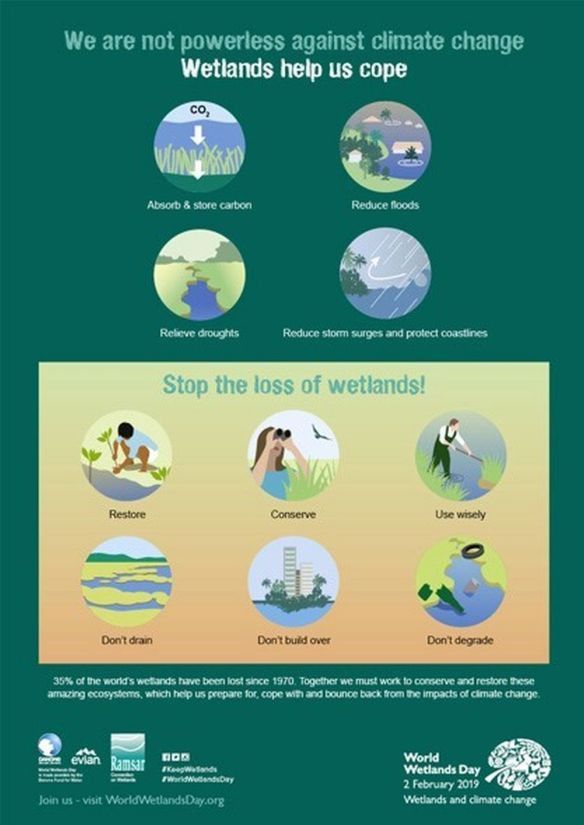
A bit lesser known in the US – okay, a LOT lesser known – observance on February 2nd is World Wetlands Day, a day designated to bring awareness to the importance of wetlands in balancing global ecosystems.

The house where I lived as a youth was situated on a sand hill that was basically surrounded by wetlands (back then designated simply as a swamp). The first signs of spring for me were the green shoots of skunk cabbage that emerged from the murky waters of the swamp. These quickly grew into wide, flat, shiny leaves and bright yellow flowers that emitted the musky odor of their namesake. I loved the cheery sight of them, and I actually found the earthy, slightly sweet smell to be somewhat pleasant (in small doses and from a distance).

Skunk Cabbage 2

The sounds of croaking frogs were prevalent on warm evenings, and every once in a while a beaver or nutria would find their way into our lower yard. Mosquitoes abounded. We pretty much stayed out of the swamp and let it do its thing of living and dying, sprouting and rotting, flooding and receding. I thought it was kind of cool to live within the wetland, but I had no appreciation of its importance as an ecosystem.

The last time I visited that area, I found that the swamp had been filled in and houses lined both sides of the low road that used to define where our yard ended and the swamp waters began. It was a sad sight. The adage “You never know what you have until it’s gone” comes to mind.

It’s too late for “my” swamp, but other wetlands can be restored, preserved and protected. Let’s do it!

wetland Infographic


Infographic taken from WorldWetlandsDay.org 

Overload

keyboard

“I can’t do this anymore!”
The laptop stares at me from the kitchen table
where I sit, defeated head fallen into helpless hands.
It has stalked me from my work office to my home.
Black and white pixels layer documents across its screen,
a lasagna of files dumped from an overstuffed virtual briefcase.

I can’t do this anymore.
My husband stares at me from the kitchen counter
where he sits, a lukewarm mug of coffee cupped in soft hands.
Did I say that out loud?
His disapproving frown indicates that I did.

I shove the opened laptop across the table.
It stops just shy of the edge.
I wish it would have fallen,
hit the linoleum floor and
shattered into a million pieces.
I wish I could do the same.

“Two more years,” he says.
“Stick with it for two more years, and then I can retire.
We’ll move to the valley and you won’t have to work.”

Two more years? I can’t do that.
Nor can I fathom any middle ground between
two more years and not anymore.

I can feel myself being compelled toward the edge
where I will teeter until the inevitable fall.
I wonder how many years it will take
to recover the million pieces.


In response to the dVerse Poetics prompt:

“… the Poetics challenge today is to write a confessional verse in the style of [Sylvia Plath, Robert Lowell, Anne Sexton…] … or write something which plays with the ideas expressed here — to put your regrets, your guilts, your sins, your humanity, your lived experiences, and all that you have kept within, out there through unbridled frankness or hyperbole or hidden allusions and metaphors or in any which way you want. It is all about challenging the restrictions that we impose in our written expression and to share something which is depictive of our own self.”