spider sleeps in web dreams of netting trophy flies wakes to find stink bug

spider sleeps in web dreams of netting trophy flies wakes to find stink bug

The theme for The Daily Post’s photo challenge this week is Local. In the related post, Jen H writes:
“Home” is… a place that is familiar and comforting, and it gives us a sense of belonging. Home is what and who is local — the places and people we know by heart.
While I’ve resided in other places since then, my home town is what came to mind when I read the post for this week’s challenge. I grew up in a small town near Astoria, Oregon, and lived in the same house for 18 years until I went off to college. While not all of my memories of those years are pleasant and “comforting,” there was certainly continuity.
We knew the townsfolk. We knew their names and their lineage. We knew their histories, and we knew their secrets – that weren’t really all that secret – as often happens in small towns.

Certain locations gained special meaning to us as they became linked to significant experiences or people in our lives. I wrote about one such place in an article that ran in The Oregonian newspaper some 25 years ago (1990, I believe).
Below is an edited version of that article:

Toll collector Don Patch is not impressed with the Astoria Bridge. “It’s big and green. Other than that, it’s not especially distinctive.”
Perhaps it’s a matter of perspective. From where Patch sits, taking money through the window of the small toll booth, he doesn’t even see the bridge. He sees only the southbound traffic spiraling downward toward him like vultures intent on their prey. Or maybe he holds a grudge because of the time a loaded log truck hit the toll booth – with Patch inside – knocking the booth off its foundation. The scars are still visible on Patch’s forearm; he was hit by a falling first-aid-kit.
Lela Starr, collecting tolls from the northbound lane, has a better view of the bridge. Yet what stands out in her mind after working there 5 ½ years are motorists’ questions, such as, “What’s that big island over there?” Starr’s usual response: “We call it Washington [State].”
We grew up together, the bridge and I. Next year, as I face my 30th birthday, the bridge turns 25. Not exactly old for a bridge, yet in its quarter-century if has played a significant role in the community – and in my life.
In its short existence, the bridge has witnessed birth and death. It has endured bad press, foreboding predictions and assaults by truck, ship and weather. It has been the backdrop for Hollywood glamour, romantic encounters, political protests and crime.
* * *
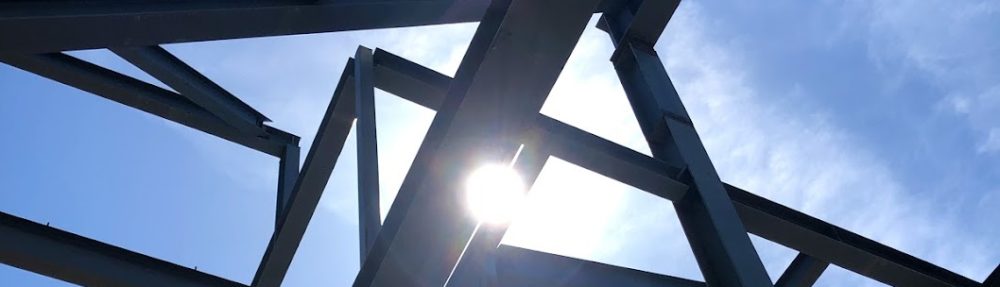
Stretching 4.1 miles across the mouth of the Columbia River, the Astoria Bridge connects Oregon and Washington as the final link in the 1,625-mile-long U.S. Highway 101, from Tijuana, Mexico to Olympia, Washington. The Guinness Book of World Records once credited the bridge with the longest three-span continuous-through truss in the world. Recent editions omit this listing. Whether a longer span exists somewhere or people just lost interest in three-span continuous-through trusses, I don’t know.
When I first became aware of the bridge, with its crisscross of metal trusses stretching out over the Oregon ship channel, I was too young to know that the bridge was being scorned as the biggest boondoggle in Oregon’s history. It was the most expensive project the State Highway Division had ever undertaken, and skeptics doubted its ability to pay for itself.
Astorians had pushed for a trans-Columbia bridge for years. As early as 1930, President Herbert Hoover signed a bill authorizing construction of a bridge, but the federal Public Works Administration rejected the $6 million project.
In 1961, with an updated price tag of $24 million, then-Governor Mark Hatfield signed off on legislation making the project a reality. Astorians celebrated with a serpentine parade through the city streets and a bonfire. On August 27, 1966, the bridge opened to two-way traffic. My family’s car was one of those to cross that day. On a last-minute whim late that evening, my parents bundled up their four pajama-clad children in blankets, and we drove the eight-mile round trip to Washington and back [to Astoria, Oregon].
The Daily Astorian newspaper asserted that the ‘60s would go down in history as the “Decade of the Bridge.” After the opening publicity, however, excitement began to wane. But not for lack of trying.
Nationally renowned psychic Jeanne Dixon did her part by predicting the structure’s collapse in 1969. Wrong. Made-for-television devastation seemed likely a decade later when filmmaker Irwin Allen (“The Swarm,” “The Poseidon Adventure”) set his sights on the span as the location for a movie called “The Night the Bridge Fell Down.” Although the bridge would have had a stand-in model for the stunt work, the project was cancelled when typical rainy winter weather combined with a local refusal to close the bridge for a full day.
In 1975 the bridge figured into another indelible memory, far less pleasant than my first encounter. While stopped at a traffic light on a street in Astoria that faced the bridge, I witnessed a figure falling from the bridge into the Columbia River. My brothers, who were with me at the time, went to find a phone to report the suicide to the local police, while I was left to stand vigil on the bank under the bridge in case the person surfaced alive. He did not.
* * *
The 1980s was a busy decade for the bridge. In 1985 it appeared in the movie “Short Circuit.” No title role this time; the bridge was only a prop from which No. 5, a 4-foot-tall robot, made a daring escape by parachute.
Also in 1985, a baby was born on the bridge, a fish truck caught fire on the span, and a log truck wiped out a toll booth. Two years later a vessel struck the protective pilings around one of the bridge’s piers, piling up more than $800,000 in damages.
I began working for the Oregon State Highway Division in 1986. As part of my job, I substituted as a toll collector. On the highway maintenance crew, I had the rare pleasure of spending several hours over the ship channel, flagging traffic and enjoying the view of the Columbia River and the tidy homes nestled into the verdant Astoria hillside. But the happiest outcome of working on the bridge happened one day when a car stalled on the bridge during one of my toll-taking shifts. I called the Oregon State Police to help recover the vehicle. The responding officer became my husband some few months later.
* * *
Throughout its near misses with fame and fortune, the bridge began paying for itself. Statistics demonstrated that it was far exceeding anticipated usage. If the “Bridge to Nowhere” designation is to be believed, a lot of motorists have been going nowhere. Within three years, construction bonds will be paid off. But whether the tolls are reduced or dropped entirely remains to be seen.*
I no longer work on the bridge, but we still seem linked through some imperceptible current that tosses us together at the whim of the tides. I can’t help wondering when our paths will cross again and what lesson the encounter will hold.
_______________
* The tolls on the Astoria Bridge were discontinued in 1993, having paid off the $24 million in construction bonds two years earlier than originally projected.

sweep me off my feet take me to the moon and back you magical broom

“I’m miserable,” she utters despondently.
Her head drops to the table,
face smushed into the sleeves of her sweatshirt.
“I just want to be happy.”
Happy? Hell, I’d settle for functional.
“Is that too much to ask?”
She sniffles into her sleeve.
“Not at all,” he says.
“Everyone deserves to be happy.”
Kind eyes. Calm voice. Practiced cadence.
How does one deserve an emotion? I wonder.
Either you feel it, or you don’t.
Or is it a state, and not an emotion?
The state of happiness…
Can one deserve to be in a state?
What about the state of depression?
No one deserves that, that’s for sure.
Then again, no one would likely say,
“I just want to be depressed.”
The clock on the wall seems frozen.
I will the hands to move more quickly.
They don’t.
Perhaps I don’t deserve a faster clock.
He turns toward me. Observation mode.
I don’t meet his gaze, but I don’t look away, either.
Blank eyes. Silence. Practiced apathy.
“And how are you this morning?” he asks gently.
I consider the question.
Perhaps I should have prepared a response.
It’s not like I didn’t know he’d ask.
“Depressed,” I say.
“That’s why I’m here.”
I just want to be well.
Is that too much to ask?
The Daily Post Discovery Challenge: Radical Authenticity

Image © Maggie C. 2016
What would Halloween be without a little monster mashing:

pale dog haunts the night loveable apparition fails to cause a fright

If we were having coffee I would tell you I’m pleased to be seeing more and more signs of autumn. Leaves turning to vibrant hues, falling ground-ward only to swirl back up in the wind and skitter down the rain-slicked streets…
Okay, so I wouldn’t really use the words “skitter” and “rain-slicked” if we were sitting around sipping coffee. I might more likely say something like, “There go those damned dead leaves blowing down the street. You just know they’re going to end up clogging the rain drains, and then the streets will be flooding all winter.”
Along with the skittering leaves of the season, the autumnal rains have set in. I purchased a Gore-Tex coat a week or so ago to wear while walking my American Eskimo dog Chules this fall and winter. I thought about getting Chules a matching poncho, but with his thick double coat of fur, I doubt he even really feels the rain.
Except in his face, that is. He flattens his ears back against his head, and squints up at me accusingly as he hunker-trots along, side-stepping the larger puddles. I’m sure I’ll have that same look on my face in a few more weeks when the gusty cold winds force the rain from a vertical downpour to a horizontal onslaught. But for Chules’ sake – and mine – we’ll persevere in our daily walks.
If we were having coffee, I’d tell you I’ll be watching the U.S. Presidential debate later today. It reminds me of when I was a child and my parents let me stay up late to watch Saturday Night Wrestling, featuring the likes of The Claw in his black mask (Booooo!!) and Rowdy Roddy McDowell (Hurrah!!!) in his kilt, and Beauregard something-or-other in not much more than his well-oiled muscles and skimpy wrestling shorts.
Invariably the actors wrestlers would end up in the spectator seats, chasing one another through the arena aisles, and slinging wooden folding chairs at one another that would break into splinters upon being cracked over someone’s head.
Watching the staged wrestling matches, one could get totally caught up in the drama and suspense even though you subconsciously knew that after the show these “sworn enemies” would likely be sipping beers together at some dive bar just down the street from the arena.
Wait… what was I talking about? Staged… actors… slinging… drama…
Oh, yes. The Presidential debate.
I’m just glad such nasty slime-slinging debates don’t blow in every autumn. It’s bad enough having to deal with those damned clogged rain drains.
Thanks to Diana at PartTimeMonsterBlog.com for hosting the #WeekendCoffeeShare.

dark of night obscures – or perhaps illuminates – what is seen by day