Transformation: Pet to Portrait

This week’s Daily Post photo challenge is around the theme of “Transformation.”

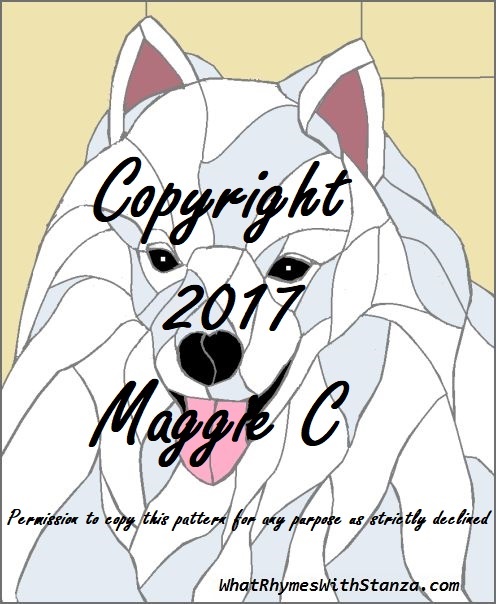
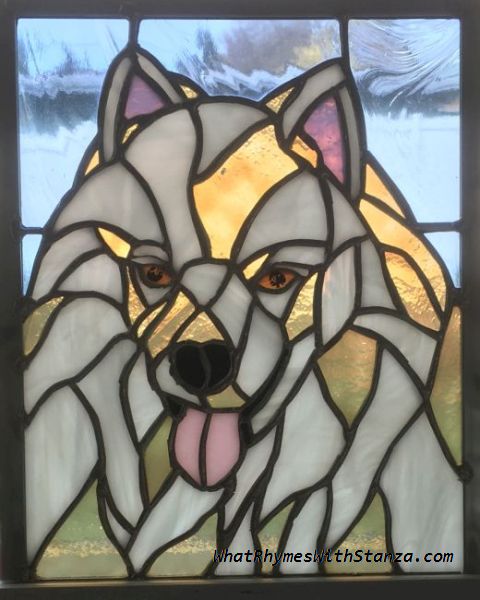
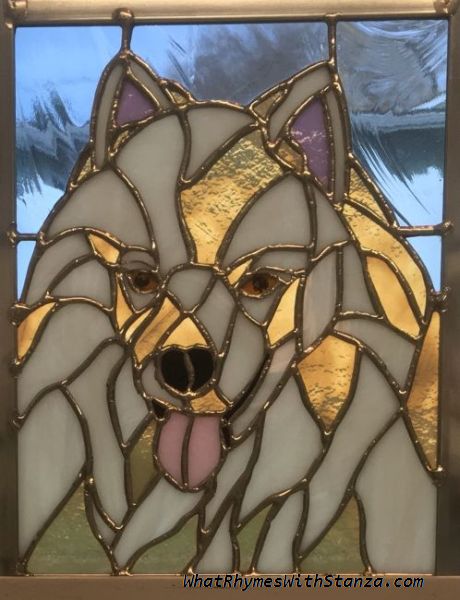
A new undertaking for me is turning pet portraits into stained glass representations; a transformation from photo to cartoon pattern to stained glass panel! And even the finished project is transformed with every change of lighting throughout the day.

Take a look!

transform1

“Brisco” Photo courtesy of Peggy Lemmer

transform2b

Pattern I drew of Brisco based on the photo above

transform4

Completed stained glass panel of Brisco based on the pattern

transform3

Same panel, seen through different lighting.

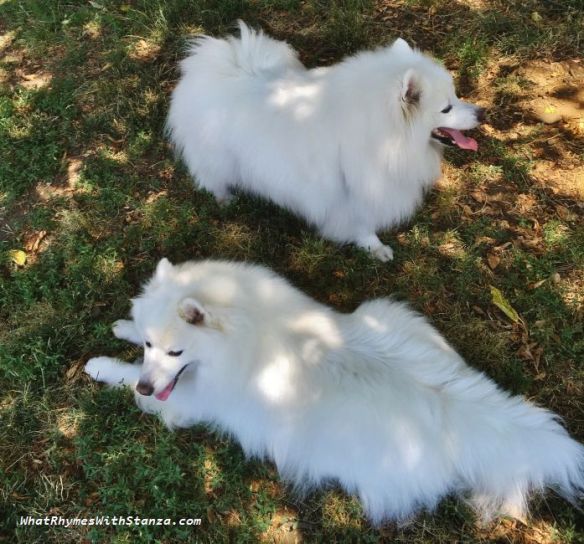
Bonus photo: Brisco (top) with my eskie Chules.

brisco and chules


Stained glass animal portraits will soon be available on my Etsy shop, Glass Manifest. Interested? Go to https://www.etsy.com/shop/GlassManifest  and click on the “Contact shop owner” button,  or email me direct at Maggie.C@zoho.com

A Smashing Success

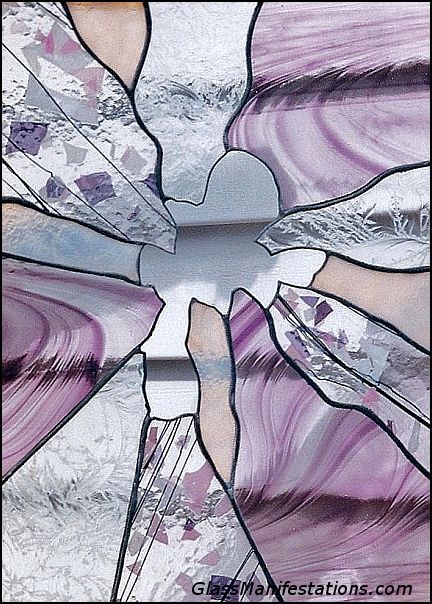
s3

I’m going to make a hole in a window

You’re going to break a window?

Not break a window. Just put a hole in one.

So smash it, you mean.

Yes, it might look smashed.

What will you smash it with?

Does it matter what smashed it?

If you want to smash a hole in a window, you have to hit it with something.

What would you use, if you were to smash a window?

Me? I’d use a baseball. Maybe smack it hard with a bat. You could hit it from clear across a field and no one would know it was you.

People will know I smashed this window.

See, that’s why you use a baseball or something. Make it look like an accident.

So, an unfortunate baseball incident?

Exactly.


s1

“The Unfortunate Baseball Incident”


S  S is for Smashing.

Experimenting in the 90s

experiment g

NOTE: Stained glass photos in this post are from scans of  3×5 inch prints taken a loooong time ago by a not very apt photographer (me). I apologize for the quality (or lack thereof) and small size of the detail photos.

You all remember 1998, don’t you? You could buy a dozen eggs in the USA for 88 cents. President Bill Clinton was impeached for lying about… well, everything. Quebec sought independence from Canada. The Wedding Singer was playing at movie theaters, and Spice Girls were playing everywhere else.

Okay, I don’t remember 1998 either, but I think that was around about the time that I bought my glass kiln. It was a manual model, as opposed to a programmable model. The difference being that mine had one dial that went from “1” to “10” to denote how hot you wanted the interior of your kiln to be, and a gauge that showed how hot the interior actually was. Kind of. Ballpark. Your guess was as good as the gauge’s.

Programmable kilns require a degree in computer technology (or a savvy teenager) to operate. They can be set to heat up when you want them to, stay at that temperature for however long you want, ramp up or down to whatever temp you want next… and continue doing so for however many changes your kiln allows you to preset (which is determined by how much money you shelled out for said kiln).

Needless to say, a manual kiln required a lot of experimentation, copious note-taking and additional experimentation to get the results one wants when fusing or slumping glass. Since I’m too impatient to do all of that – and since that seemed boring as all get out – I opted to just experiment to see what the kiln would produce after my wild guesses about how and when to adjust (remember that little 1 to 10 dial I mentioned?) the temperature.

Here are some of my early experiments:

In the 90s, it was really cool to melt a bottle to flatten it, drill a small, angled hole in one end, and turn it into a stick incense holder. I just stopped at the flattened bottle stage.

experiment b

Then, I had a chipped wine glass that was headed for the garbage. I “repurposed” it, chucking it into the kiln to see what would happen. I was thrilled with this result.

experiment c

This next one was quite brilliant! Unfortunately the photo doesn’t show the results well at all (we took photos with cameras back then, not our phones; my phone cord wouldn’t have extended all the way to the kiln, anyway).

I cut a circular piece of textured glass (hence the grid pattern). Then I placed little rocks in the kiln and laid the glass on top of the rocks. The notion was that the glass would melt around the rocks and form a really cool, totally random, bumpy shape.

How was I to know that the rocks I had gathered from the beach still contained moisture inside and would explode once they were heated to umpteen degrees? That session was cut short once the rock shrapnel began pummeling the inside lining of my kiln.

experiment a

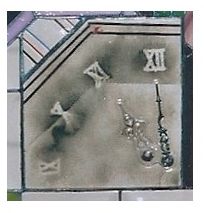
Next, I experimented with sandwiching various things between two pieces of clear glass and fusing them together. Here, I used a couple of metal clock hands. I made the Roman numeral shapes by placing the plastic pieces that came with the clock kit on the glass and sprinkling black fine frit over them. (Fine frit is colored glass that has been ground into powder.) I was smart enough to remove the plastic numbers before preparing the piece for  the kiln (rack one up for the experimenter!).

As I was moving this clock “sandwich” to the kiln, the layers slipped, thus making the shadow line in the frit that mirrors the shape of the glass corner. That “accident” just made it more interesting, so into the kiln it went! I thought this one turned out rather well. Much better than the exploding rock episode.

experiment d

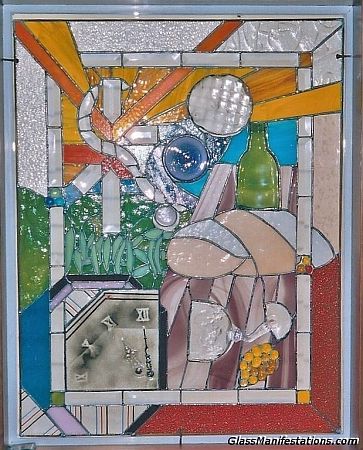
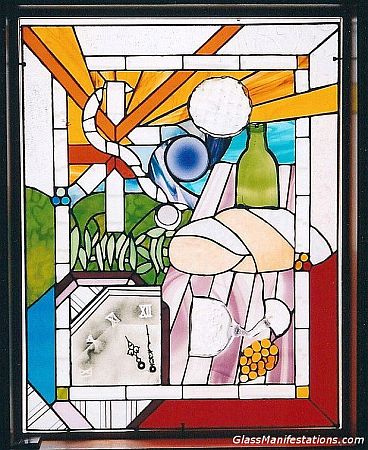
I ultimately soldered my experiment “results” into this panel:

experiment e

Window with no back lighting.

experiment f

Window backlit by sunlight.

I sold my kiln when I downsized my living space. Probably just as well; who knows what I might have tried next? Will I ever buy another? I doubt it. The programming seems too daunting.

Besides, I’m still learning how to take photos with my cell phone.


E E is for Experiment

Play Time

home

This is Day One of the WordPress Blogging U’s course Photography 101. Okay, I’ve taken the class twice before, but what can I say? It’s fun!

Today’s assignment is to share an image showing, “What does ‘home’ mean to you?” And of course, my first thought for a meaningful photo was: My bathroom! Well, more specifically, the new backsplash I made for the sink.

I happen to have a bit of opaque stained glass laying around (okay, maybe a lot of it), which I rarely use these days as I am mostly working with translucent or transparent glass for panels meant to be displayed in windows. I decided to try making opaque glass tiles to add a “splash” of color to the bathroom. The photo above shows the results.

My home is nothing fancy, was built over 60 years ago, and for me it is a perfect place to try out new skills on whatever “improvements” I want to attempt. It’s my life-sized “arts and crafts” project, you might say. My personal playground for pretending to be a plumber or a carpenter, or sometimes a purple unicorn. Don’t judge.

So what’s in the works for my next home project? I don’t know yet. I’ll have to see what’s in my toy box. Uh, I mean my tool box.

Dog Imitates Art

The theme for this week’s Daily Post photo challenge is “Life Imitates Art.”

When I created the “Canid” panel (pictured below), I had a fox in mind. Some folks commented that it looked like my American Eskimo dog, except for the coloring of course.

I’ve been thinking about tweaking the design to make a similar panel to represent my Eskie. Might have to add that to the queue of projects.

In the meantime, enjoy my entry for the “life imitates art” challenge:

art1

Chules, my America Eskimo dog

art2

“Canid” stained glass panel by Maggie C.

Give Me a Break

break2

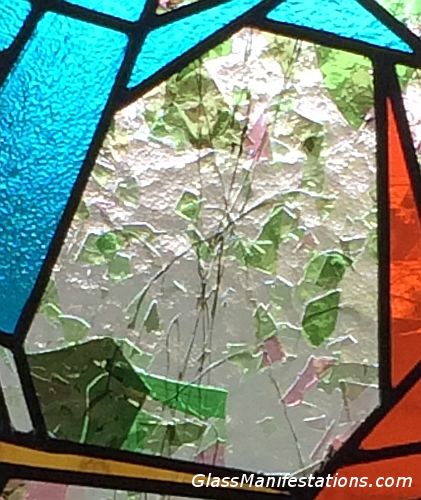
When working with stained glass, it’s always wise to factor in the likelihood of breakage during the construction of a panel. That’s what glass does. It breaks. It cracks. It shatters.

And when it does, you say, “Oops!” or some other four letter words, sweep away the shards, pull out the extra glass that you purchased for just such an occasion, and go on with the project.

But sometimes you have only a limited supply of a particular type of glass, and you have to plan carefully to get the best use out of it. And so it was with my Spring Birds panel.

break4

The background glass was rather spendy, and so I bought just the amount that I thought would be needed for the project.

When it came to cutting and fitting the largest background piece into the panel, I was ever so careful to get it just right. There would be no second chances, because I had no other piece of that kind large enough to replace this one.

I got the piece in, sighing with relief as I tapped the horseshoe nail into place to keep it from shifting and, as I turned away to get the next piece to put in place, I mindlessly gave the nail just one. more. tap.

And I heard it. That heartbreaking, glass breaking, shard making sound. I looked back and saw this:

break1

Oops, indeed!

Long story short, after a trip to the Uroboros glass factory and many dollars later, I was able to replace the broken piece and finish the panel.

I guess when you work with glass, them’s the breaks.

break


Daily Post weekly photo challenge: Oops!

120 Years but No Longer Counting

I had thought it odd the last time I was at the local stained glass supply store. I’d asked for a couple of lengths of the half-inch zinc U-came that I use to frame most of my panels. The clerk had turned to the wall behind the counter where the long boxes that held the six-foot long strips of came were shelved.

After making a vague show of glancing into a couple of boxes, he announced,  “We don’t have any.”

“When do you expect to have more?” I inquired.

“I wouldn’t count on it,” he said.

He wouldn’t count on it? I wanted to say, “You didn’t really look very hard. Maybe there’s some in the back room where you guys disappear to sometimes to retrieve the less frequently requested supplies.”

But I’m not the pushy kind, so instead I hopefully asked, “But you do expect to have more sometime?”

“I wouldn’t count on it,” he replied.

If I were the pushy kind, I would have then said, “What do you mean, ‘I wouldn’t count on it?’ Surely I’m not the only one who buys this item. And if you no longer carry it, you should say so, or say you can order it, or say where I might find some. But just ‘I wouldn’t count on it?’ What lousy customer service!”

But of course, I didn’t say any of that. I’m more of the strong silent type. Or perhaps the wimpy silent type. Most likely the latter. Regardless, I left the store sans zinc and puzzled by the whole encounter.
glass variations2

I returned to the store yesterday, thinking that if someone else were working the counter I would ask again about the zinc came, and maybe inquire as to exactly what “I wouldn’t count on it” meant. That would have been quite pushy for me, too, but I was still rankled by the prior clerk’s lackluster comments.

I got my answer even before stepping foot in the store. A notice posted on the front door read “Going Out of Business.”

After 12 decades in business, Cline Glass in Portland, OR was shutting its doors.

I’ve frequented Cline’s ever since I began dabbling in stained glass in the 1990s. Before moving to the Portland area, I would drive the 80-some miles from the coastal town of Tillamook to purchase supplies for my projects. Over the couple of decades since my introduction to stained glass, it has evolved from “dabbling” into something more akin to my “lifeline.”

A bit melodramatic perhaps, but glass is my greatest outlet for creativity. A form of meditation. My home studio is my place to get into “the zone” and settle my anxieties for a bit of time. A place to let the ruminating side of my brain take a rest as the technical side figures out how to score the glass to get that inside curve to break cleanly.

Sure, I can order glass and supplies from catalogs or online, but buying stained glass long distance is really a crap shoot.

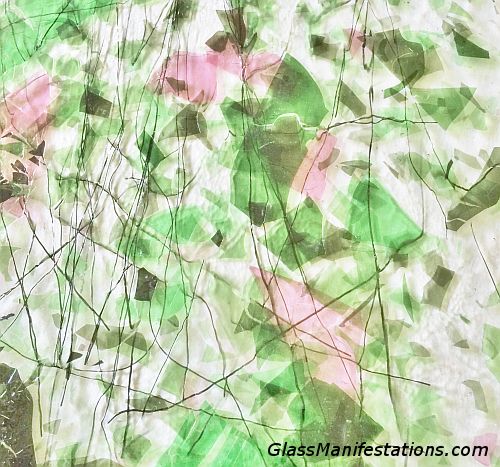
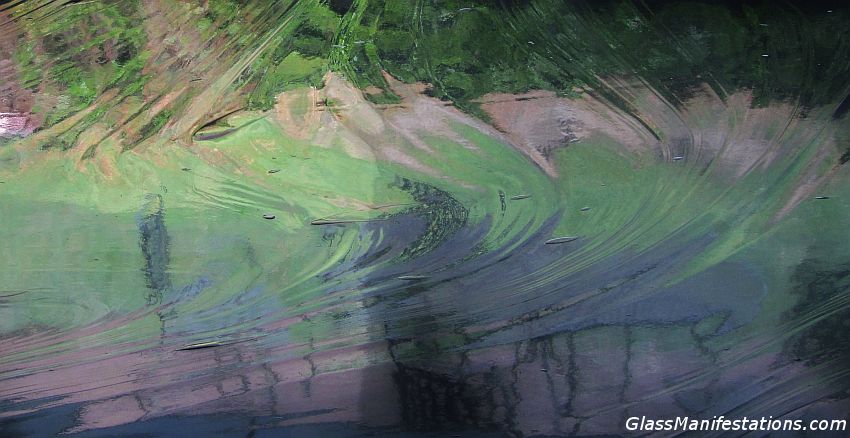
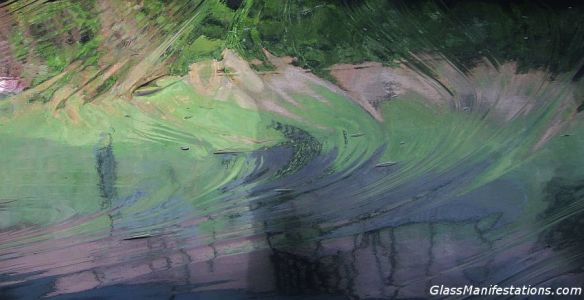
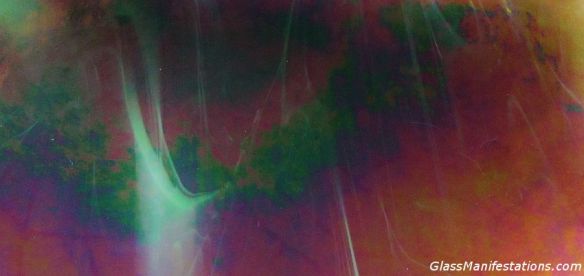
There are often significant variations even within an individual sheet of some types of glass. And what you receive in your long-awaited delivery from across the country may or may not resemble the sample photo you saw in the online catalog. Usually it does not.
glass variations1

When buying stained glass online, you can’t hold it up and see how it reflects light, how it filters light, how it comes to life and brings the ambient light around it to life.

You can’t place it next to another selected piece and see how the colors and textures will relate with one another, evaluate whether the pieces will work together to create the effect you want, determine whether the unique patterns on the quarter-sheets in front of you are capable of telling the story you want your finished piece to portray.

Needless to say, I’m bummed. I asked a clerk yesterday (not the “wouldn’t count on it” guy) where I might go from now on to get my glass, and he said, “Try Seattle.” Another 173 miles away, but I will make the drive when I need to.

I’ll need to plan out my projects better. I will no longer have the luxury of thinking, “You know what would look good here…” and zipping off to Cline’s to see if they still have that kind or color I saw on a previous visit.

As a general rule, I don’t like change. But I guess every 120 years or so, change is going to happen. I will miss Cline’s, but Seattle’s a nice town to visit. Maybe I’ll find a good source of glass there, a retailer that will be in business for another fifty years at least.

If I find that source, I will likely stick with it for the next few decades or so, or until I can no longer break out inside curves, whichever comes first.

That, I would say, is something you can count on.
Sorting Glass — A Poem

I’ve turned my energies to poetry for a while, as I take a two-week challenge from The Daily Post. I didn’t write this poem for the challenge, but was reminded of it, so I thought I’d share it here:

Sorting Glass

Sorting stained glass into bins,
careful lest I cut myself.
How does one parse the spectrum of light
into specific and separate boxes?

Blue or green?
Translucent or opaque?
Flashed? Rolled? Blown? 
It even defies the line 
between solid and liquid.

Can’t mold it into endless shapes,
like a potter fondling clay on a wheel.
Can’t sand it smooth like a choice piece of wood,
and wipe the fine dust away with gentle strokes.

No. It’s cold and rigid and sharp and brittle.

But when the light finds it,
it warms and dances and morphs 
into myriad shapes and textures and nuances
that no other medium can rival. 
It comes alive. 

It brings me to life.
And as I sort it into bins,
being careful not to cut myself,
I feel its pulse in time with mine. 

m3