Stained Glass Production: at the Corner of Art and Environment

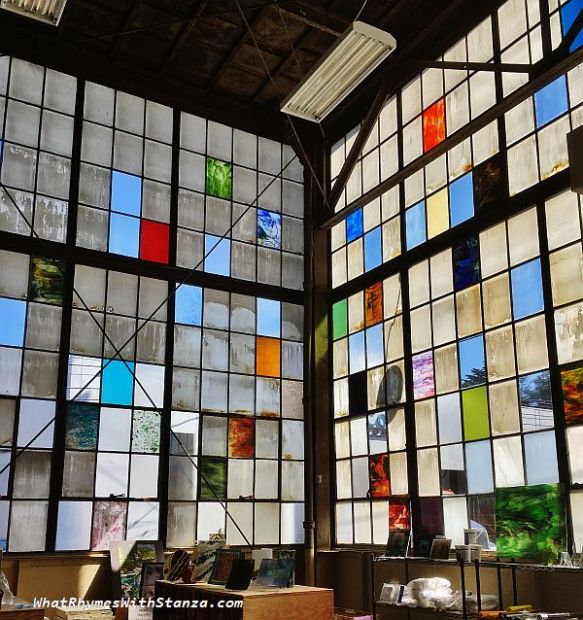
corner3

Interior corner at the Uroboros Glass studio in Portland, OR.

The art glass industry is facing many changes lately, and it’s hard for me to get on board with the direction things seem to be going, even though I feel like I “should” think it’s all for the better. Even though it IS for the better. Likely.

In the Pacific Northwest where I live, two of the three nearest art glass manufacturers have essentially gone out of business recently, in large part due to newly imposed environmental regulations. Growing concern about poisonous contamination from glass factory operations have led to tighter – and very costly – restrictions on manufacturers, and the expense of implementing the revised safeguards has been crippling to the industry.
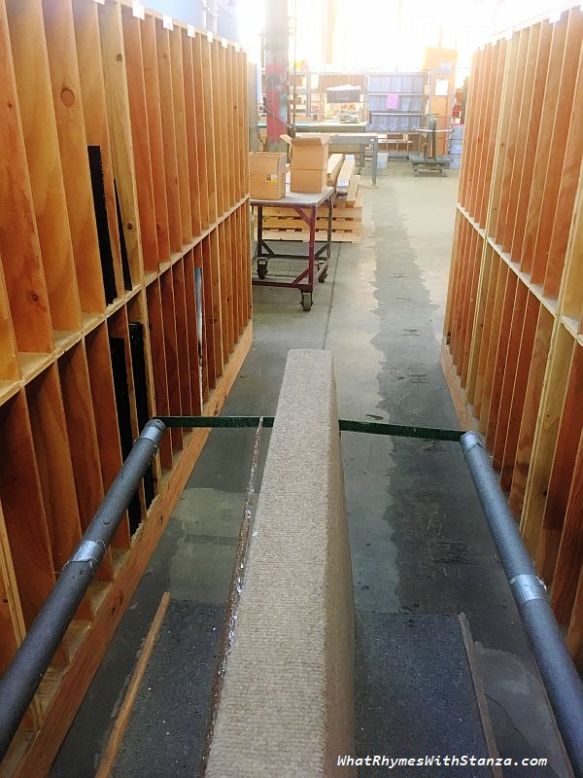
corner2

Glass bins were nearly empty at the Uroboros Glass factory as of mid-July, 2017

One could question the impetus for such strict mandates: How viable were the environmental studies, and did they provide an accurate depiction of environmental impacts? Was there consideration and investigation of other potential sources of contamination in the tested areas? Are the specific restrictions and requirements that have been imposed actually effective and/or what is needed to improve safe factory operation?

Maybe it simply boils down to “better safe than sorry.” Environmental, ecological and human preservation and safety are paramount, and if the art glass industry has to sacrifice certain hues of glass to contain unhealthy contaminants, then so be it.

A no-brainer, I suppose. But still…
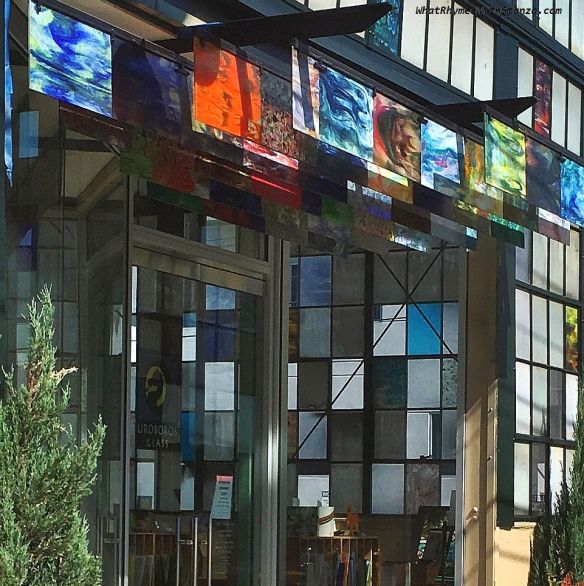
corner1

Entry to Uroboros Glass Studio in Portland, OR.

Production of art glass previously produced by the two closed factories, Uroboros Glass and Spectrum Glass, has been taken over by another glass manufacturer, Oceanside Glasstile, and moved to a different, less restrictive location. But that doesn’t really resolve the issues.

There are still myriad choices in color, texture, opacity and other facets of art glass, certainly enough to feed my artistic soul for a long time to come. Perhaps I need to be open to “turning the corner,” and seeing what new “avenues” appear, so to speak; non-toxic avenues that will help sustain ALL of us for a long time to come.


The Daily Post weekly photo challenge: Corner

Art and Environment

uroboros2

The one-word prompt over at The Daily Post today is “Glass.” How could I not write a post to that prompt?

I’ve been neglecting this blog for a while now, but it’s not for lack of topics to discuss. It’s more because I felt the need to research topics, and to sit down and do a thoroughly well-planned post that considers all sides of an issue.

But where’s the fun in that, right? So I’ll just write with a disclaimer that everything I say has the potential of being utterly false. I think I can work within those parameters.

There’s a lot of change going on in the art glass industry here in the Pacific Northwest, and I imagine it won’t be long until the issues spread nationwide, if they haven’t already.

In some random study of moss or lichen or something (as I said, I forewent the research on this), it came to light that parts of Portland were showing very high lead content in the environments. Further study seemed to pinpoint the source of these pollutants as being two art glass manufacturing sites, who use heavy metals to create the glass.

Chromium, for example, is used in production of glass in colors of green, black, and some browns and purples. Cadmium is used for making yellows, oranges, and orange-reds. Both factories ultimately stopped production of those colors of glass while further testing is conducted to determine the actual sources of pollutants, and while installation of new emission control measures take place.

The divergent responses of the two glass manufacturers — Bullseye and Uroboros —  remind me of two cartoon characters in the children’s magazine Highlights: Goofus and Gallant. Goofus is always rude, thoughtless, uncouth, greedy… Gallant is always thoughtful, considerate of others, polite… well, you get the idea.

So, in my metaphor, Bullseye is Goofus and Uroboros is Gallant. This is the part where lack of research could get me into trouble, so I’ll leave my discussion of the two companies at that.

Another Pacific Northwest glass manufacturer, Spectrum, has gone out of business as of this month. A smaller company than the other two, Spectrum made the determination that — along with other issues — they couldn’t absorb the cost of retooling for emissions control. Spectrum had been in business for thirty years.

While I lament the changes that might curtail the manufacture of many colors of glass, I of course acknowledge the utmost importance of environmental safety. (Hint: Gallant cares about that, too.)

But think about telling Vincent Van Gogh that he couldn’t use yellow in his paintings anymore. “Starry Night” would have become just “Night.” And his Wheatfield and Sunflower paintings? I can’t imagine.

The art glass- and glass art- worlds may never be the same. I’m sure someone will come up with other ways to recreate the colors with less environmentally impactful materials, but it won’t be the same. Or they’ll come up with ways to meet increasingly stringent environmental standards, at which point the cost of manufacturing art glass will skyrocket to the point where the glass will become unaffordable to hobbyists and nonprofessionals.

Okay, I’ve thoroughly bummed myself out now. I guess there’s no use in crying over spilled – um, cadmium. The good news is that my premonitions about the future are usually totally off base. Especially when I haven’t done my research.

I’m guessing that Gallant always does his research.


The Daily Post one-word prompt: Glass

The I’s Have It

i8Inertia: I want to make a stained glass panel for my soon-to-be-born grandbaby. But:

  • I haven’t done stained glass work in a long time and I’m pretty rusty;
  • I’m downsizing so I don’t want to go out and buy a lot of new materials;
  • I don’t want to end up making something that looks horrible.

Inquisitiveness: What could I make that would be fairly simple, using materials I already have on hand, while challenging my perfectionism?

i3

Idea: I have a sample box of multi-colored rectangles of glass. I have lead came. Straight lines are simple.

i1

Inspiration: When I lay out the sample pieces, they remind me of a patchwork quilt. I could make my new grandbaby a “quilt.” That’s a grandmotherly gift, right?

i2

Imagination: What if I added a symbol of some sort? Something meaningful to me that would make the “quilt” more personal… like… a nautilus! [You’ll have to wait for the “N” day to find out what makes the nautilus meaningful to me.]

i4

Implementation: Get the lead out (literally), and go for it!

i5

Insight:

  • I’d forgotten how much fun it is to do stained glass and I want to take it up again;
  • simple designs can be just as effective as elaborate ones. I don’t have to plan big projects that require a lot of materials;
  • when my grandbaby is old enough to appreciate this gift, her thoughts will likely not be about how “horrible” it is. Her thoughts might even have to do with recognizing the love that went into the making of this gift.

i6

Incredible!!!!  ⇒ The way that I feel for having overcome the inertia, impediments and insecurity I felt before taking on this project!

i7

Isla: The name of my first grandbaby.


I  I is for Incredible.

A Glob by Any Other Name. Please.

g4You look at these beautiful buttons of glass; a confectioner’s delight of colorful “candy.” And you ask, “What are these gorgeous pieces called?”
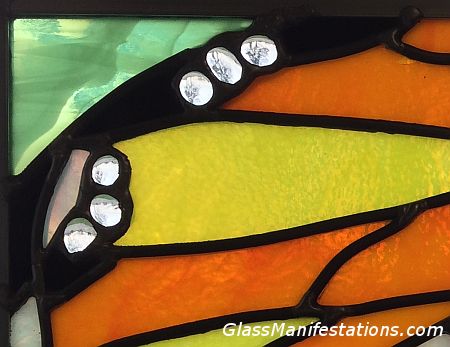
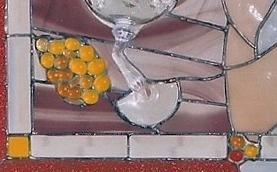
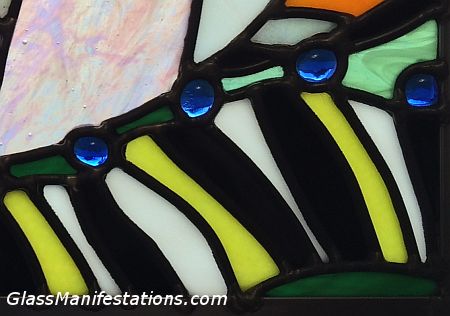
And I say, “Oh, those? Those are globs.”

Globs? Brings up visions of a lump of ice cream fallen to the sidewalk where the warm pavement turns it into a sticky – well… a sticky glob.

Or maybe a coagulation of gunked up motor oil stuck to the floor of a mechanic’s garage, dripped from an engine that was so filled with grime that the dark sludge came out in – you guessed it – globs.

But these beauties of glass? These irregular shapes and sizes were formed when molten glass was dropped in small amounts onto a flat surface and left to solidify. Flat on the bottom, rounded on top, and delightfully ready for incorporation into stained glass projects.

g2

g1

g3

And, yes, they’re called globs.

Oh, by the way, if you don’t think that name quite suits them, I guess you could call them by their other name. They are also known as nuggets.

g5

Feel better now? I know I do.


G  G is for Glob.