Yesterday was Groundhogs Day in the US and Canada, and megastar (among the rodent crowd) groundhog Punxsutawney Phil purportedly did not see his shadow, which is said to be a harbinger of an early spring this year.
While not the most reliable diagnostic tool of the atmospheric sciences (the groundhog has about a 39% accuracy rate), it is nonetheless a quaint tradition from simpler (climatically speaking) times.
A bit lesser known in the US – okay, a LOT lesser known – observance on February 2nd is World Wetlands Day, a day designated to bring awareness to the importance of wetlands in balancing global ecosystems.
The house where I lived as a youth was situated on a sand hill that was basically surrounded by wetlands (back then designated simply as a swamp). The first signs of spring for me were the green shoots of skunk cabbage that emerged from the murky waters of the swamp. These quickly grew into wide, flat, shiny leaves and bright yellow flowers that emitted the musky odor of their namesake. I loved the cheery sight of them, and I actually found the earthy, slightly sweet smell to be somewhat pleasant (in small doses and from a distance).

The sounds of croaking frogs were prevalent on warm evenings, and every once in a while a beaver or nutria would find their way into our lower yard. Mosquitoes abounded. We pretty much stayed out of the swamp and let it do its thing of living and dying, sprouting and rotting, flooding and receding. I thought it was kind of cool to live within the wetland, but I had no appreciation of its importance as an ecosystem.
The last time I visited that area, I found that the swamp had been filled in and houses lined both sides of the low road that used to define where our yard ended and the swamp waters began. It was a sad sight. The adage “You never know what you have until it’s gone” comes to mind.
It’s too late for “my” swamp, but other wetlands can be restored, preserved and protected. Let’s do it!
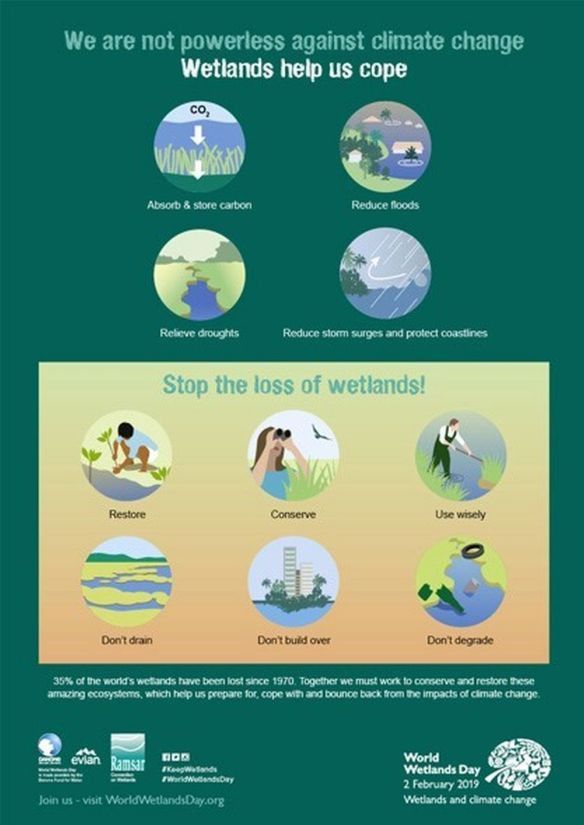
Infographic taken from WorldWetlandsDay.org





 What Rhymes with Stanza?