April Showers Bring…

Jules Verne. From the Earth to the Moon. London, Sampson Low, Marston, Low, and Searle, 1873 

It’s April, and we all know what that means: NaPoWriMo!

It’s National Poetry Writing Month, and the well-versed souls at NaPoWriMo.net are once again supplying us with inspiration, motivation and creative prompts to help us in the challenge of writing a poem a day for the entire month of April. I always have the best intentions of meeting the challenge, but sometimes life happens. We’ll see how it goes this year.

For April 1:

They say you can’t judge a book by its cover, but they never said you can’t try to write a poem based on a book cover — and that’s your challenge for today! 

As a resource, we were sent to The Public Domain Review’s collection “The Art of Book Covers 1820-1914.”

I chose to use a cover to Jules Verne’s book From Earth to the Moon. My endeavor:

To the Moon

When first we breached primordial ooze, 
our lungs inflating from newfound air,
we turned skyward with clouded eyes, and
there it was:

a moon!

We grew a spine (well, some of us),
strengthened lengthening limbs,
climbed mountains and – 
finding our voice – we howled 

at the moon. 

Torsos stretched, gaining balance.
Minds stretched, gaining wherewithal.
Desires stirred beyond mere survival.
Straining upright, we reached yearningly to

touch the moon.

Stripped of innocence, we clothed our bodies.
Sloughing naivete, we cloaked our intentions.
Finding pride, we adorned our personhood.
Growing listless, we set a goal: we would walk

on the moon. 

Scarred and marred from our abuse, at a distance
Earth nonetheless appears a shiny bauble; a marble
expendable in our cosmic game, because we believe
if all else fails, we will simply move 

to the moon. 

Cruel Moon

moon

“The moon is merciless,” she writes.
Cruel and scathing, she tells us.

Is this the same moon under which
lovers swoon?

The same moon toward which
canids tilt sharp-muzzled heads and
sing ballads torn from the depths of
ancient heritage?

Seer of harvests, bountiful and ripe.
Sometimes new,
sometimes blue,
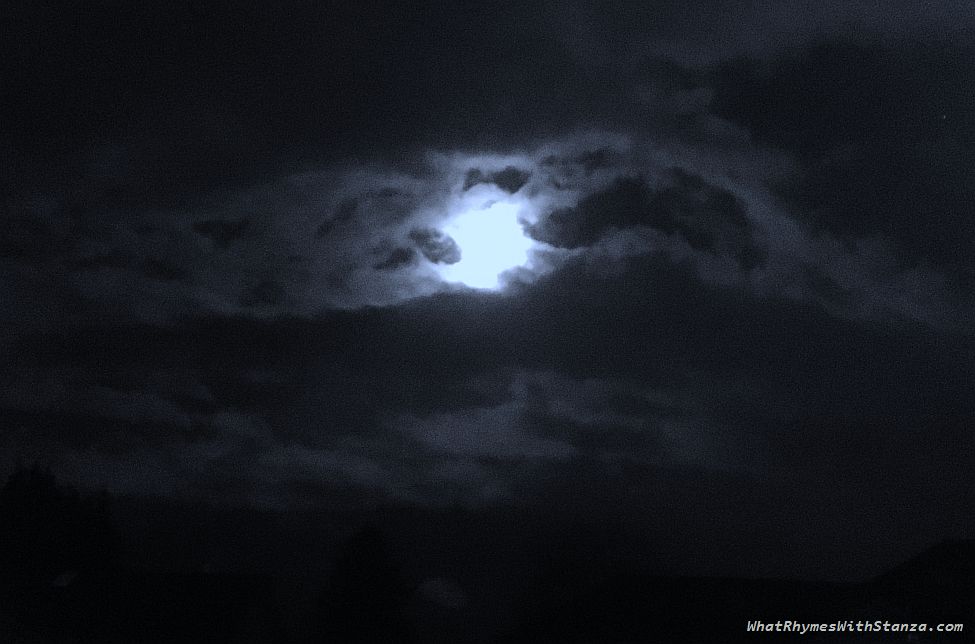
sometimes erased by crumbling clouds,
sometimes agleam like a new gold tooth.

How can it be merciless, suspended
beyond mortal hands? Out of reach,
out of touch,
timelessly same as the day it was born.

“I know the bottom,” she writes.
“I do not fear it; I have been there.”
Moon-stricken poet, no longer a pawn
to the beacon of night,
where is this bottom you speak of, and
where are you now?


NaPoWriMo Challenge, Day 29: pick a poem written by Sylvia Plath, and then write a poem that responds or engages with your chosen Plath poem in some way.

I chose the poem “Elm,” written on April 19, 1962.

Circle Dance

r1

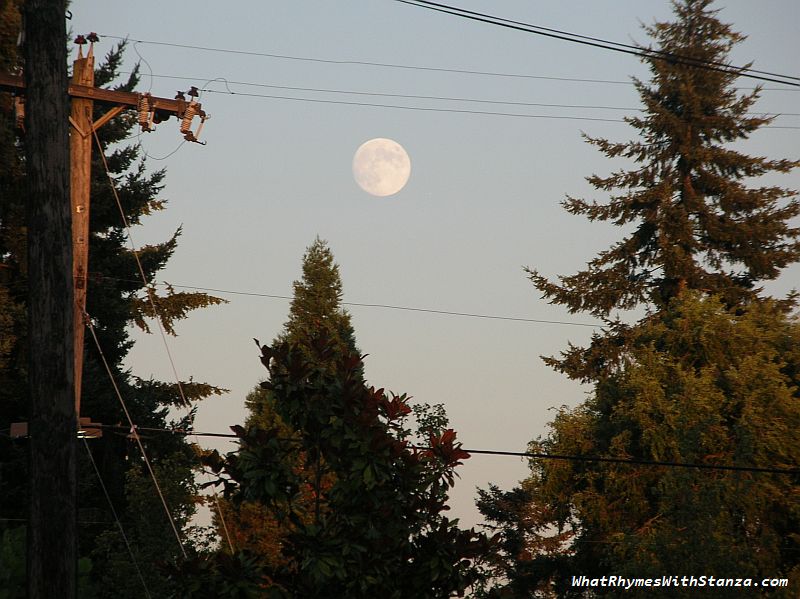
Round moon makes its
rounds around the
round earth that moves
‘round the bright,
round life-giving sun.

Cyclical seasons grow the
round bulbs of spring into
round flowers in summer that
round out colorful bouquets.

‘Round about autumn we
round up fallen leaves into
rounded piles to jump in and play.

Round snowballs fly as
round-faced children run
‘round in the wintry cold.

Cyclical seasons
round out our years as we
cycle through ages and stages in the
circle dance of life.


R  R is for Round.

Inward Eyes

“To see the moon that cannot be seen,
turn your eyes inward & look at yourself, in silence…”

~ Rumi

moons

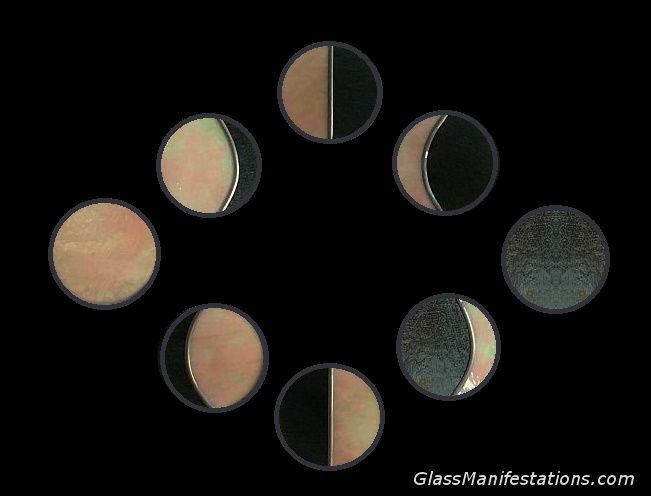
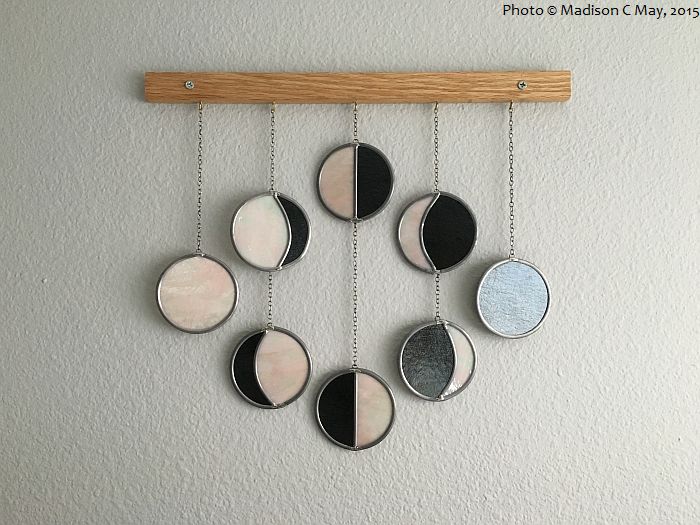
Moon Phases (artist Maggie C)

You might say I’m in the eye business. According to Dictionary.com, one of the definitions of eye is:

the power of seeing; appreciative or discriminating visual perception: [as in] the eye of an artist.

Okay, so this particular definition is sixth in line of the listed meanings, but it is there.

I think for most visual artists, what you see (literally, with your eyes) when you look at their work is inconsequential compared to what you feel. Or how it makes you think. Or what memories it evokes.

Or any number of other responses. But a response that comes from your inner eye.

I always find it interesting to hear how my stained glass pieces affect a viewer. What it says to them, if anything. It’s especially interesting with my abstract designs.

Someone saw one of my panels once and said, “That looks like hope!” Someone else might see it and say it looks like despair. There’s no right or wrong.

I may have my own interpretations of the pieces, and my interpretation is also neither right nor wrong, even though it’s my creation. It can evoke myriad responses from me, too. Different responses at different times.

Different things that my inner eye chooses to perceive. That’s what makes art – and life – interesting.

“Close both eyes to see with the other eye.”
~ Rumi

eyes