Beauty in the Eye of the Eyesore

“Your yard gets a lot of attention from my visitors!” my neighbor calls from the edge of her manicured lawn. I survey my property, a burgeoning habitat for native plants and the native critters that feed upon them. 

“Yeah,” I reply. “Someone recently asked me if I was letting the yard go wild to reduce my property taxes.” 

My neighbor laughs, and then admits the nature of the “attention” to which she had alluded.

“My visitors ask, ‘Does she mean for her yard to look that way?’ ‘She’s planting all that brush intentionally?’” 

bear grass and buckbrush,
coyote bush and deer fern…
and skunk cabbage? Please!

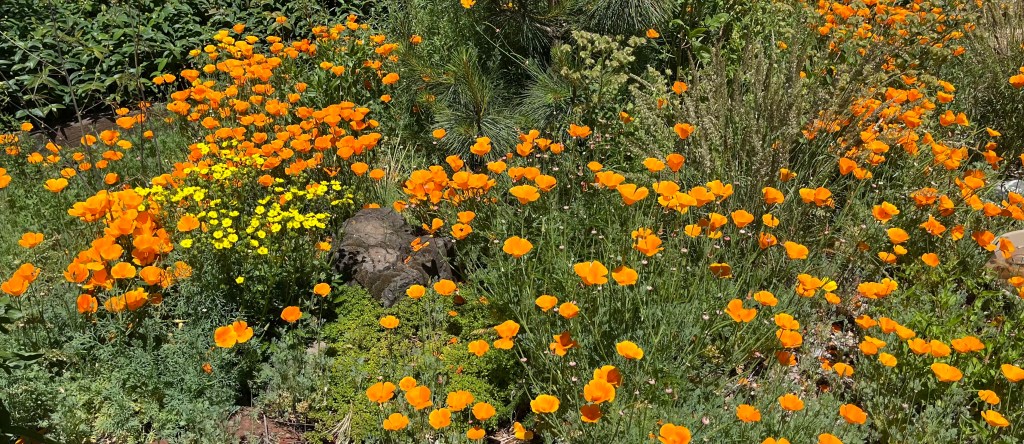
I wonder if those are the thoughts of visitors or of my neighbor, or maybe of all who see my native landscaping. So be it. I settle into the rocking chair on my back porch and watch bees – legs plump with pollen – buzz through the California poppies. Ladybugs dine on aphids among the large-leaved lupines, and a pair of mourning doves peck for seeds beneath  a clump of prairie june grass. 

summer solstice nears
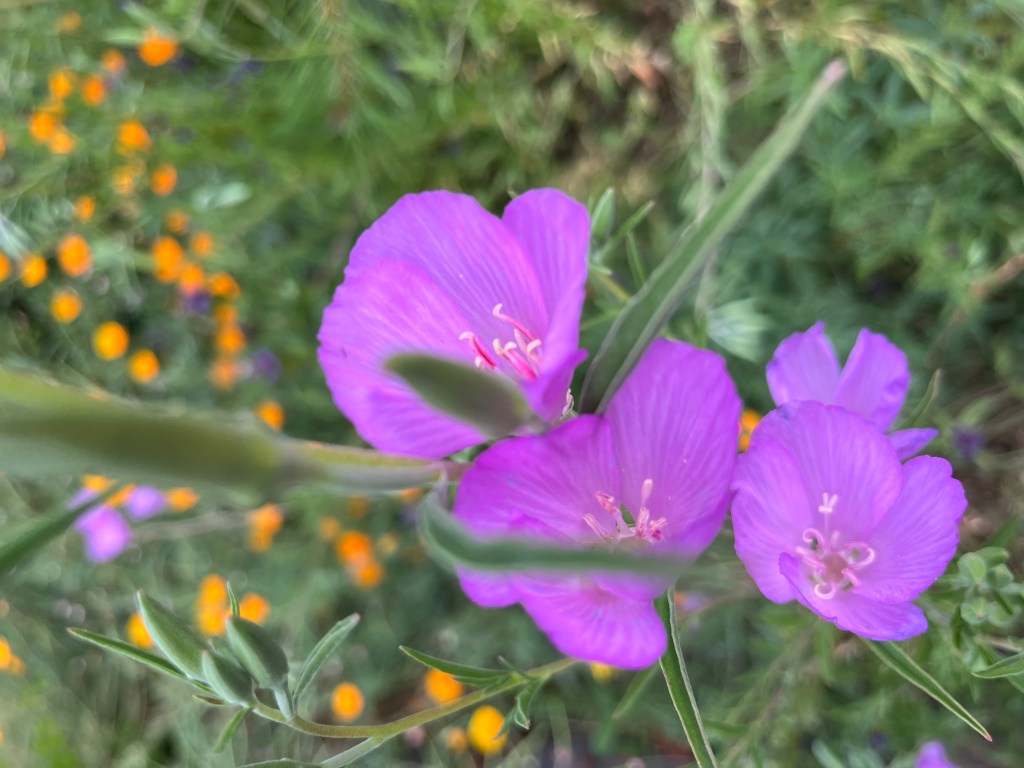
farewell-to-spring’s pink petals
blossoming on cue
dVerse Haibun Monday: Summer or Winter

Fleeting Blossoms

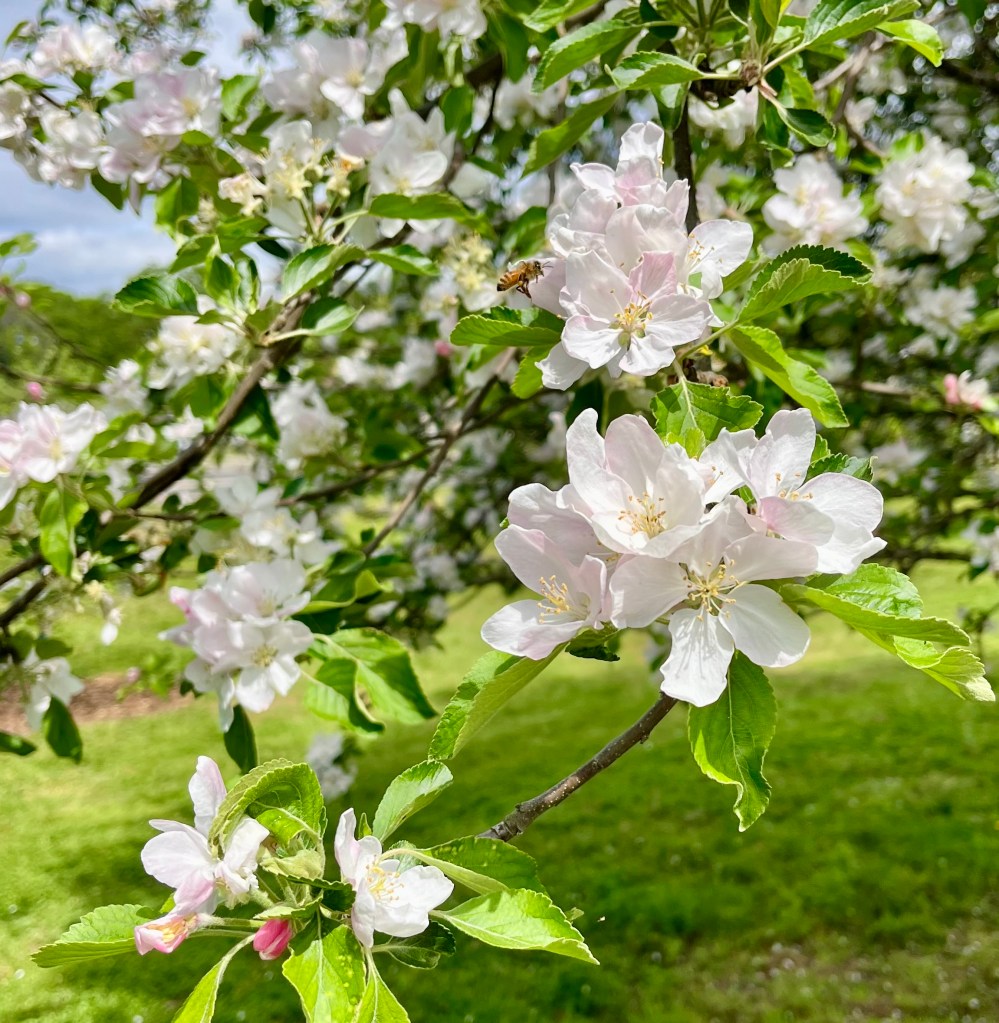
While walking through the park, my dog Chules and I pause at an apple tree. I am drawn to the white-pink blossoms and the bees that float among them. Chules is more intrigued by the base of the trunk, and the invisible messages left there by other dogs. He lifts his leg and adds his own note to the trunk. 

cherry blossoms wane

pink petals carpet the ground 

apple tree looks on

Day 29 of National Poetry Writing Month (NaPoWriMo). In response to dVerse prompt: Haibun Monday: late cherry blossoms.

Read the Signs

Day 26 of National Poetry Writing Month (NaPoWriMo) .

Today’s NaPoWriMo prompt is to write a sonnet. The strict rules of sonnets:

  • 14 lines
  • 10 syllables per line
  • Those syllables are divided into five iambic feet. (An iamb is an unstressed syllable followed by a stressed syllable).
  • Rhyme schemes vary, but the Shakespearian sonnet is abab cdcd efef gg (three quatrains followed by a concluding couplet).
  • Sonnets are often thought of as not just little songs, but little essays, with the first six-to-eight or so lines building up a problem, the next four-to-six discussing it, and the last two-to-four coming to a conclusion.

The “rules” are somewhat bendable, but I tried stay relatively true to the strict format. Herewith:

Sales Pitch (Read the Signs)

The sign says No Solicitors. You knock.
Beware the Dog that lunges at my door.
“The rats and piss ants this year run amok.”
You’ll slay them all. They’ll bother me no more.

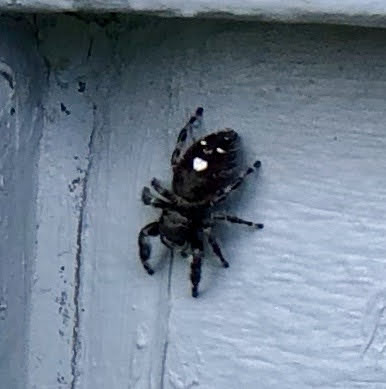
A spider egg sac hangs upon the wall.
“A hundred spiderlings your home will fill.”
More likely to my garden they will crawl
to feast upon the bugs you wish to kill.

No rodents, bugs or crawlies bother me.
The poison’s “safe for pets,” you persevere.
My Wildlife Habitat sign plain to see;
No chemicals have touched my yard in years.

Your sales pitch failed, now please just go away.
My “pests” will live to see another day.

Bird Speak

Day 23 of National Poetry Writing Month (NaPoWriMo) 

Today’s NaPoWriMo prompt is to write a poem that focuses on birdsong. I wrote about birds, but not songbirds. Oh, well. Here ’tis:

Bird Speak

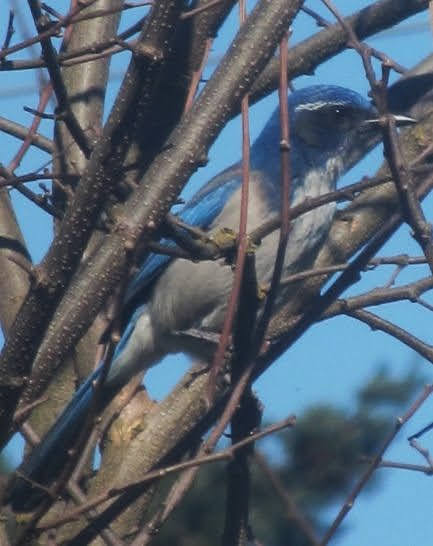
Scrub-jay squawks accusingly at me
from atop my backyard fence.
What offence I may have committed,
I do not know, but he’s got that
“you know what you did” tone.
“I shouldn’t have to tell you.”

Always a tricky situation. Do you
try to guess, and risk confessing to something
they didn’t even know you'd done? Do you
ask forgiveness, even though you don’t know for what?
Am I overthinking the meaning of this jay’s
strident vocalizations?

My dog Chules joins me on the deck, and the scrub jay
aims his admonishments at the pup.
Now I know he’s just making stuff up.
Chules is a good boy, and – while he’s been known to
chase some wildlife now and again –
he always gives them a good head start
lest he actually catch something.

Rather abruptly, scrub jay zips his beak, and
flits up into the canopy of the black walnut tree.
A large black crow swoops over my rooftop
and lands on the fence, inches from where the
jay had been holding court moments ago.
With one loud caw, he announces: there’s
a new corvid in town. I don’t see a badge,
but I won’t argue.

Chules and I are forgiven our sins, so long as
we don’t try to pull any of that crap on the crow.
Mind you, crow has no better idea of
our transgressions than Chules and I do.
We agree to his terms nonetheless.

Chules is tempted to run at the crow and scare him off the fence,
but thinks better of it when he remembers being previously
dive-bombed by said bird for just such behavior.
I go back to pulling weeds, and the scrub jay… well,
we likely won’t hear much from him for a while.

Pilgrim Ridge

Day 14 of National Poetry Writing Month (NaPoWriMo) 

Today’s NaPoWriMo prompt:

try writing a poem that describes a place, particularly in terms of the animals, plants or other natural phenomena there. Sink into the sound of your location, and use a conversational tone. Incorporate slant rhymes (near or off-rhymes, like “angle” and “flamenco”) into your poem. And for an extra challenge – don’t reference birds or birdsong!

Here we go:

Pilgrim Ridge

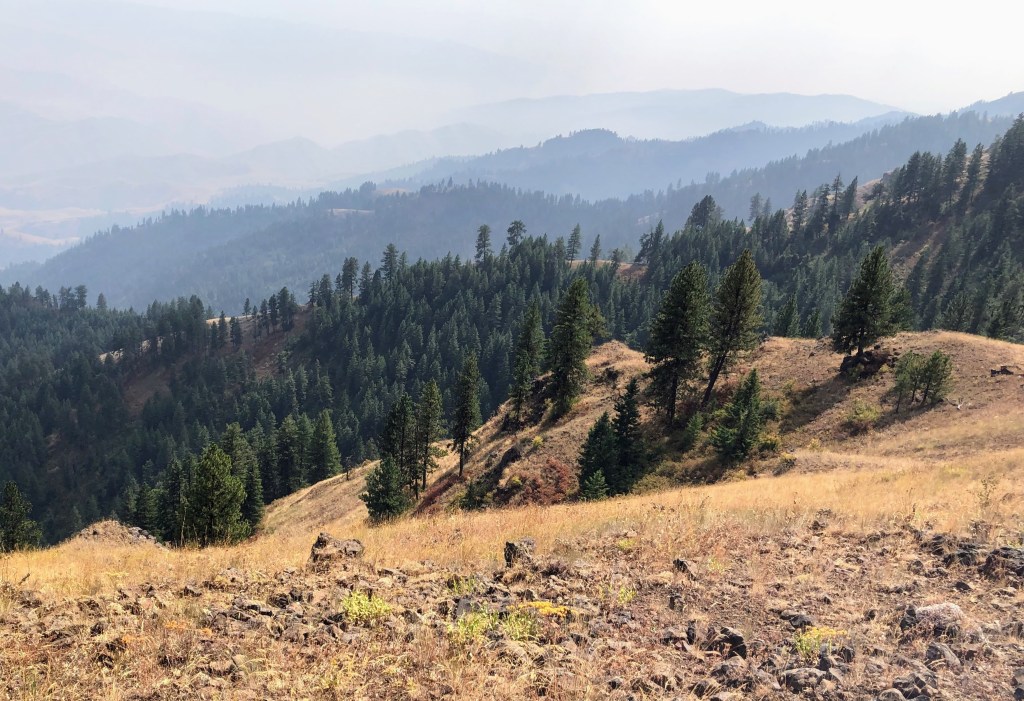
Atop Pilgrim Ridge, miles from nowhere – 
no, that’s not an apt description;
Nowhere is quite near, in fact it’s right here –
crisp, pure silence defies definition
until one acclimates to the endless sky,
the light savory air,
the rocky ground stubbled in dry
remains of early summer wildflowers.

Leaning into the silence, one begins to hear
the percussive opening of a breeze-soft symphony;
gentle crackling of seed pods, split as the sun bears
down, the shaker of seed shot falling to ground,
a brush-on-cymbal swish of grasses swaying together,
the guiro scrabble of chipmunks skittering up
skinny pines to hide in long-needled shelter.
And then the music ratchets up.

The chipmunks begin their cuíca scoldings.
Wind chimes low tones in the clustered trees,
now weaving. Grasses are folding in the
hot air. A steady push now; no longer a breeze.
Clouds scuttle in and the thunder drum shakes,
first slow and lumbering, then brash, a
crescendoing rumble
that ends with a lightning-bright quake,
and the diminuendo of tambourine rain.

Cuíca Sounds

Pink Moon

Day 13 of National Poetry Writing Month (NaPoWriMo) 

Today’s NaPoWriMo prompt:

Donald Justice’s poem, “There is a gold light in certain old paintings,” plays with both art and music, and uses an interesting and (as far as I know) self-invented form. His six-line stanzas use lines of twelve syllables, and while they don’t use rhyme, they repeat end words. Specifically, the second and fourth line of each stanza repeat an end-word or syllable; the fifth and sixth lines also repeat their end-word or syllable. Today, we challenge you to write a poem that uses Justice’s invented form.

And so:

Pink Moon

April’s full moon – the Pink Moon – lights the sky tonight.
Its name evokes spring flowers: creeping phlox, moss pink.
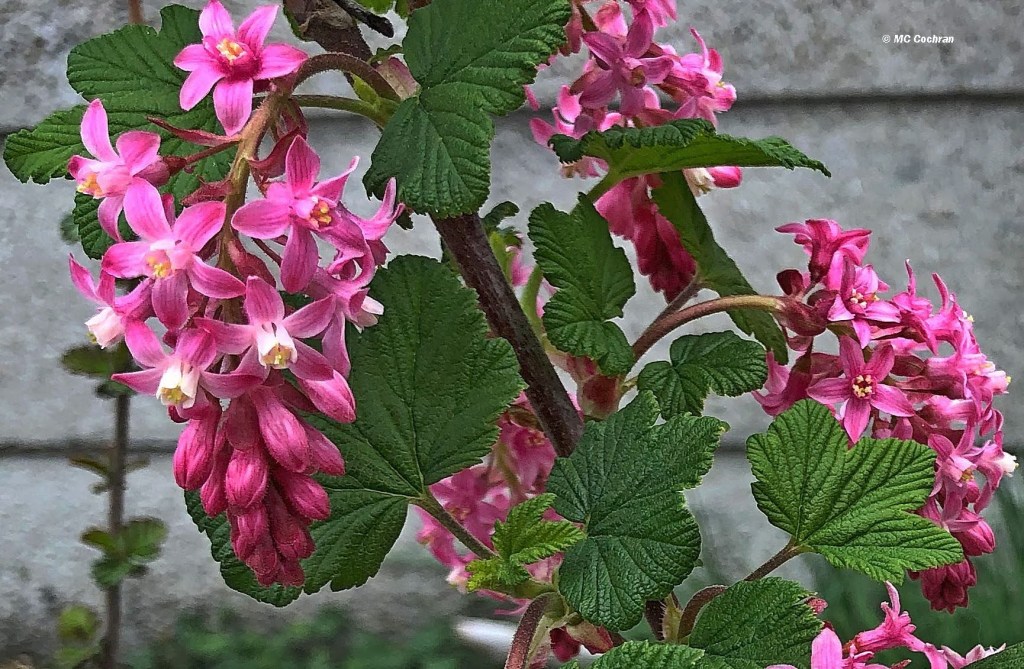
Where I live the red flowering currant blooms now.
Amongst shrubs with still bare branches, a pop of pink.
I stepped outside to view the moon. It wasn’t there.
I’ll check later. Perhaps it’s neither here nor there.


Flowering currants are first to bloom in my yard
of native species. Osoberry comes on next.
Its small pale blossoms don’t make nearly the same splash.
Oregon grape blooms next, and then the next, and next.
The Pink Moon is not pink; the red currant blooms are.
I’d check again, but cat-in-lap says no, so here we are.

The Ocean

Day Zero of NaPoWriMo (National Poetry Writing Month). Or is it NaPoWriMo eve? I shall endeavor once again to meld with my muse and meet the challenge of writing a poem a day for the entire month of April.

Our first (Early Bird) prompt from NaPoWriMo.net is to

Pick a word from the list below. Then write a poem titled either “A [your word]” or “The [your word]” in which you explore the meaning of the word, or some memory you have of it, as if you were writing an illustrative/alternative definition.

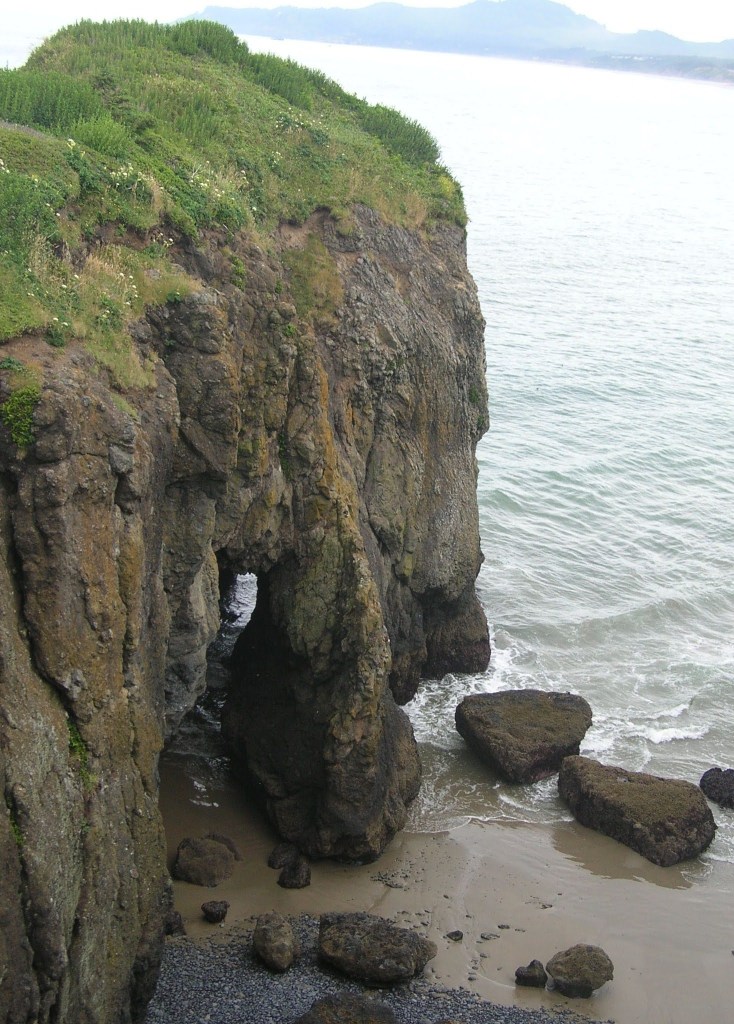
From the list (which I won’t reproduce here) I chose the word “ocean.” Hence:

The Ocean

Bestower of bounties:
one may fish for a feast
or dive to the depths
plucking pearls from the peace.

Betrayer of boys
setting sail on the seas,
seduced by the Sirens,
then besieged by the beast.

Mantra of mindfulness,
mysterious muse,
meandering metronome,
hewer of hues.

Destroyer of destinies,
splitter of seams,
shattering ships and
drowning brash dreams.

Thunderous thralls turn to
tranquil translucence.
Balmy or bawdy,
a nymph or a nuisance.

Such is the kaleidoscope,
the ebb and the flow.
We are moored to this tempest;
mind, body and soul.

Alphabetical April

Day Eighteen of National Poetry Writing Month! Today’s prompt from NaPoWriMo.net:

write an abecedarian poem – a poem in which the word choice follows the words/order of the alphabet. You could write a very strict abecedarian poem, in which there are twenty-six words in alphabetical order, or you could write one in which each line begins with a word that follows the order of the alphabet. This is a prompt that lends itself well to a certain playfulness. Need some examples? Try this poem by Jessica Greenbaum, this one by Howard Nemerov or this one by John Bosworth.

My offering:

April 
buds curling,
dense earth frees 
ground-harbored insects.
juncos, kits, larvae; 
Mother Nature opens,
poetic quatrains rustle,
spring’s timely unfolding,
verdant waves, 
xenial youthful zeal.