Icon Underfoot

PDX3

Iconic carpet underfoot at The PDX Project art exhibit “A Farewell to the PDX Carpet.”

We never seem to appreciate a good thing until we lose it. And sometimes things don’t even become appreciable until we face losing them. Case in point, the iconic PDX carpet in Portland, Oregon.

Granted, the old carpet at the Portland International Airport (PDX) is — shall we say — tacky. Designed in 1987 and installed in the early 90s, the teal background features a geometric pattern intended to represent the intersection of the north and south runways at PDX as seen from the control tower at night.
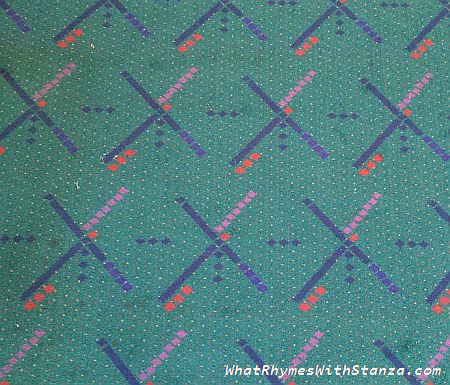
PDX5

Original PDX carpet (1990s to 2015)

I’ve trodden the carpet a number of times, mostly to meet incoming friends or relatives, or to see them off on some adventure. And I never gave the floor beneath me a second thought. The first thought, however, was as I’ve previously stated, “tacky.” Worn and stained teal just isn’t my favorite color. Nor does it match my luggage. Which is black. That tells you how bad it is.

So when I started seeing photos appear on Instagram and Facebook of people’s feet on the carpet, I didn’’t get it. I went to my source of all things trendy quirky (my daughters), and learned that there is a cult following of the PDX carpet, and that that’s a “thing” now, photographing your feet as you pass through the airport.

PDX1

Foot photo on the original PDX carpet.

The PDX carpet has its own Wikipedia entry, its own Facebook page with 13,000 likes, and its own Instagram hashtag (#pdxcarpet) with almost 64,000 photos to date. Oh, and it was the Grand Marshall in this year’s annual Portland Starlight Parade.

The recent spike in popularity of the PDX carpet seems driven by the fact that the 25 year old design is being retired as a new carpet installation is underway. Yes, the 14 acres of teal carpet are disappearing as we speak. Well, not disappearing. As is typical of many outmoded items in Portland, the carpet is being repurposed. The grottiest parts will be recycled, but the remaining pieces are available for sale in various shapes and forms.

PDX2

Carpet-adorned piano at The PDX Project art exhibit “A Farewell to the PDX Carpet.”

While the carpet has been referred to as a “hipster icon,” I find myself climbing onto the nostalgia bandwagon, too (and I assure you I am not hipster). So of course I had to go to the art exhibit that was set up in Portland to honor the retiring carpet.

Not a very large exhibit, and not overly impressive, but oh-so-Portlandia. I got to photograph my feet on the carpet one last time, play the PDX-upholstered piano, and check out other carpet-inspired art.

I haven’t seen the new carpet yet. In the shadow of the original PDX carpet, it will have some pretty big shoes to, um, underlay. My guess is that, while it may never reach Grand Marshall status, it will probably eventually be embraced in its own right.

That’s just the way Portland is.

PDX13

Panel from The PDX Project art exhibit “A Farewell to the PDX Carpet.”

Weekly Photo Challenge: Beneath Your Feet

In Search of Wild Horses

I wrote this poem a couple of summers ago, about a weekend trip to the Ochoco forest in central Oregon. A beautiful, unforgettable experience with wonderful people and stunning scenery.


IMG_0086 On Friday we set out in search of wild horses.
leaving the city with all its frenzy,
eager to begin our wilderness adventure.
We crossed sparkling rivers and overgrown creeks,
and saw wild rhododendrons
sprawling in the shade along the wooded roadside.
We found a stream bank that would make a great watering spot,
but alas, we saw no wild horses.


IMG_0115

On Saturday we set out in search of wild horses.
We watched ospreys diving for lake trout.
We hiked steep mountain trails,
pausing to admire the grandeur of snow-capped peaks
and the delicateness of wildflowers
swaying in the gentle breezes.
We saw hoof prints in the soft forest floor,
but alas, we saw no wild horses.


IMG_0066

On Sunday we set out in search of wild horses.
We enjoyed the scent of pine trees and lilacs,
watched lizards scurrying down rough-barked junipers,
and climbed hills to discover what lies beyond.
We marveled at piles of sun-hardened manure
scattered amongst the trees by our elusive prey.
We saw grass trails bent down where they may have passed by,
but alas, we saw no wild horses.


IMG_0134

On Monday we set out for home.
En route we passed the Painted Hills that
undulate in shades of rose and verdigris and taupe and ochre.
We saw weathered barns sagging wearily in the fields,
antelope grazing in a verdant pasture,
and watched a man feed ice cream to his dogs.
We basked in our weekend revitalization.
And, by the way, we saw wild horses.

Memory Chip

I remember when a chip was a piece of wood that fell from a lumberjack’s axe. The wood was used to make paper which was used to make books which were stored in libraries.

lumberjack 1

This is a lumberjack made out of wood.

A library was a building where people could come to borrow books and take them home to read. The books were due back on a certain date, and there was a fine charged if the books were not returned on time.

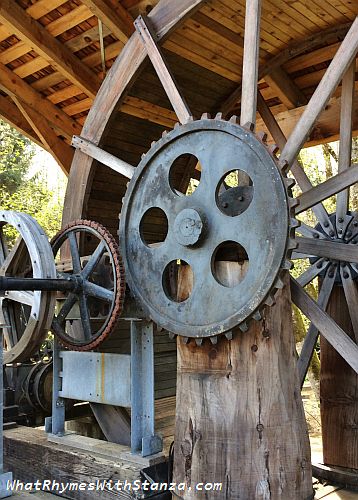
gears

This is a torture machine used on people who didn’t return their books to the library on time. Just kidding! It’s actually more lumberjack stuff.

The library in the town where I grew up was housed in a building that took up an entire city block. I read many books that I took home from that library. Unfortunately my memory did not retain very much of the information that was in those books.

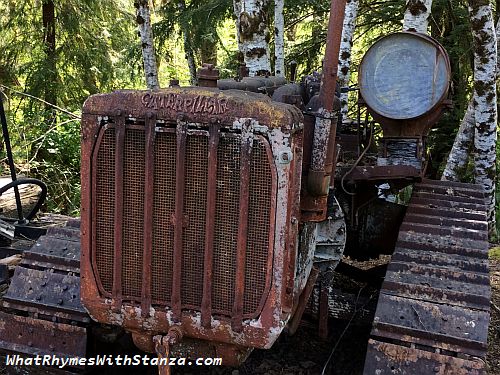
caterpillar

I could have driven this caterpillar to the library, but I did not. I drove an Oldsmobile Delta 88. It was gray.

Now chips come inside of computers that are smaller and weigh less than a lumberjack’s lunchbox. The amount of data stored in the city-block library in my home town could easily be stored in memory chips and accessed at any time virtually anywhere in the world with a smaller-than-a-lumberjack’s-lunchbox-sized computer.

lumberjack 2

Here’s another lumberjack. He’s probably never been to a library. Not because lumberjacks don’t go to libraries; but, you know, he’s made of wood.

I may have known how all of this computer stuff works at one time. I probably read it in a book. But my memory dulls faster than a lumberjack’s axe at a logging camp. Maybe someday I can upgrade to a memory chip that will help me recall all the books I have read.

That wood chip away at my memory problems for sure!

cat

This cat crawling around on logging machinery probably has a good memory. I wonder if his fur is naturally brown, or if that is dirt he acquired while crawling around on machinery. I think he’s supposed to be gray. Like my Oldsmobile.


(Photos taken at Camp 18 Logging Museum in Elsie, Oregon.)

World Oceans Day (photo essay)

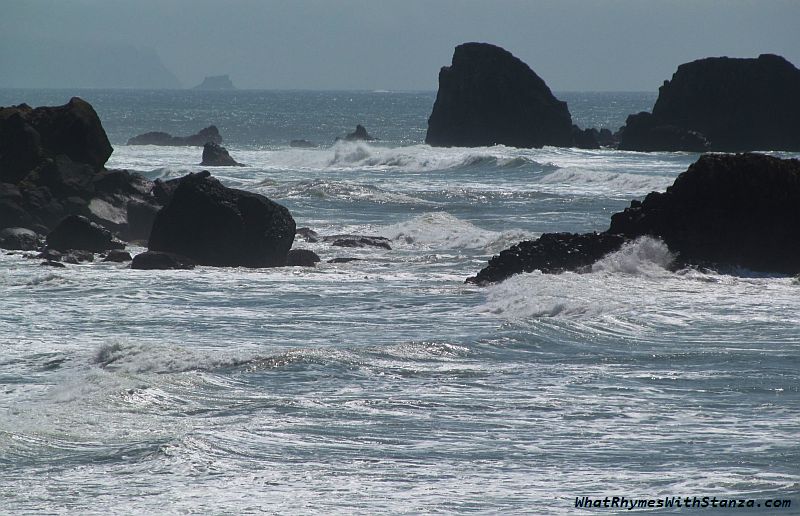
Expansive and deep,
beautiful but volatile,
ample force to turn
vessels to splinters.

ocean3

Teeming with life,
ceaselessly churning,
an indefatigable
dynamo.

ocean4

Kissed by the sun,
caressed by the winds,
extolled by poets
and sailors alike.

ocean1

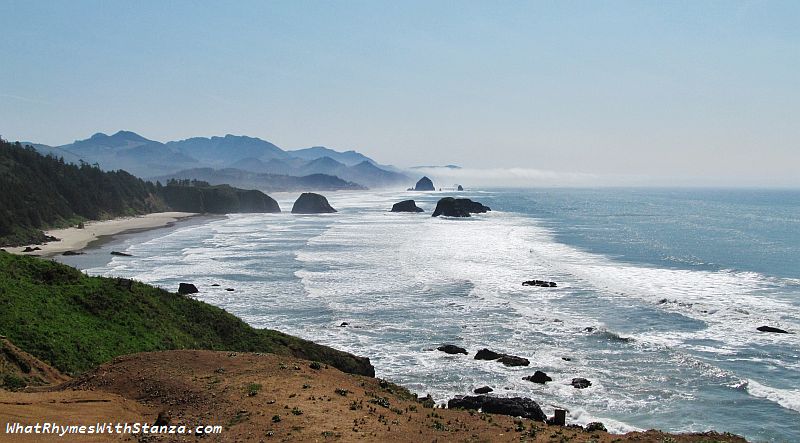
Sustainer of life
as we know it on Earth,
yet with all its
grandeur and might…

still fragile.

ocean2


What could be big enough to threaten and endanger our oceans (and thus our planet)?

Microplastics.

Microplastics particles, which are smaller than five millimeters in size, likely pose a massive environmental and human health risk when they enter our natural waterways.

Toxins including DDT, BPA and pesticides adhere to the particles, and because they can resemble plankton, they’re often ingested by small aquatic life. The toxins biomagnify as they move up the food chain, accumulating in birds, fish, marine mammals and potentially humans.

Adventurers and Scientists for Conservation (ASC)

June 8th, 2015 is World Oceans Day.

What can we do to help “turn the tide” on the dangerous amounts of plastics polluting the oceans?

  • We can work to increase awareness of the issue. Here’s a video of how one artist is doing that: Invisible Ocean: Plankton and Plastic. But it doesn’t have to be that complicated.
  • We can choose not to buy and use products that contain plastic microbeads (as in certain brands of toothpaste, facial cleansers, soaps…).
  • We can avoid using disposable plastic bags. (Take the Better Bag Challenge.)

These may seem like small steps toward tackling such a large problem ( just “a drop in the ocean,” so to speak), but that’s how things get done. Small actions lead to big changes.

Let’s act today.

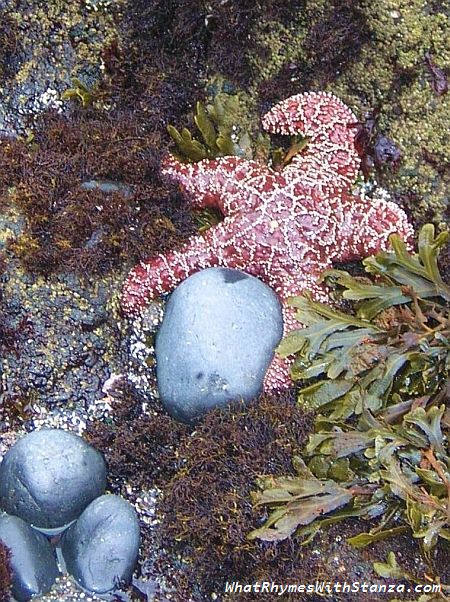
starfish with rock


Thanks to Jane (Just Another Nature Enthusiast) and her challenge at UNLESS: Earth-friendly Chroniclers: Challenge 11~ “Healthy Oceans – Healthy Planet” for the inspiration.