Funeral

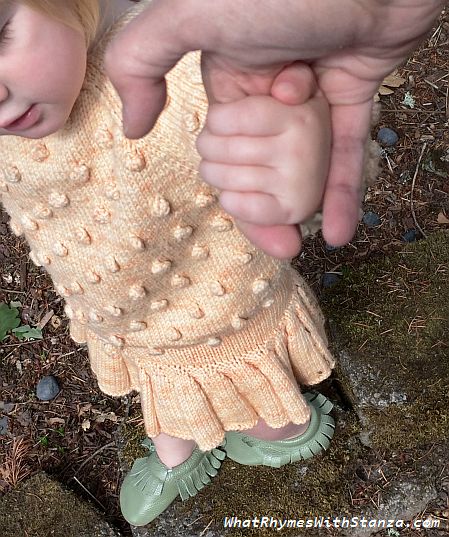
Little cherub on mama’s lap, 
surrounded by strangers,
crammed into narrow pews
in a room she does not know.

No color, no toys, no talking. No joy. 
She squirms, but just a little.
Everyone stands in unison.

An organ plays, slow and plodding.
Grownups sing, low and droning.
She doesn’t recognize this song, 
but music! Music is a familiar friend!

She listens, watching mama’s lips move.
The hymn ends. She knows what follows music.
She claps her little hands together 
and gives a cheerful, “Yay!”

The congregation laughs.
Thank God for laughter amidst sorrow, and
thank God, too, for toddlers who 
haven’t yet had to learn 
the somber intricacies of mourning. 

Day Five of National Poetry Writing Month! Our prompt today from NaPoWriMo.net talks about the “juxtaposition between grief and joy, sorrow and reprieve,” and asks us to:

write a poem in which laughter comes at what might otherwise seem an inappropriate moment – or one that the poem invites the reader to think of as inappropriate.

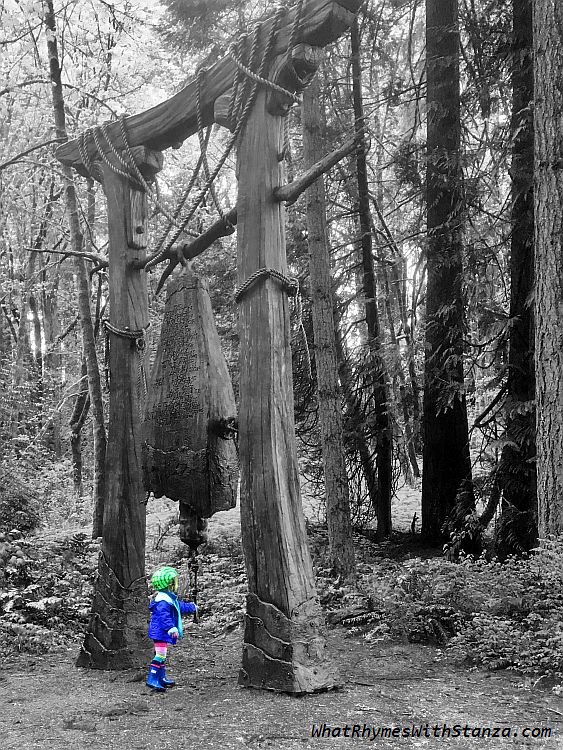
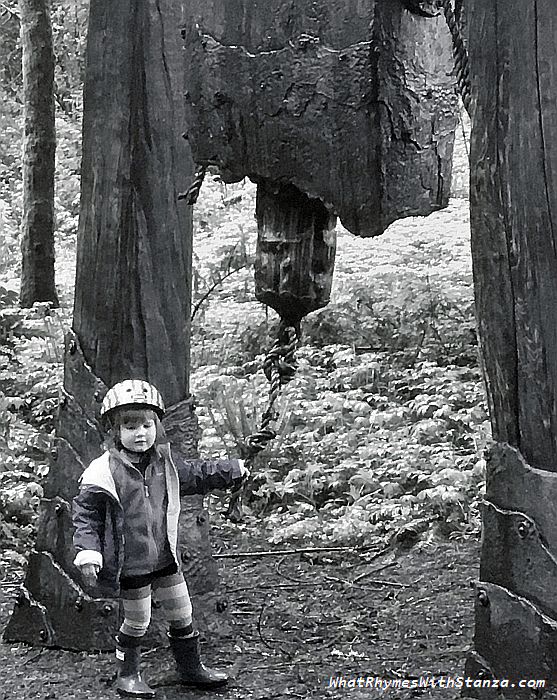
Wonder

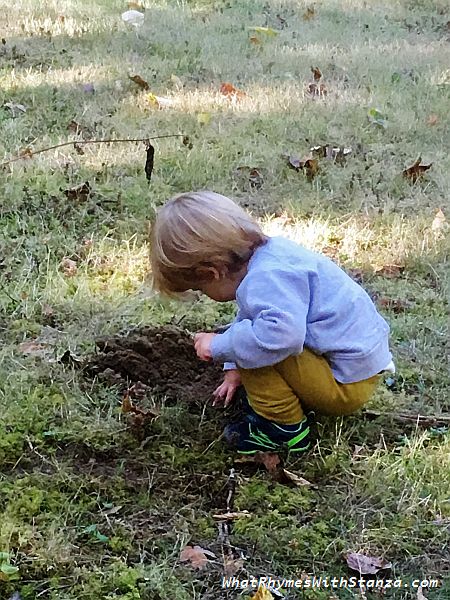
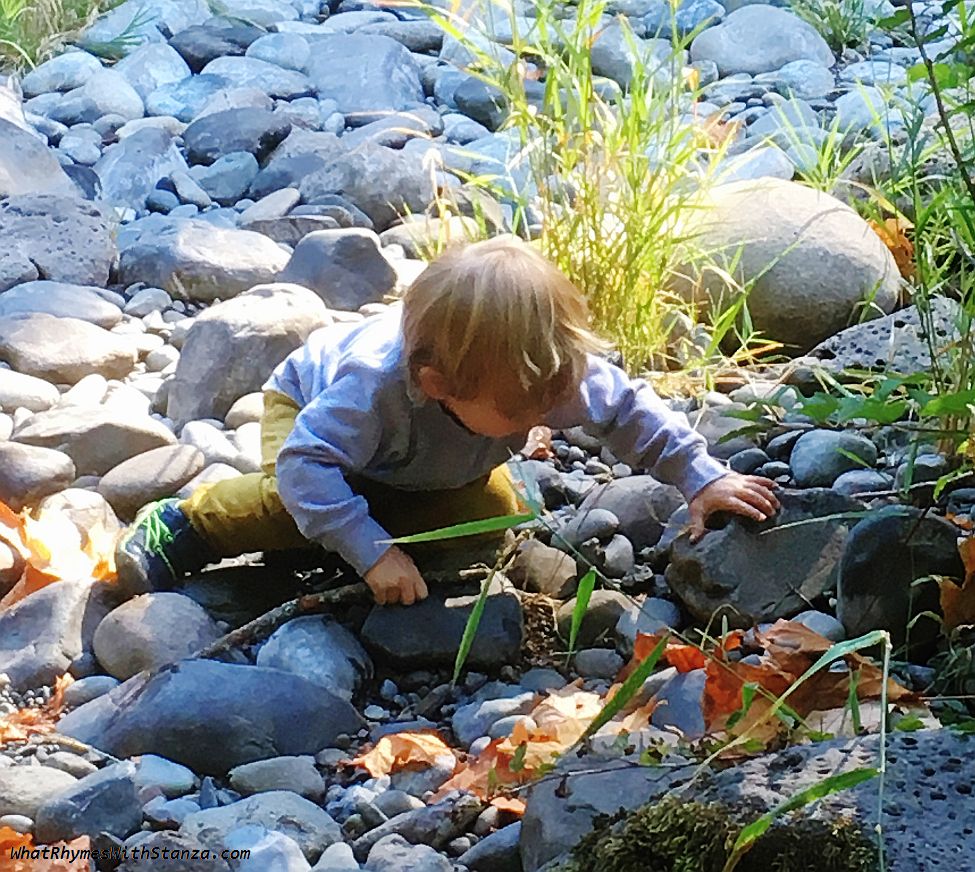
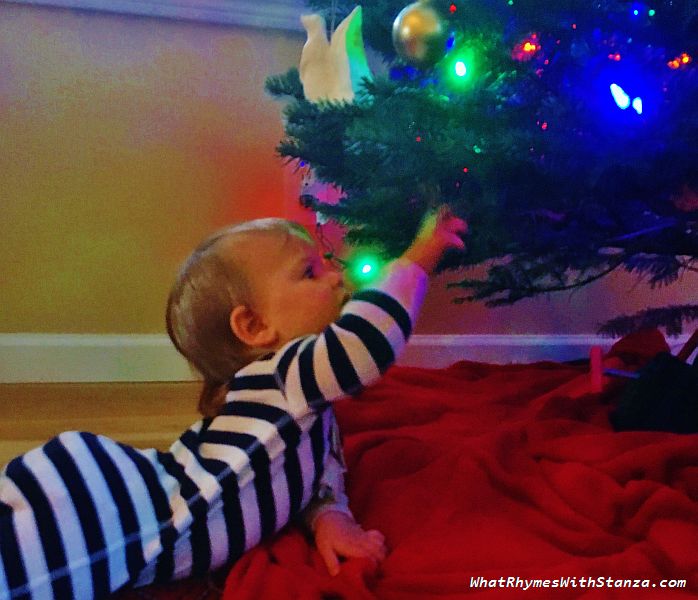
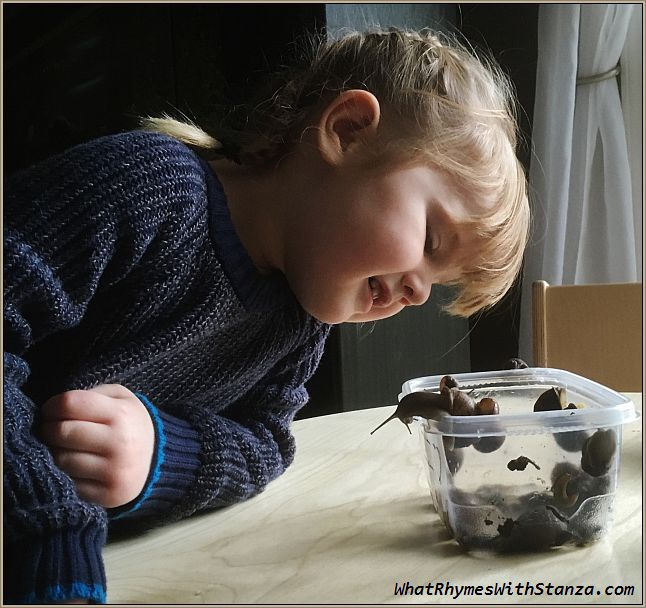
Wonder comes in many sizes.
Unfortunately, it seems that the bigger one gets,
the smaller their wonderment.

Thank goodness for the little ones who remind us
to pause — as often as we can – and wonder.

big4

big3


The Daily Post one-word prompt: Wonder
Cee’s Black and White Challenge: Large Subjects

Polaroid

scan-89

“How do you open this darn thing? I can never remember.”

Someone finds the button, and the black box pops open into an odd wedged shape.

“There! Is there film in it?”

“Dunno. Take a picture and find out.”

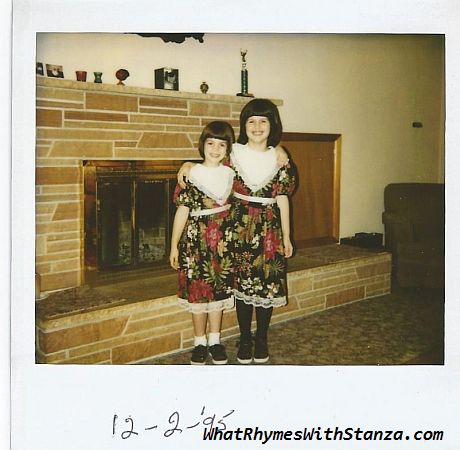
“Oh, alright. You girls, stand over there! By the hearth.”

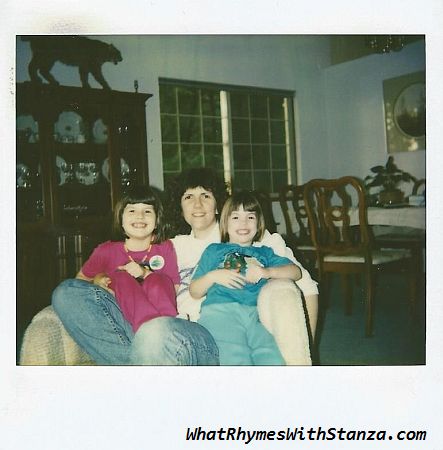
With a bit of jostling, the girls obediently shuffle into place and assume the pose: arms wrapped around one another in a display of sisterly love. They look toward the camera and smile.

scan-95

“Now smile.”

They spread their grins even wider.

Snap. Flash. Hiss.

The camera spits out a white-bordered card with a milky greenish-brown square in the center. The photo hangs where it exited, just short of falling to the ground. The picture taker dislodges the print and sets in on the coffee table.

“There! Let’s see what we’ve got.”

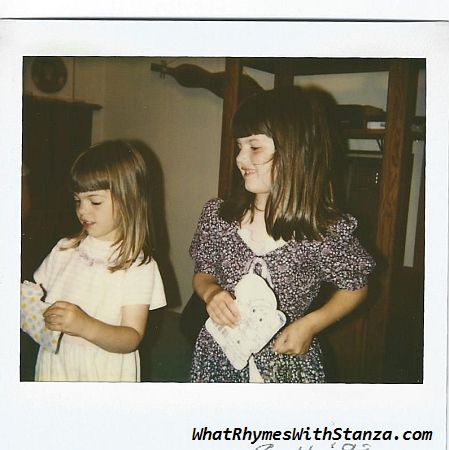
We circle around the table and watch as ghostlike images begin to rise from the murky Polaroid. Soon we can make out the features of the girls, and as the photo continues to develop, we see that one of the girls’ eyes were closed when the picture was snapped. Oh, well.

The print is a bit blurry, too dark, and the subjects are not framed properly. Typical. Someone notes the date on the wide bottom border, and there it is: a posed moment in time that documents a birthday, holiday, new dresses, or maybe just the changes from year to year as the girls grow and mature.

scan-93

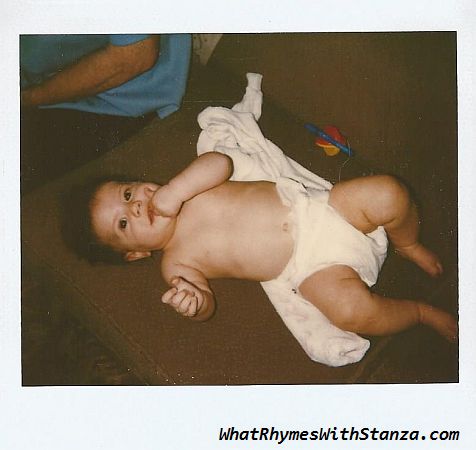
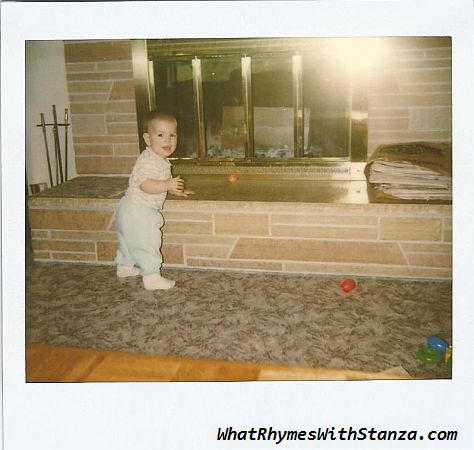
The captured moment goes in a shoebox where many others have been collected, and it turns into another memory to be pulled out and sorted and enjoyed for years to come.

scan-88

It is shared by passing it from hand to hand. It is cropped with scissors if one wishes, but that’s not likely to happen. The highlights are enhanced by tilting the photo toward the nearest window or lamp, and the image is sharpened by adjusting one’s bifocals into better focus.

scan-90

I sift through my shoebox now and again — probably more often than the girls realize — and the photos always make me smile.

Truth be told, I wouldn’t trade my Polaroids for all the Photoshopping in the world.

scan-94


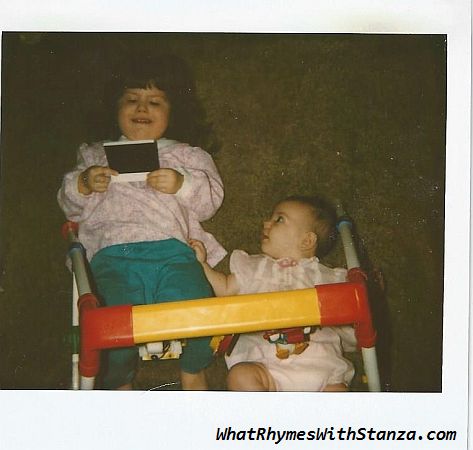
The photos above were most likely taken by a variety of relatives. Unfortunately I cannot assign individual credits. 


The Daily Post Discover Challenge: Transcript

growing anticipation

lean into each day
not racing to be the first
rather
in eagerness to explore

anticipation1

reach ever higher
not to claim more than others
rather
to stretch your understanding

anticipation2

take time for catnaps
restore soul and sanity
and
allow new dreams to unfold

anticipation3


The Daily Post weekly photo challenge: Anticipation

Enquiring Minds

questions

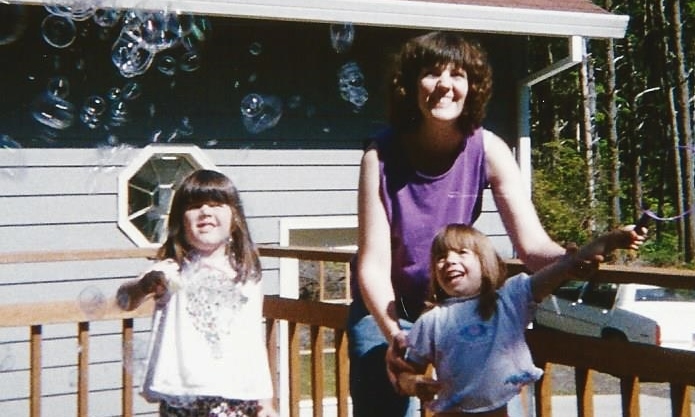
Way back in another lifetime, like about 25 years ago, I wrote a bi-weekly column for a tiny local newspaper. The focus was mostly about my family and the joys of raising two bright, beautiful daughters; daughters who had lots of questions, most of which I had no viable answer to.

Here is a column I wrote in 1992 that demonstrates the quandary of fielding questions about life, love, and the pursuit of wind-blown hats.

Twenty Questions

“Mommy, why is the sky blue? What makes grass?” We are barely ten miles out on a 60-some mile long trip. The truck’s radio is broken and there are four of us stuffed into the cab, with no room for the girls to lie down and sleep. I think Sarah saves up her best questions for just such occasions. I’m not sure why the sky is blue, but there are two things I know for certain: this will be a long, long trip and I will have a headache when it is over.

Sarah has entered the “how come” phase of life, where questions comprise roughly 75 percent of her conversation. Another 20 percent consists of demands for personal services such as feeding (immediately), dressing (in pink, if you please) and putting her hair into an assortment of Barbie-esque hairdos. The final five percent of her speech is a mishmash of statements ranging from “I’m not going to be your friend anymore and you can’t come to my birthday!” to “I love everyone in the whole world!”

Watching television with my preschool daughters has become a trying ordeal. As soon as the character appears on the screen I am barraged with questions. “Mommy, who is that? What is he doing?” And most importantly, “Is he a good guy or a bad guy?”

Every time lettering appears on the screen or a commercial comes on, Sarah seems to have a Pavlovian-programmed reflex to turn to me and inquire, “Is the show over now?”

It’s even more challenging if I tune in a program for the girls to watch and then leave the room. Absence is no excuse for not having all the answers. “Why was the little girl laughing? Was that her Mommy in the car?”

“I don’t know, Sarah. I didn’t watch the show and I have no idea who or what you are talking about.”

“Oh.” Sarah waits a few seconds. “Were they good guys or bad guys?”

Maybe I should feel honored that my daughters seem to regard me as omniscient, but that’s not really the case. Sometimes I flunk out on seemingly simple questions.

“Why is the sun shining on us so hot?” Sarah asked one day.

“Because it’s a hot, sunny day,” I said. Made sense to me.

“No! That’s not why!” Sarah glowered at me, as if I had told her she couldn’t wear pink anymore or something equally repugnant. I guess I could have gone into an explanation of the earth’s position relative to the sun, or theories of global warming, but I have a feeling none of that would have been the right answer either.

To compound the problem, Emily is into imitating, so if Sarah starts up playing Twenty Questions, Emily pipes in with 20 of her own. Only Emily adds a new twist to the game. She precedes each question with: “Mommy?” I wait for the question to follow. Instead she repeats herself: “Mommy??” I turn toward her to let her know that I am listening. Not good enough. “Mommy!?”

“What!” I finally respond. Only after my verbal response will she proceed with her question, if she still remembers it. If she doesn’t remember what she was going to ask, she starts over: “Mommy?”

Sometimes the questions are entertaining. They show a unique form of logic with which only young children are blessed. One windy day, the family was on an outing and my husband, who wears a hat to protect his balding scalp from the elements, was having a difficult time keeping the hat on his head. Emily was delighted to watch her daddy repeatedly chase his cap down the street.

That evening as I was brushing Emily’s hair, she asked, “Mommy?”

“What?” I responded quickly. I’m learning, you see.

“Why doesn’t Daddy have any hair?”

“Why don’t you ask Daddy?” I suggested wearily, having fielded my quota of questions for the day.

Apparently remembering the day’s earlier activities, Emily turned to her father and asked, “Daddy, did the wind blow your hair away, too?”

Even I couldn’t wait to hear the answer to that one.


The Daily Post Discover Challenge: Tough Questions
Life Echoes Life

“Life imitates art.” That’s the theme for this week’s Daily Post photo challenge.

Hmmm. I thought of a great photo op for this topic but, alas, it would involve two other people who are not available today, a drive to a city park where the art is located, and getting wet in the rain…  Maybe next time. Or later in the week, at least.

In the meantime, here’s my take on life imitating art imitating life. Or something like that.

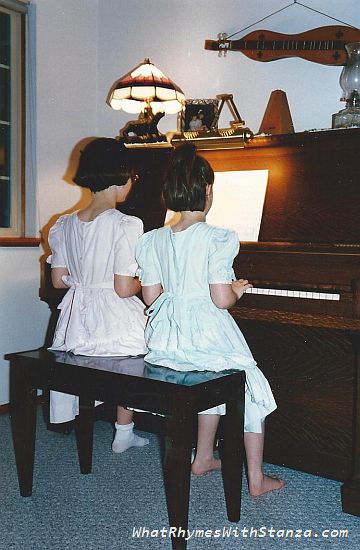
It starts with a photo of my daughters playing the piano:

art3


which I used to create this painting:


art2

“Girls at Piano” by me.


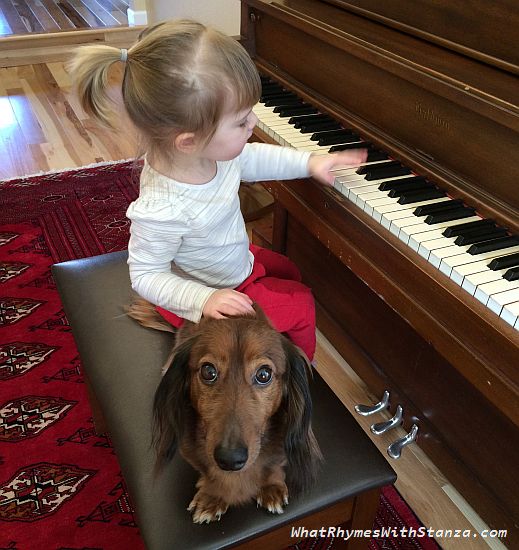
And now my daughters are grown, and my granddaughter, while not “imitating” her mom and aunt or the painting of them, is nonetheless creating her own version of the theme:


art1


I’m not sure how the dog fits into all this, but I’m sure that — with my granddaughter’s tutoring —  he’ll be playing in no time at all.


Daily Post weekly photo challenge: Life Imitates Art