wholly interknit
by time and proximity
nature’s artistry
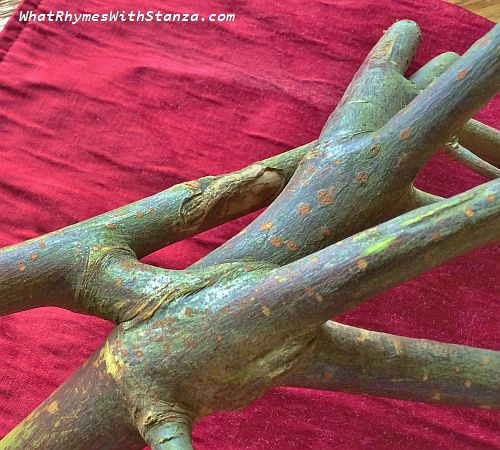

Discover Challenge: Identity


Flotsam, Jetsam & Lagan: sounds like a prestigious law firm, doesn’t it? Or maybe a 1960s folk rock group? But no, these terms have a more nautical theme.
I’ll let dictionary.com explain:
Flotsam — 1. the part of the wreckage of a ship and its cargo found floating on the water. 2. material or refuse floating on water. 3. useless or unimportant items; odds and ends.
Lagan — anything sunk in the sea, but attached to a buoy or the like so that it may be recovered.
Jetsam — goods cast overboard deliberately, as to lighten a vessel or improve its stability in an emergency, which sink where jettisoned or are washed ashore.
⊕⊕⊕⊕⊕
I won’t be channeling my inner pirate here; I get seasick in the bath tub if I take my eyes off the horizon. The thought of people chucking things into the ocean intentionally is also rather sickening, but I’ll save that for another post.
The point of this post is:
Wait, that doesn’t sound quite right… Anyway, I’ll wade in with my analogy:
Sometimes we go about life having taken on a lot of unnecessary “odds and ends,” and when we get hit with – “stormy weather” shall we say — we founder and end up floating about, all wet. The “useless and unimportant” baggage we were needlessly hanging onto bobs about pointlessly in the waves nearby as we frantically dog paddle and wait for rescue. That’s flotsam.

Sometimes we get the “ship” kicked out of us and lose our footing on dry land, but we manage to take stock of what happened and what’s important to us, and we can devise a plan for how to recover from our losses. That’s lagan.

And then there’s jetsam, when we rid ourselves of the unnecessary baggage that’s weighing us down, impeding our progress, or endangering our stability. And having done that – and continuing to do it – we sail through situations that might otherwise have sunk us.

I’m striving for jetsam; lightening my load of unnecessary stress, worries and material “stuff.” It’s definitely an ongoing process. Stuff seems to seek us out at every port, clinging to us like barnacles on a boat.
Okay, swabbies, I think this ship has sailed. I’m off to the galley for some chow. I suddenly have a hankering for fish and chips.
 J is for Jetsam.
 Inertia: I want to make a stained glass panel for my soon-to-be-born grandbaby. But:
Inquisitiveness: What could I make that would be fairly simple, using materials I already have on hand, while challenging my perfectionism?

Idea: I have a sample box of multi-colored rectangles of glass. I have lead came. Straight lines are simple.

Inspiration: When I lay out the sample pieces, they remind me of a patchwork quilt. I could make my new grandbaby a “quilt.” That’s a grandmotherly gift, right?

Imagination: What if I added a symbol of some sort? Something meaningful to me that would make the “quilt” more personal… like… a nautilus! [You’ll have to wait for the “N” day to find out what makes the nautilus meaningful to me.]
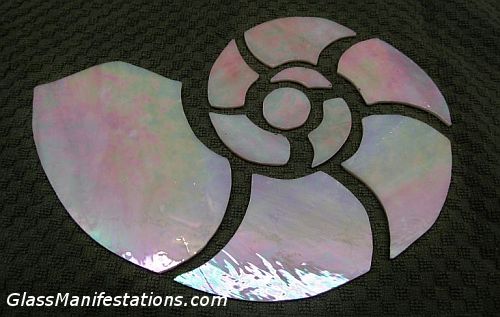
Implementation: Get the lead out (literally), and go for it!

Insight:

Incredible!!!! ⇒ The way that I feel for having overcome the inertia, impediments and insecurity I felt before taking on this project!

Isla: The name of my first grandbaby.
 I is for Incredible.
dog sleeps in rocker
I admire him with soft eyes
lest my gaze wakes him


You know how it is when you have a thread loose on your shirt sleeve that you can see out of the corner of your eye every time you move your arm?
It’s on the sleeve of your dominant hand, so whenever you have scissors handy you try to cut it off, but with your weaker hand you can’t manage the scissors well enough to get the thread between the blades. And if you do get that far, you’re still afraid to make the cut because from your peripheral vision you can’t tell if you’d be cutting the cloth of the sleeve as well as the errant thread.
You do know how that is, right? And then when there are no scissors around, and you start noticing the thread poking up from your sleeve again, you just want to pinch it tight between your thumb and index finger and yank it out to be rid of it once and for all.
But you know you can’t. You’ve been told that if you pull on a loose thread, the entire article of clothing will come undone and fall at your feet in a ragged, unraveled heap.
What I’m getting at here is:
Not following? See, the definition of art is like that wily, unruly thread that you just can’t quite get a hold on. And so you keep coming at it from different angles, thinking the meaning of art – heck, the whole meaning of life – is right there, just visible out of the corner of your eye.
Take hostas for example. You know, those green leafy plants that don’t look like ferns. Okay, so you’ve got your hostas over here, and over there somewhere you’ve got your ferns. And the question is:
It doesn’t get any clearer than that. But you’re still scratching your head and giving me that look, so I’ll continue. No, no, I insist.
I follow the Facebook page for Dale Chihuly, world-renowned glass sculptor. Yes, he’s the magnificent artist after whom I named my dog. It’s an honor really; maybe not so much for Dale, but certainly for my dog.
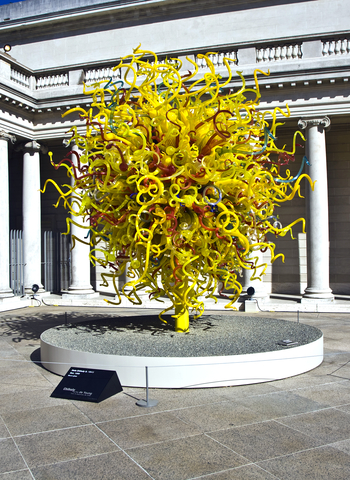
Dale Chihuly’s work.
Recently, on Dale Chihuly’s Facebook page there was a photo of a glass art installation in Oseyrarsandur, Iceland, from the year 2000. The artwork is titled “Green Ferns.” I haven’t had the chance to hop over to Oseyrarsandur to snap a photo for you, but here’s the link to the FB photo:
Okay, so the artist is sharing a photo of the artist’s work which the artist has titled “Green Ferns.” And below the FB post someone comments, “I’d say those are hostas, not ferns…. But thanks!”
So here’s the question: are they ferns, because that’s what the artist says they are? Are they hostas, because that’s what the commenter says they are? Are they both, depending on who’s looking? This is starting to sound like that twine theory stuff. String, I meant string!
Does it matter at all what anyone thinks they are? I believe it does. If you’re watching a ballet featuring dying swans, for example, and someone says, “I’d say those are ducks, not swans… But thanks!”, don’t ya kinda think they’ve missed the whole point???
I don’t suppose Dale Chihuly is losing any sleep over this. I know my dog Chihuly certainly isn’t. And maybe I’ve just turned this whole matter into a ragged, unraveled heap on the floor.

Dog Chihuly’s work.
Maybe someday I’ll see that niggling little thread out of the corner of my eye and I’ll turn my head and there they will be… all my answers to:
I apologize, Mr. Chihuly, for pulling the thread. I just couldn’t help myself.
 H is for Hostas.
Daily prompt: Green

With each passing day
the past grows ever longer,
even though we already
cannot fathom its scope.
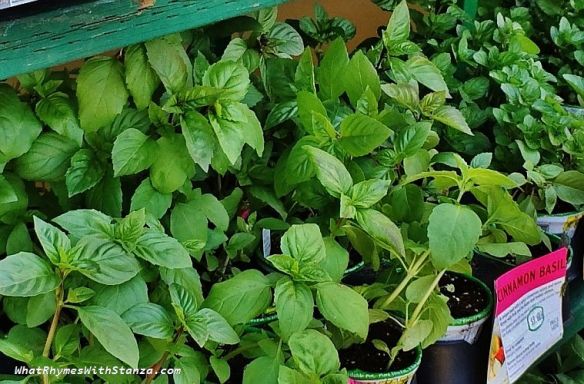
With each dawning day
the present forgives us,
and offers a clean slate
to create what we choose.
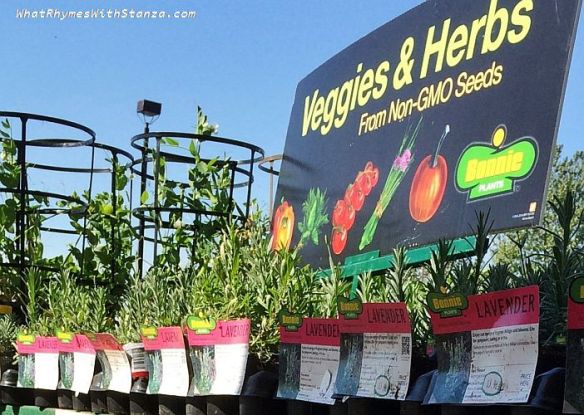
With each dream or hope
the future takes shape.
Have we learned from our past?
Are we setting the stage
today?
The Daily Post weekly photo challenge: Future
 You look at these beautiful buttons of glass; a confectioner’s delight of colorful “candy.” And you ask, “What are these gorgeous pieces called?”
And I say, “Oh, those? Those are globs.”
Globs? Brings up visions of a lump of ice cream fallen to the sidewalk where the warm pavement turns it into a sticky – well… a sticky glob.
Or maybe a coagulation of gunked up motor oil stuck to the floor of a mechanic’s garage, dripped from an engine that was so filled with grime that the dark sludge came out in – you guessed it – globs.
But these beauties of glass? These irregular shapes and sizes were formed when molten glass was dropped in small amounts onto a flat surface and left to solidify. Flat on the bottom, rounded on top, and delightfully ready for incorporation into stained glass projects.
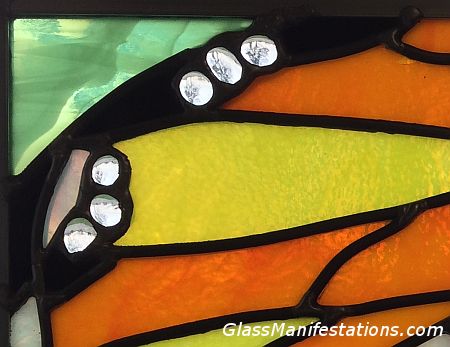
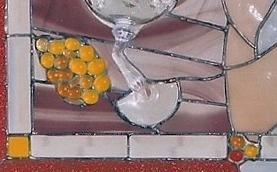
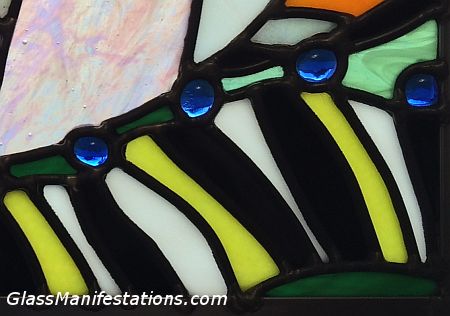
And, yes, they’re called globs.
Oh, by the way, if you don’t think that name quite suits them, I guess you could call them by their other name. They are also known as nuggets.

Feel better now? I know I do.
 G is for Glob.
shadows and half thoughts
play hide-and-seek in my mind
I’m ready… or not
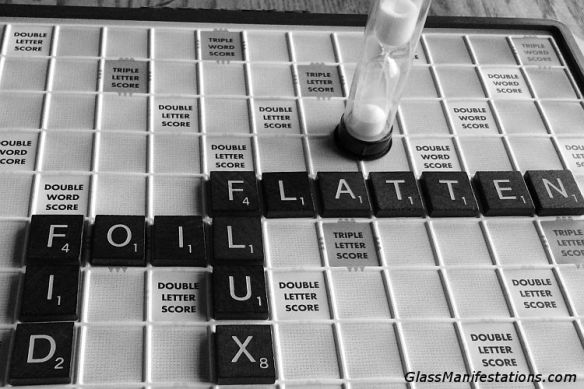
For me, one of the best things about taking up stained glass has been learning the word “fid.” Scrabble, anyone? Sure, it’s only three letters, but that little word has helped me limp along on the Scrabble board more than once.
What’s a fid? Yeah, my Scrabble competitors always ask that, too.
Here’s a photo of a fid:

and another:

and another:

A fid has many uses in the stained glass world. When using the copper foil method of constructing stained glass projects, the individual pieces of glass are wrapped along their edges with copper foil tape.

The foil has a backing that is peeled away to reveal the sticky side. The sticky side adheres to the glass.

A fid is then used to press the copper foil more firmly against the glass, and to flatten the tape securely against all edges of the glass.
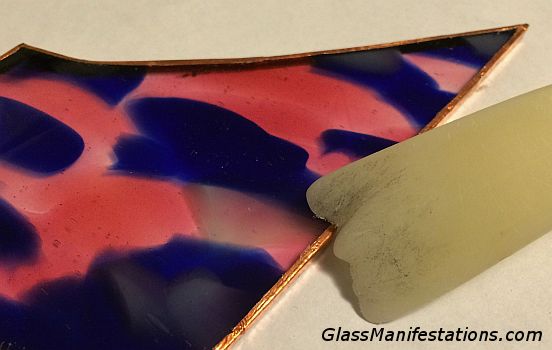
This is my favorite fid. The end edge was straight across when I bought it. The grooves were worn in by continued use.
After all the pieces are foiled and assembled, flux is applied to the copper seams and the pieces are soldered together to create the finished project.

Obviously not the same glass project as pictured above, but an example of what finished solder lines look like.
If you are using came instead of copper foil for joining the glass pieces, fids are also helpful for opening came channels to accommodate thicker pieces of glass.

This is a piece of zinc U-shaped came. The glass edge fits into the channel in the came, and the came is soldered at the seams where two or more came pieces meet.
Fids are full of fantastic features for foiling fun forms! Tell that to your Scrabble companions!
 F is for Fid

 What Rhymes with Stanza?