Vancouver, USA Summer Spots (Walk #8)

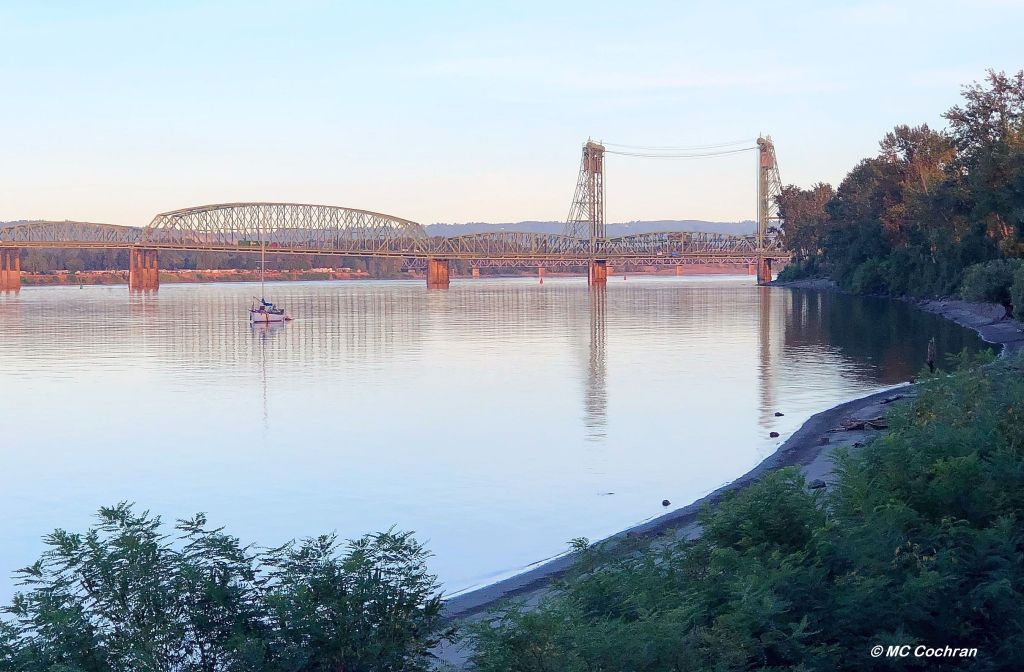
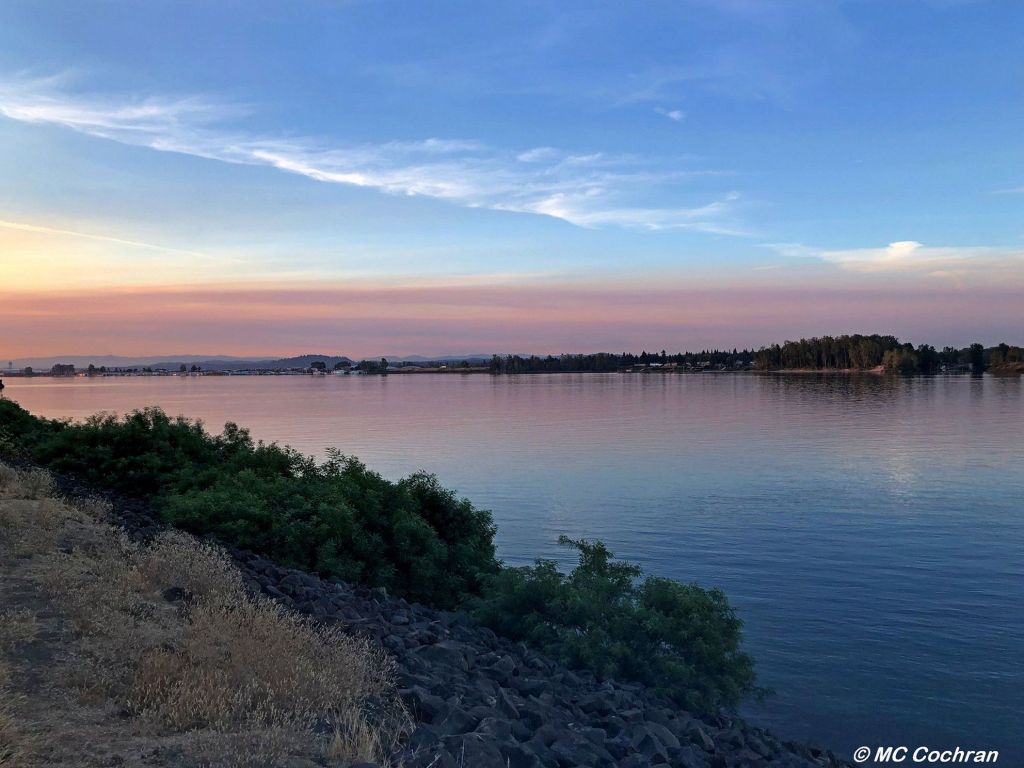
At the halfway point of the Visit Vancouver USA challenge (an app designed to encourage participants to get outdoors and explore the area), my eighth walk took me to the banks of the Columbia River and the Waterfront Renaissance Trail.

Chules and I went early in day to avoid the “heat dome” high temperatures, so we managed to catch a bit of the sunrise pink sky.

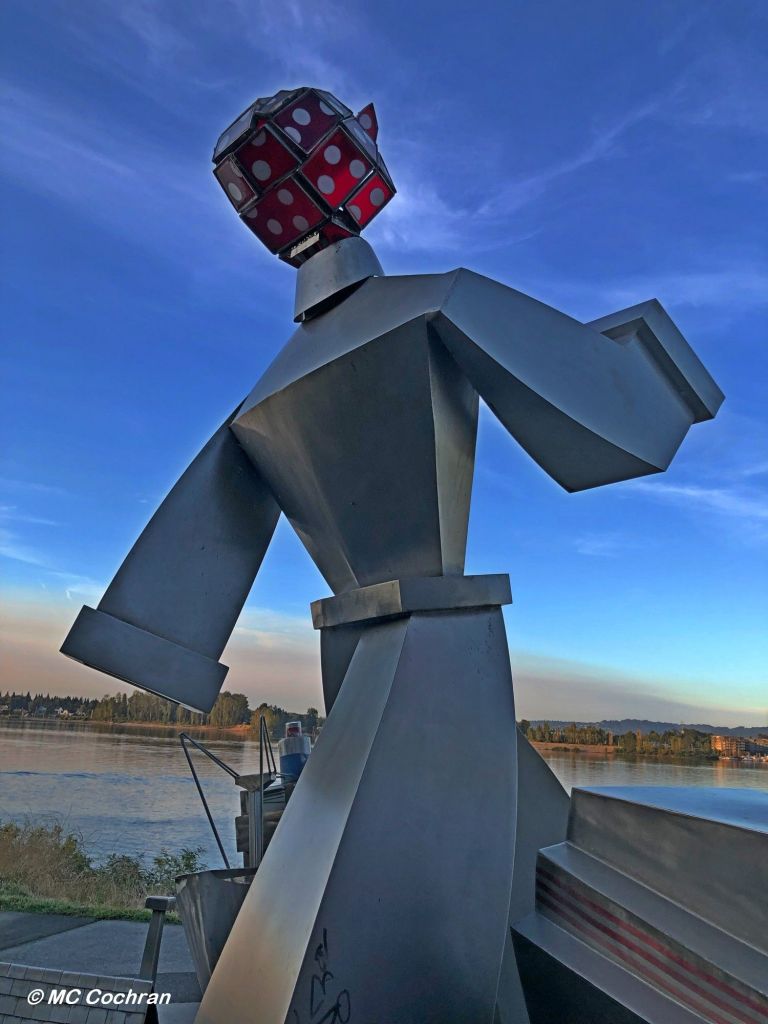
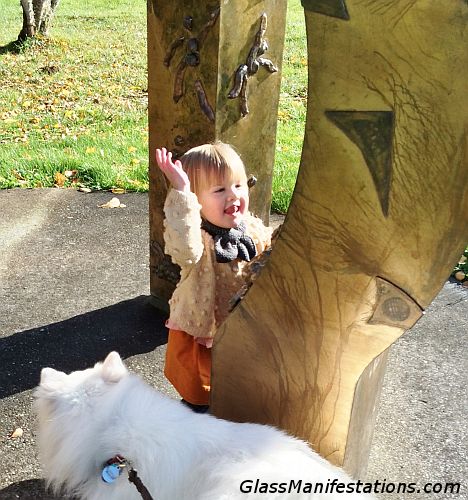
We’ve visited this area many times, so we strolled the familiar walkway for about a mile. I always enjoy seeing the art installations, including this sculpture of Ilchee, by artist Eric Jensen.

The sign next to the sculpture tells us that:

 “Ilchee, or ‘Moon Woman,’ was the daughter of Chinook Chief Comcomly. Ilchee arrived in the Fort Vancouver area in 1813, where she met and married her father’s successor, Chief Casino. She is depicted gazing west down the Columbia River, toward her family’s ancestral home at Chinook Point on the Washington coast.”

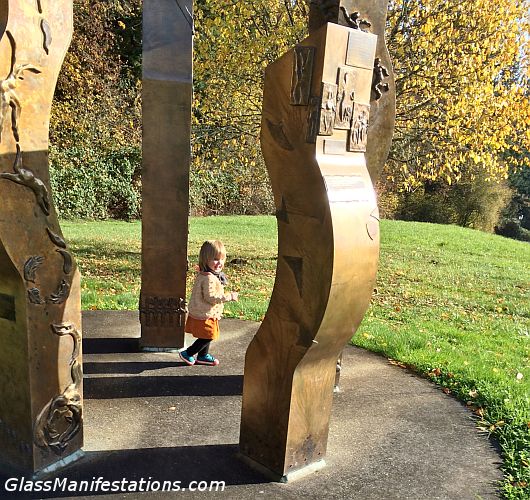
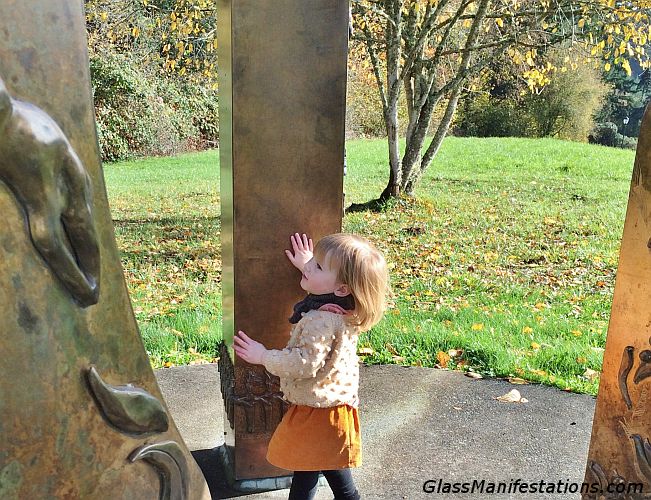
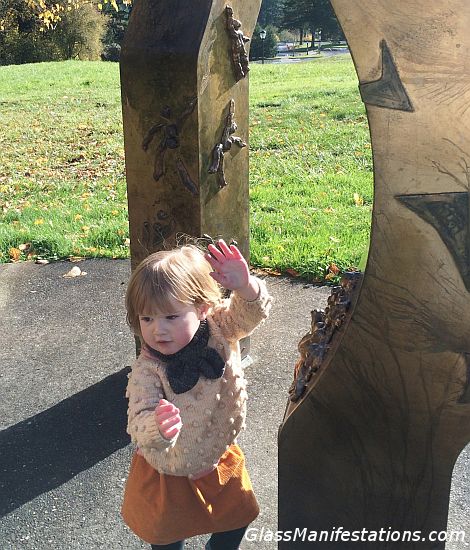
Farther east on the trail is another public art piece titled “Wendy Rose,” by the artists Women Who Weld (Sharon Agnor, Wendy Armstrong, Sumi Wu, Jennifer Corio & Kathy Wilson).

The plaque there states:

“Wendy celebrates the legacy of the women who entered the workforce at the Kaiser Shipyards during World War II. Wearing a bright red polka dot scarf made of glass, Wendy strides across the Bonneville Dam and is surrounded by other local symbols of the era.”

An interesting contrast between Ilchee and Wendy Rose, historically (and artistically) speaking.

So that’s eight site check-ins; seven to go!


Also an entry for the Photographing Public Art Challenge (PPAC) hosted by Marsha and Cee.

Words and Paint

NaPoWriMo, Day 28

The prompt today deals with:

“the concept of meta-poems – which are poems about poems! In this video, the poets Al Fireis, Lily Applebaum, Dave Poplar, and Camara Brown discuss Emily Dickinson’s ‘We learned the Whole of Love.’ …

And now for our daily (optional) prompt. As you may have guessed, today I’d like to challenge you to try your hand at a meta-poem of your own.

So this is maybe not a proper meta-poem, but after watching about half of the video provided as a resource, this is the impression I was left with:

journal

Words and Paint

Large canvas yawns on studio floor
Cigarette ash lengthens with neglect
Eye sizes up canvas and looks for inspiration
Brushes, paints, splatters, spills
Colors, contrasts, movement, perspective

Figure steps back, surveys result
Artist, art? Crafts-person, handiwork?
Custodian, drop cloth?

♦ ♦ ♦

Blank page of crisp, white paper
Pen taps desk, ink smears
Hand looms over paper and waits for direction
Verbs, nouns, phrases, thoughts
Colors, contrasts, movement, perspective

Figure lifts page, reads and reworks
Poet, poetry? Wordsmith, story?
Shopper, grocery list?

♦ ♦ ♦

Canvas is framed, hung on wall in gallery
Viewers study the painting
Discuss what the artist intended
with each brush stroke or nuanced hue.

Writing is published in journal
Readers study the piece
Discuss word choice and tenor
Delve into the poet’s mindset and meaning.

♦ ♦ ♦

Custodian goes in search of missing drop cloth.
Shopper wonders where they misplaced their list.

Seasons in Glass

NaPoWriMo, Day 22. The prompt:

Today, I’d like to challenge you to write a poem that engages with another art form – it might be about a friend of yours who paints or sculpts, your high school struggles with learning to play the French horn, or a wonderful painting, film, or piece of music you’ve experienced – anything is in bounds here, so long as it uses the poem to express something about another form of art.

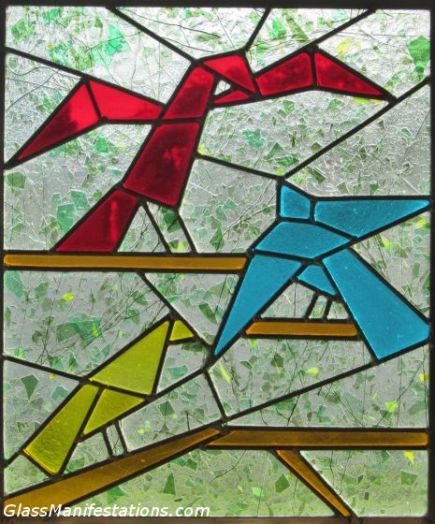
While I did struggle with French horn in high school, stained glass is much more fun. And so I give you:

Seasons in Glass

I.

birds-summer

It is Summer.
The trees are full of leaf chips:
green and yellow with black stringer twigs.
I haven’t done glass work in ages.
I will do straight lines.
Lots of straight lines. And lead,
not copper foil. Foil is harder to do.
Birds come to mind.
I don’t really know why.
I spread my wings and begin cutting glass.

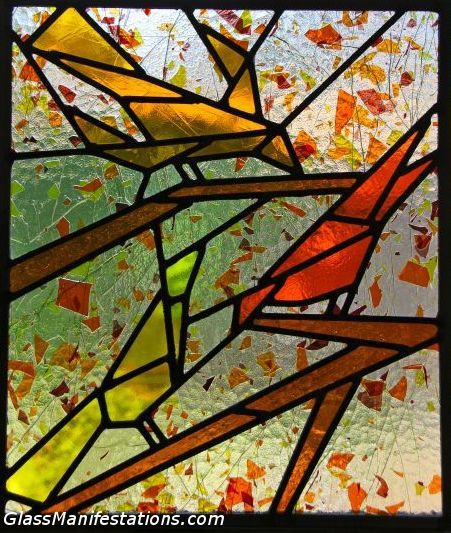
II.

birds-autumn

It is Autumn.
The leaf chips have turned gold and burnt orange,
and a deeper shade of yellow.
They are falling.
The birds chatter amongst themselves.
Is it time to head south?
It’s getting colder. They hold their wings close in
to their weightless bodies.
I turn the heater on in my studio.

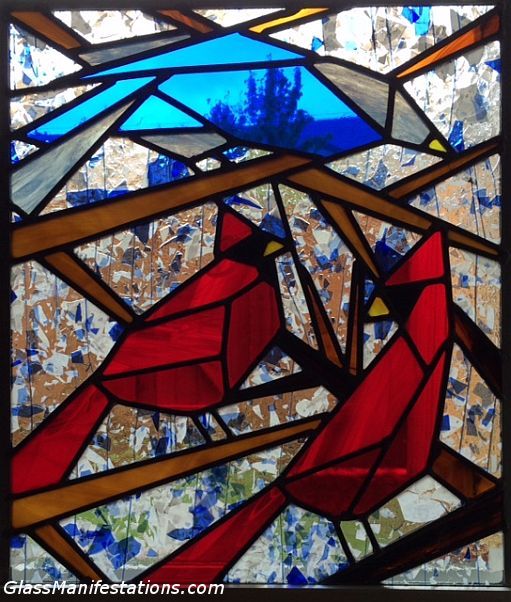
III.

birds-winter

It is Winter.
White snow, blue ice.
This pattern is no longer in production;
the birds need to be larger.
Two fat cardinals land on bare branches and
consult with a larger bird, whose tail feathers
splay a bit to accommodate
smaller pieces of background.
I love the dark red of the cardinals;
a smooth rolled glass that cuts like butter.

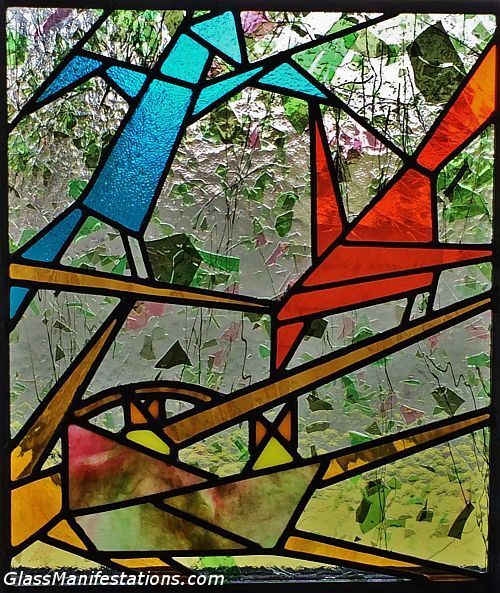
IV.

birds-spring

It is Spring.
Leaves are returning.
Delicate lavender flowers
buzz with the breeze of bee wings.
It is time for building nests,
laying eggs,
feeding hatchlings.
How does one differentiate
a worm from a slender tree branch?
I will allow curves this time.
After three seasons,
I think I’m ready.

Chiseled Features

face2

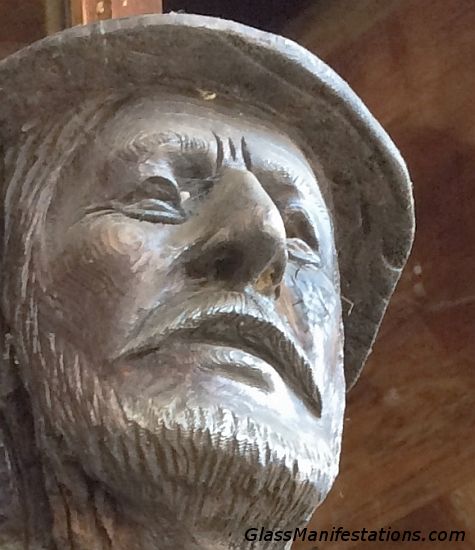
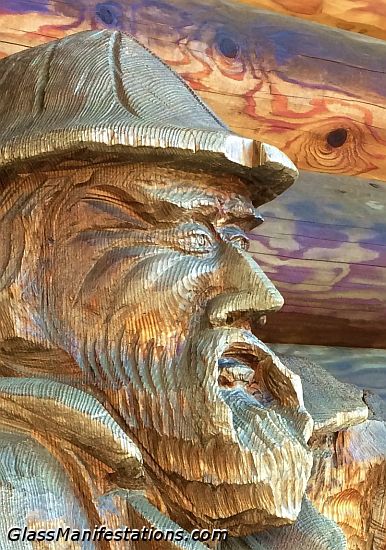
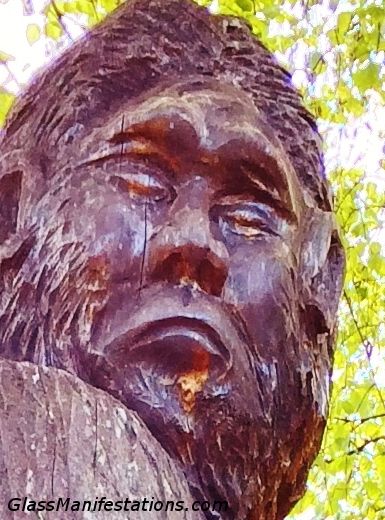
Art comes in many media and creative techniques. These three faces were carved from logs with chain saws, with final touches added by chisel.

face1

The first two represent lumberjacks. And the third is none other than Sasquatch (Big Foot) himself.

face3

These large carvings are on display at Camp 18 Logging Museum in Elsie, Oregon. Photos showing a more distant view of the lumberjacks can be seen in this post on my sister blog, “What Rhymes with Stanza?”


The Daily Post weekly photo challenge: Face

A Host of Hostas or a Flock of Ferns?

h1

You know how it is when you have a thread loose on your shirt sleeve that you can see out of the corner of your eye every time you move your arm?

It’s on the sleeve of your dominant hand, so whenever you have scissors handy you try to cut it off, but with your weaker hand you can’t manage the scissors well enough to get the thread between the blades. And if you do get that far, you’re still afraid to make the cut because from your peripheral vision you can’t tell if you’d be cutting the cloth of the sleeve as well as the errant thread.

You do know how that is, right? And then when there are no scissors around, and you start noticing the thread poking up from your sleeve again, you just want to pinch it tight between your thumb and index finger and yank it out to be rid of it once and for all.

But you know you can’t. You’ve been told that if you pull on a loose thread, the entire article of clothing will come undone and fall at your feet in a ragged, unraveled heap.

What I’m getting at here is:

What is the meaning of art?

Not following? See, the definition of art is like that wily, unruly thread that you just can’t quite get a hold on. And so you keep coming at it from different angles, thinking the meaning of art – heck, the whole meaning of life – is right there, just visible out of the corner of your eye.

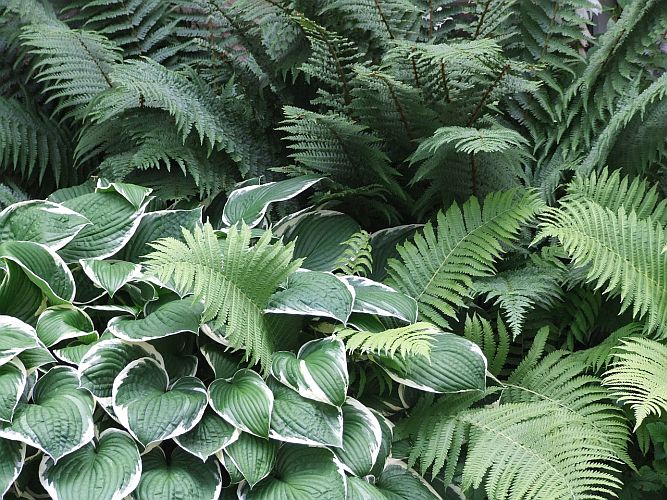
Take hostas for example. You know, those green leafy plants that don’t look like ferns. Okay, so you’ve got your hostas over here, and over there somewhere you’ve got your ferns. And the question is:

When is a fern a hosta and when is a fern a fern, and who gets to decide?

It doesn’t get any clearer than that. But you’re still scratching your head and giving me that look, so I’ll continue. No, no, I insist.

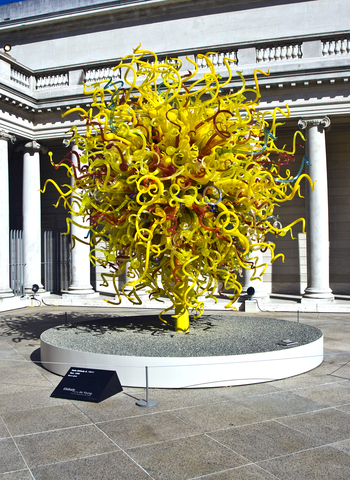
I follow the Facebook page for Dale Chihuly, world-renowned glass sculptor. Yes, he’s the magnificent artist after whom I named my dog. It’s an honor really; maybe not so much for Dale, but certainly for my dog.
h3

Dale Chihuly’s work.


Recently, on Dale Chihuly’s Facebook page there was a photo of a glass art installation in Oseyrarsandur, Iceland, from the year 2000. The artwork is titled “Green Ferns.” I haven’t had the chance to hop over to Oseyrarsandur to snap a photo for you, but here’s the link to the FB photo:

Okay, so the artist is sharing a photo of the artist’s work which the artist has titled “Green Ferns.” And below the FB post someone comments, “I’d say those are hostas, not ferns…. But thanks!”

So here’s the question: are they ferns, because that’s what the artist says they are? Are they hostas, because that’s what the commenter says they are? Are they both, depending on who’s looking? This is starting to sound like that twine theory stuff. String, I meant string!

Does it matter at all what anyone thinks they are? I believe it does. If you’re watching a ballet featuring dying swans, for example, and someone says, “I’d say those are ducks, not swans… But thanks!”, don’t ya kinda think they’ve missed the whole point???

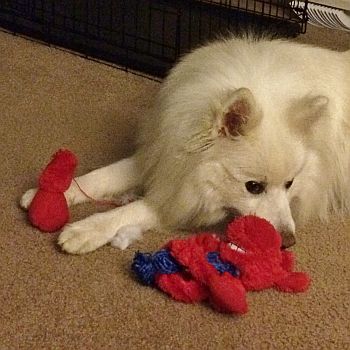
I don’t suppose Dale Chihuly is losing any sleep over this. I know my dog Chihuly certainly isn’t. And maybe I’ve just turned this whole matter into a ragged, unraveled heap on the floor.
h2

Dog Chihuly’s work.


Maybe someday I’ll see that niggling little thread out of the corner of my eye and I’ll turn my head and there they will be… all my answers to:

  • who gets to say what is art?
  • who gets to say what art is? (yes, those are two separate questions);
  • what the heck is string theory, anyway? and
  • why are so many loose threads in life just barely out of reach of one’s scissors?

I apologize, Mr. Chihuly, for pulling the thread. I just couldn’t help myself.

H  H is for Hostas.


Daily prompt: Green
Treasure Trove

IMG_0095

We’re up to Day 16 of the Blogging U’s Photo 101 course. The subject today is “treasure.” The instructions given in this lesson tell us that “any object or experience that is deeply meaningful can be a treasure. Items, places, people — we all cherish something, or someone.”

No surprise here: one of the things I greatly treasure in my life is having the space, time, and capability to follow my love of working with stained glass.

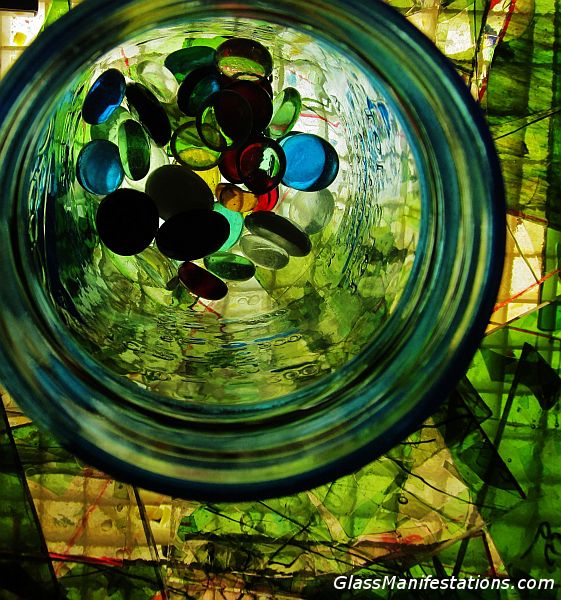
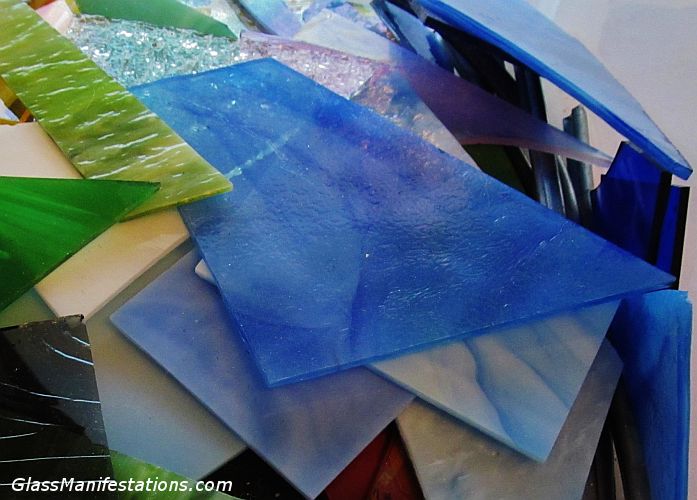
The photo I took for this lesson shows the partial contents of a drawer containing scraps of glass left over from previous projects; scraps that are just waiting to become part of some new project sometime down the road.

My family used to put together jigsaw puzzles occasionally, and it was considered “cheating” to look at the picture on the box cover to figure out placement of the different components of the image. It was more of a challenge to figure it all out without knowing exactly what the finished puzzle would look like.

With my glass scraps, the “picture on the box” may not even exist yet, and yet the puzzle pieces do. Sometimes a small glass scrap may be just what I need to fit into a particular design I’ve drawn up, but sometimes my design evolves from the particular scraps on hand.

So maybe what I treasure most is the creative process and the potential of the raw materials. I wonder… is it cheating to make the puzzle fit your pieces instead of having the pieces fit the puzzle?


Photo 101, Day Sixteen: Treasure + Close-up