The Way of the Whale

NaPoWriMo, Day 23. The prompt:

Write a poem about an animal.


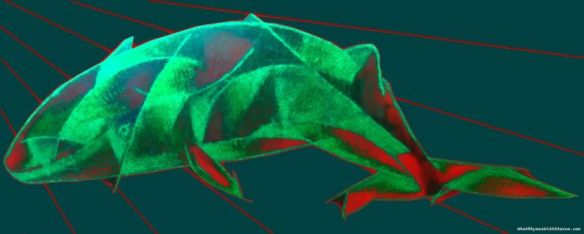
whale-3

Tell me again about the whales, Great-gran; did you
ever see one?

Yes, child, I have seen them,
but only from afar.

Even at a great distance, it must have been amazing!

That it was, child. That it was. Such grand beings!

What happened to the whales, Great-gran?

Oh, child, they went the way of the dinosaur,
and the wolf, and the elephant,
and the eagle…

Oh, how sad.

Yes, yes, it is very sad.

Great-gran, have you ever seen a human?
Great-gran… Why are you crying?

I have seen them, Child. I will not speak of them,
except to say there are some things
I wish I had never seen.

If Only

Day Five of NaPoWriMo. Lots of choices for the prompt today. I chose to write a villanelle, which is defined as such:

The classic villanelle has five three-line stanzas followed by a final, four-line stanza. The first and third lines of the first stanza alternately repeat as the last lines of the following three-line stanzas, before being used as the last two lines of the final quatrain.

Clear as mud? I thought so, too. But I gave it a go anyway.

woods1

If Only

If we only had the time –
just imagine if you would –
all the mountains we could climb.

Wouldn’t it be fine?
Leisured strolls in shaded woods
if we only had the time?

If we let the years unwind,
wove the hard times with the good,
all the mountains we could climb.

We’d pick peaches in their prime,
dine beneath the cottonwoods
if we only had the time.

If we heard the clock bells chime,
left our worries where they stood,
all the mountains we could climb!

How might our futures be defined
if we only understood?
If we only had the time,
all the mountains we could climb.


Also posting on dVerse, where the poem form for the month is the villanelle. 

Weekend Wildcard: Groundhogs and Vital Bogs

1 WILDCARD

Yesterday was Groundhogs Day in the US and Canada, and megastar (among the rodent crowd) groundhog Punxsutawney Phil purportedly did not see his shadow, which is said to be a harbinger of an early spring this year.

While not the most reliable diagnostic tool of the atmospheric sciences (the groundhog has about a 39% accuracy rate), it is nonetheless a quaint tradition from simpler (climatically speaking) times.

A bit lesser known in the US – okay, a LOT lesser known – observance on February 2nd is World Wetlands Day, a day designated to bring awareness to the importance of wetlands in balancing global ecosystems.

The house where I lived as a youth was situated on a sand hill that was basically surrounded by wetlands (back then designated simply as a swamp). The first signs of spring for me were the green shoots of skunk cabbage that emerged from the murky waters of the swamp. These quickly grew into wide, flat, shiny leaves and bright yellow flowers that emitted the musky odor of their namesake. I loved the cheery sight of them, and I actually found the earthy, slightly sweet smell to be somewhat pleasant (in small doses and from a distance).

Skunk Cabbage 2

The sounds of croaking frogs were prevalent on warm evenings, and every once in a while a beaver or nutria would find their way into our lower yard. Mosquitoes abounded. We pretty much stayed out of the swamp and let it do its thing of living and dying, sprouting and rotting, flooding and receding. I thought it was kind of cool to live within the wetland, but I had no appreciation of its importance as an ecosystem.

The last time I visited that area, I found that the swamp had been filled in and houses lined both sides of the low road that used to define where our yard ended and the swamp waters began. It was a sad sight. The adage “You never know what you have until it’s gone” comes to mind.

It’s too late for “my” swamp, but other wetlands can be restored, preserved and protected. Let’s do it!
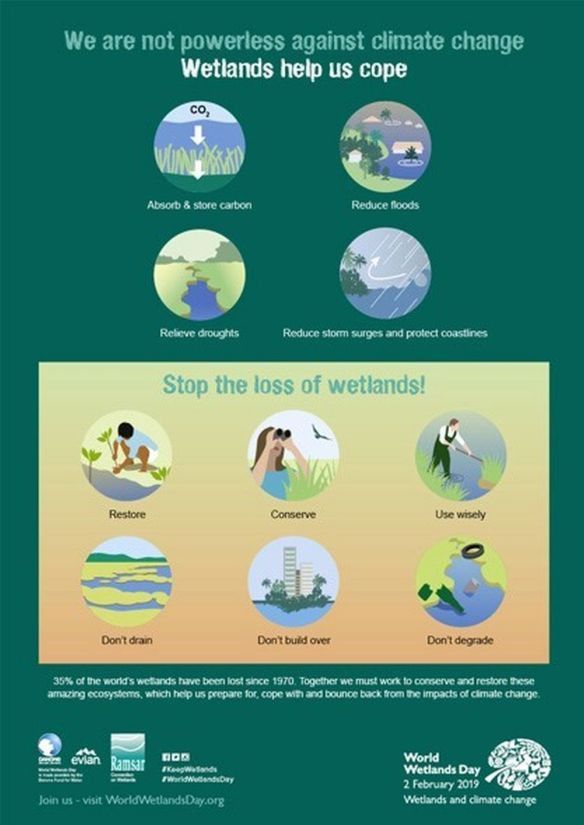
wetland Infographic


Infographic taken from WorldWetlandsDay.org 

dog days of winter

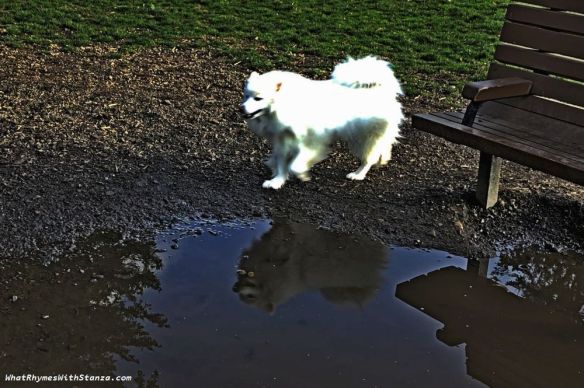
mud2

The gravel path encircling the dog park is churned to mud. Wood chips, spread last season to fill in low spots, now form a waterlogged sponge underfoot. The sky, pale blue and cloudless, does not belie that we are in mid-dreary-chilly January. It bears a sense of oppression, making one inclined to slouch when walking, as if to clear a low ceiling.

The dogs don’t seem to mind the damp chill. Puddles, gritty mud, soggy clumps of sod… it’s all the same to their weather-hardened paws. There are balls to chase, fence posts to water and all manner of smells to sniff.

After a couple of plodding loops around the field, I catch up to my pup, who has paused to stick his nose up a Doberman’s butt. I latch the leash to his collar and we head out of the park. I sidestep pools of standing water, morosely noting that the rainy season has only just begun. My dog plows straight through the water, tongue flopping, slobber hanging off his chin. He — obviously — has failed to notice that we are in mid-fricking-depressing January.

gnarled bare tree shivers
arthritic branch points skyward
lays blame on winter

mud1


dVerse Haibun Monday: January