De-Composing

NaPoWriMo Challenge, Day 19 (still catching up): An erasure poem as described by poet Dan Brady.

“First, write a paragraph of prose about anything you want. Next scan through the text and try to erase it down to a single sentence or phrase. The erased text becomes your first page and the full prose paragraph becomes your last page. Now see if you can add bit by bit to create a sequence that builds across several pages/iterations between the initial phrase to the complete text.”

erasure poem

rosemary3

All in the Timing

You don’t think we can, do you?

I know it can’t be done…

I’ll prove I’m right, I’ll prove you wrong.

… by you or anyone.


Right down that row, that’s where we’ll go.

In here, it’s called a lane.

Set up the pins, we’ll knock ‘em down.

 You’re really quite insane.


You pull Grandpa by the head

and mind his face, I know.

I’ll grab his legs and give a push.

Just take it nice and slow.


Steer clear the gutters ‘til the end.

That’s what my daddy said.

Dead center for a hole-in-one.

A “strike.” But yes, Dad’s dead.


They all fell down, we’ve won the round.

And Grandpa’s in the pit.

One problem, though, that’s only ten.

Well, just you wait a bit.


Pins swept away, news ones in play…

The gears are grinding slow.

And Grandpa clock is smashed to bits.

It’s really quite a show!


His casing’s cracked, his springs have sprung!

His hands are in the air.

He’s hit three pins in the lane next door.

I think he bowled a spare!


And there it is, just like I said!

It couldn’t be foreseen.

Grandfather clock will strike no more…

… but he did once strike thirteen.


NaPoWriMo challenge, Day 22: Take [a] statement of something impossible, and then write a poem in which the impossible thing happens. “The clock can’t strike thirteen.” 

Unpremeditated

shoe lace

I’m trying to catch up in the National Poetry Writing Month challenge. Here’s NaPoWriMo Challenge, Day 20: “Write a poem that involves rebellion in some way.” One suggested approach was to write the poem in a way that rebels against your usual writing style. I tend to want my poems to make sense, to convey a message. Even if it’s a silly poem, I want there to be a point to it. With today’s poem, I wrote with a stream-of-consciousness pace, without concerning myself with whether it was sensical.  Unedited, except for typos. 

As an experiment, it was interesting. As a poem… meh. 


cold as flame.
you said it didn’t matter, and yet
it did.

I can’t thank you enough for
the freedom you gave me.
Or at least loaned me.
Haha.

A hollow laugh. Why do we do that?
If you come for me, I won’t go.
I may follow, but
would you even lead?

These are the rules:
Always make sense.
Always second guess.
Always review and rework until perfection is attained.

Even though there is no such thing.
Even though by massaging everything,
you probably make it worse.

Overworked.
That’s what I am.
Are you?

Does this make sense?
Does anything?
Make sense, that is.

And of course, that perennial question:
does everything – or anything –
need to make sense?

Senseless.
That’s what I am.
Always wanting to be in control.
Or not. I just wish for once
I knew the rules,
so I could
break them.

Narcissus

jonquil

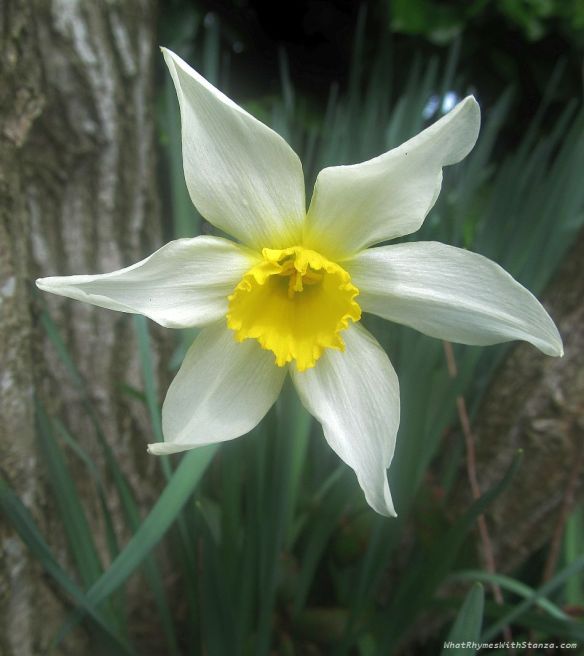
“I never did like Narcissus,” he says,
though I hadn’t asked for his opinion.

“Narcissus? Why not?” I ask.

“It is such a presumptuous flower,
So simple – banal really –
yet it pops up first thing in the spring
as though the world has been awaiting it
all winter.”

“All winter? Perhaps so,” I say.
“It is so beautiful and colorful
and a refreshing change from the ugly winter snow.”

“You know what I think?” he asks.
I don’t know, and I don’t ask.
He tells me anyway.

“I think these narcissus flowers bloom early
just so they can admire their reflections in the melting snow.”

“The melting snow,” I say. “I don’t care. I love them.”
I reach down to pick one of the flowers,
but it won’t come loose of the plant.
I pull harder. It still refuses to budge.

“See that?” he says.
“Narcissus won’t even let go of a bloom.
He wants to keep all the beauty for himself.”

“For himself…” I muse.
I begin to feel faint.
I feel as though I am disappearing.

“Going somewhere?” he asks.

“Going somewhere. Yes… somewhere… somewhere…”

“Say, I didn’t catch your name,” he calls after me.

“Name? Echo. Echo. Echo.”

“Nice talking with you, Echo.
My name is Nemesis.”

Nemesis. Nemesis. Nemesis.


NaPoWriMo challenge, Day 21: Write a poem that plays with the myth of Narcissus in some way. 

Mishmash

balance 4

Eat not, you’ll never want for less.
The next worst thing could be the best.
Heed not and you will find the hidden.
Spare the rod, the child has bidden.

Break some rules to mend the rest.
Let the sun rise from the west.
Speak not, others will pause to listen.
Smash the boat, champagne to christen.

If lies be told, pay heed to rumor.
I found my mind and sensed some humor.
The dead of night awoke the living,
so these sage words I’m thymely giving.


NaPoWriMo, Day 13: Write a poem in which the words or meaning of a familiar phrase get up-ended. 

moving mountains

mountain 2

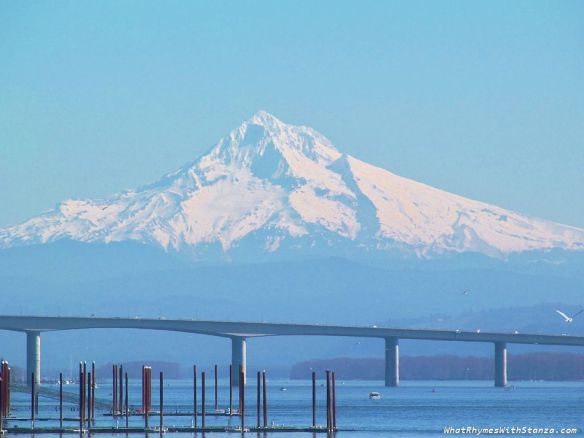
Some days the mountain sparkles in the sun with its snow-covered slopes. At other times it is invisible behind clouds and fog and – sadly – smog. But it’s always there, always a touchstone when crossing the bridge that takes me from my town in to the bigger city. Another mountain, easily distinguished by its volcanic rounded top, is more of a surprise when it appears, as I can’t seem to remember where to find it. Does it move across the landscape when I’m not looking? I have to keep my eyes on the road at least part of the time, and it would be easily missed. A third mountain is even wilier, and sometimes I mistake it for the first. Perhaps I need to concentrate more to get my bearings. Or maybe it’s just hard to see the mountains for the molehills.

branches in the wind
go to ground in my garden
dog hunts scent of birds


NaPoWriMo Challenge, Day 12: Write a haibun that takes in the natural landscape of the place you live. 

Last Chapter

identity1

If I were to write my memoirs,
the title would be “Reaching.”
The chapter headings:
How Far
How High
How Pretty
How Wealthy
How Meaningful
How Memorable

Maybe not in that order,
but probably so.

There would be a Foreword to explain
I’m not competitive (even against myself),
nor am I status-conscious, greedy or an overachiever.
Well, maybe just a little of all that.
It’s not about aspirations, goals, achievements…
just… reaching.

A reaching born perhaps of the low-key work ethic instilled by my parents.
(is that an oxymoron, “low-key work ethic?”)
Like this:
If you take one step, you might as well take two.
If you’re an apprentice, you might as well become a journeyman.
Once you’re a journeyman, you might as well aim for foreman.

There might as well be a chapter in my memoirs called “Might as Well.”

My memoirs would describe how I progressed through life in this mindset.
And how one day it flipped.
If I lost a step in my journey, I would likely fall back two steps.
If I missed a rung in my ascent, soon thereafter
I’d likely land on my butt at the bottom of the ladder.

And so it was.
Until finally I just stopped.
No up, no down.
Just full stop.

◊ ◊ ◊

Two summers ago I took up whittling.
I sit on my deck on warm afternoons
in the shade of a lopsided black walnut tree.
Opportunistic squirrels steal green nuts from the branches above me.
I place a glass of water or sun tea next to my chair,
and I whittle.

I don’t whittle to carve shapes into wood,
or to carve wood into shapes.
It’s just relaxing to take a sharp knife and a found piece of wood,
and shave away layers until I’ve reached… no, not reached…
until I know I am done.

Maybe this is the perfect last chapter for my memoirs.
I will call the chapter “Whittling,”
and I’ll describe my practice of peeling back layers
to see what’s beneath.
Not like some deep introspection, where I
lay bare the depths of my soul to reveal all the
rot and grisly scars.

Much simpler (and much more interesting) than that;
kind of like a low-key work ethic.

I just whittle
on found wood,
one shaving at a time
to discover the layers
of life,
of nature,
of squirrels,
of being in this world
on my deck on a summer afternoon.

finished


In response to the NaPoWriMo prompt: What does y(our) future provide? What is your future state of mind? Seems I had to go to the past to get to the future. 

RE: Journeyman/Foreman: my parents were of a non-gender neutral generation, but they never discouraged my career choices based on gender. 

To be, or never was…

I don’t get it, I say aloud
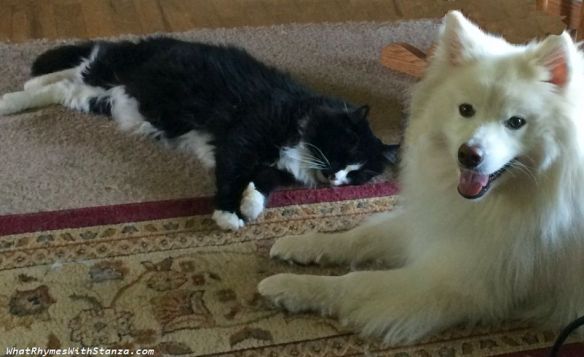
though no one’s in the room save the dog.
He tilts his head and gives me
that quizzical look that could mean so many things.
Or nothing at all.

Today I am impatient and so his sweet face doesn’t work its magic.

Go chase the cat, I tell the dog.
His ears perk up. Although he understands but a few commands —
and of those known obeys even fewer —
he jumps to his feet and scampers off, ostensibly in search of the cat.

I feel sorry for the cat and a bit mean for having made the suggestion,
but who really thought the dog would follow through?

I still don’t get it, I say aloud,
and this time there’s no one in the room at all,
unless…

the cat’s tail flicks out from behind the drapes.

Green eyes peer around a fold of cloth and lock me in a stare.
I heard what you just did, the cat seems to say.
I’m sorry, I mouth silently so as not to give his presence away.

I hear the dog sigh as he squeezes beneath my bed in the back room.
His favorite napping place. He has given up the game.
Cat is safe for now, but by his look I can tell I am far from forgiven.

I continue my soliloquy.
You know what I don’t get? This!
I point in the general direction of the glowing laptop screen.
Lines of text — some
short,
some longer — parade down the edge of the screen.

Sometimes a line or two

skips toward the center screen
as though it were the end dancer of a cancan line and missed a turn.

No rhyme nor reason.
Well, sometimes a rhyme. After all, it’s poetry, right?

Or so it self-proclaims. This is what I don’t get.
I don’t understand poetry. What makes something a poem,
and not just some random words stitched together
in seeming sincerity?

I’m too shallow, I tell the cat. He has come out of hiding
and jumps on the couch in hopes of securing a warm spot near the laptop.
Poetry in motion, that’s what they say about cats. Sometimes.

The cat meows in response and I press my finger to his lips to shush him.
Too late. The dog scrambles from beneath the bed and pads out to be with us.
No poetry in this dog’s gangly moves. Maybe he’s just a limerick.

Am I too shallow? I ask the dog and cat. They fail to reach a consensus.
Never mind, I say.

I return my attention to the keyboard.
I’ve gotta hurry up and bang out this poem
before I go to bed.

poet


NaPoWriMo challenge, Day Ten: write a poem of simultaneity – in which multiple things are happening at once.

Cycles: Winter

winter a

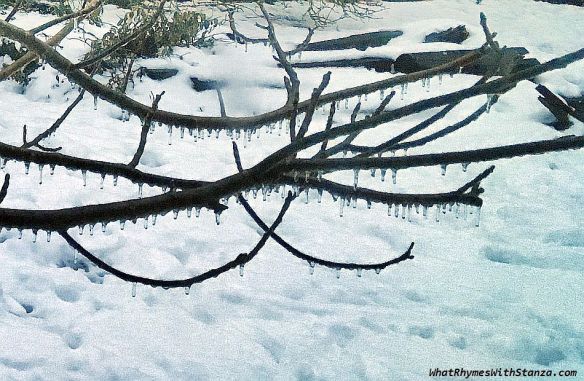
to flaunt it’s might and callous heart
winter coils its heavy hand
with whetted shards of tempered ice
impales autumnal sleeping land

in shocked surprise sap runs to ground
bare limbs must hide in rooted place
blending with gray-tinted skies
to weather winter’s raging pace

rough-edged façade belies the life
ensconced beneath the frozen ice
rogue insects wait to till the earth
once released from winter’s vice

at slightest breeze of warming air
winter cedes its thawing ground
blustering in feigned protest
as nature cycles spring around


NaPoWriMo challenge day nine: write a poem in which something big and something small come together. “Big” weather meets “small” life forms.

Story Time

golden path 2

Rain splatters in puddles, and rivulets of water snake down window panes.
Snot spatters on child-sized sweatshirts, and rivulets of same puddle above little pink lips.

“Tell us a story, Oma.” Oma has already told half a dozen just since nap time, but how does one refuse such a rapt audience?

“Once upon a time there was a little girl and her little brother.”
“No, not about us! A princess with three fairies!”

“Okay. Once upon a time there was a princess with three heads.”
“No, Oma! Three fairies!”
“Oh, right. A princess with one head, and three fairies with three heads.”

Little girl sits back, satisfied with the new head count.

Little boy chews on the round, magnifier lid of a “bug catcher” container he has pried open. The bug catcher holds a big black spider — correction: used to hold a big black spider before little boy pried the lid off.

Oma gently pulls the lid from little boy’s mouth.
“A magic mirror!” Little girl reaches for the snot-laden lid and holds it up to her eye. “The princess has a magic mirror!”

Oma hands little girl a magic tissue with which to clean the “mirror.” Little girl misses the point. (Just as well. The tissue later becomes a magical horse blanket.)

Future pretend magical horse rolls onto his side and lazily licks his paw.

“What does the princess see in the mirror?” Little girl looks wide-eyed into the magnifier lid.

Probably not much in its current condition, Oma thinks.
“The future!” Oma says.

♦♦♦

The princess learns that an evil horse prince is going to turn her little brother into a horse on her brother’s fourth birthday, unless the princess can stop him.

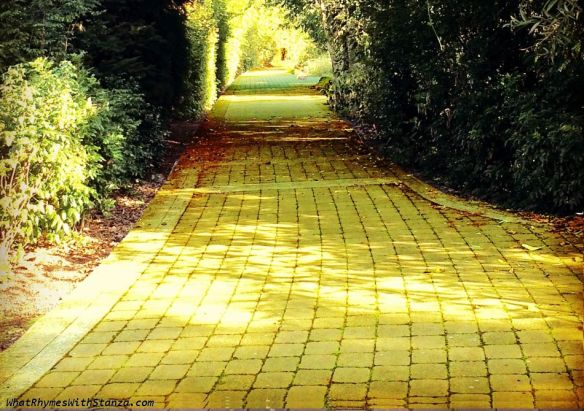
With the help of the three fairies (one head apiece) and her magical mucous-filled mirror, the princess sets off down the golden path to the dark forest where the evil horse prince with glowing red eyes lives in a dark, dark cave.

♦♦♦

The story progresses — with minor plot changes at little girl’s request — and at last the princess prevails.

Little boy has long since lost interest in the princess story and instead pretends to be drinking water from the insect catcher container which, he informs Oma, has spider poop in it.

Oma assumes that announcement is primarily based on two-year-old little boy’s fondness for saying the word “poop.” After all, the big black spider that formerly occupied the container is a plastic toy.

Oma would, however, like to know the whereabouts of the big black spider. She half-wonders if it’s going to come flying out of little boy’s nose the next time little boy sneezes.

Just then, the beautiful, wise and brave queen comes riding up the hill to the castle in her magical Subaru, and little boy and little girl greet the queen with coughing, sneezing, snot-flinging hugs and kisses.

Oma takes her leave and climbs aboard her handsome Nissan steed to head home to her palace. As Oma checks the magical rearview mirror, she gets a vision of her own future.

In the not-so-distant future, Oma foresees that she will be coughing, sneezing and snorting into her own magical tissues.

And they all live happily ever after.

Achoo!


Based on NaPoWriMo day eight prompt: Write poems in which mysterious and magical things occur. (I don’t know that this qualifies as poetry, but it is mysterious and magical.)